
Aug 9
Anti-Essentialism: A Case for a New Era of Bravery
For too long, we have remained cautious in the face of defeat and isolation. But now is the time for boldness.
by M.T. Cosmo
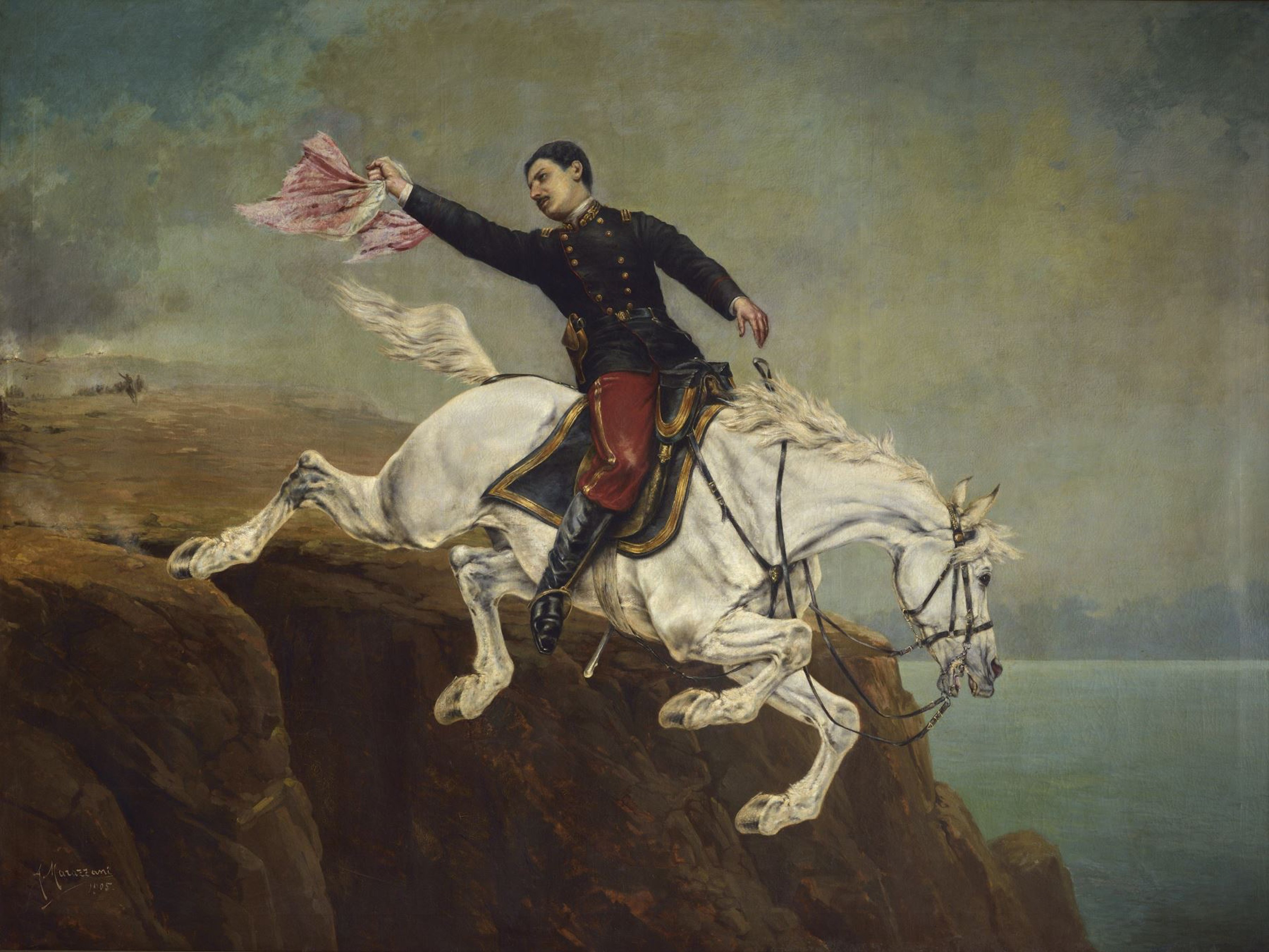
“…absolute truth is not enough to bring the masses to action, to infuse the masses with revolutionary spirit, [a] determinate ‘truth’ is needed…for the purposes of human history, the only ‘truth’ is that which is embodied in action”
Antonio Gramsci, in An Address to the Anarchists, 1920
For those of us on the Left, who have held our eyes open to the horrors of our crumbling world all our lives, we know all too well the fragility of hope. For so long, our collective dreams for a politics truly capable of effectively combating the global polycrisis before us–have remained nothing more than dreams, unreflected in reality except in our history books or in short-lived bursts of public dissolution or rage. And still, for decades, we have kept that hope alive–if not in our politics at large, then at least in our hearts, hardening ourselves in fierce ideological opposition to the apocalyptic chaos witnessed both at home and perpetuated abroad. The mountain that is the struggle before us only rising higher all while we remain deprived of any power to even begin to climb it. And in the absence of that power, many of us were forced to retreat into the battles we could fight: ones of theory and rhetoric. Resigned to doing all we could to map out the fastest route up that mountain in hopes that if we were ever given just one chance, we could seize it with an assurance of victory. For what use is theorizing if not to prepare us for action?
But there is a fatal danger that has emerged from these circumstances. For our struggle possesses neither the luxury of time nor the weakness of opposition. The enemy has forced our hand and the time for merely theorizing is over. For the only thing more frightening than the horrors we have witnessed and now face are the ones we know lie on the approaching horizon.
There are now merely years, not decades, left to prevent the rapid deterioration of life across the globe. Runaway capitalist extraction has pushed us to the brink of catastrophe on a level never before seen in human history. No matter your particular school of leftist thought, or particular focus within this polycrisis, we all must realize we are in the endgame now. In our lifetime, millions–if not billions–will die if our politics doesn’t experience a dramatic enough shift in time. We must remember that we are not just fighting to build a movement for its own sake. We are fighting to save those lives. This will not be an easy task, but, of all the obstacles before us, each of them is only made more insurmountable by anything which makes us less effective in fighting back against them.
And nothing is perhaps more disabling to our movement's ability to move forward than its tendency towards blind essentialism.
But before I break down why, I wish to first define what essentialism is not. Essentialism, as it relates to our struggle for a better world, is not simply an adherence to steadfast morals, principles, or a commitment to a truly egalitarian vision of society. Nor is it a deep understanding and adherence to the precedent set by the historical tradition of communist theory. Those qualities exist separately from what I aim to critique, and I wish to also make clear that it is not meant to refer to any one particular faction of the left, such as the so-called DSA right/left, both of which merely possess different expressions of essentialism. Where essentialism goes wrong is not in its ideals, but in the belief that anything shy of the complete and absolute implementation of those ideals is not only insufficient but not even remotely worth pursuing. It is a fundamentally rigid way of thinking that narrows our paths forward, often to the point of total inaction. A philosophy that would rather wait for a more ideal opportunity than exploit a series of flawed or limited ones, therefore making it a philosophy not of radical change, as those partial to it might like to believe, but of indefinite procrastination.
Most importantly, however, the essentialist standpoint is delusional. For what system of ideology has ever perfectly materialized, and what change has ever come all at once?
The Neo-Liberal hegemonic formation has had an ideological monopoly on our politics and culture for most of our entire lives. It has systematically pushed out all true leftist discussion from the mainstream, marginalizing it to the internet chatrooms, activist organizations, and niche studies of academia most of us have come from. The issue, though, is not the presence of these spaces–but what happens within them. For a politics without concrete action against an opponent naturally begins eating itself. Its fundamental agitation is redirected against each other as we tell ourselves we must get our house in order before taking action when, in reality, we’re just afraid, and it feels safer to argue internally than face the climb before us. We are starving for change, but without the bravery to hunt our real prey, we risk cannibalizing ourselves.
“The left is very far behind in terms of actual tangible power. But we have skyrocketed in terms of presence and visibility. However, we are incredibly insufficient as a movement right now and won’t get better until we stop identifying as fandoms for certain politics and start in mass doing those politics… Online political fandoms is not where politics are done. It’s where politics die.”
F.D. Signifier, in I’m probably done with ‘political’ content, 2026
I wish to pose a question to all of us, but especially those who feel sympathetic to the need for purity within our actions, rhetoric, and ideals. Do we believe it has been necessary for the American public to understand and have read Adam Smith or Milton Friedman to subscribe to or behave in line with the tenets of contemporary capitalism? Do we believe it has been necessary for all citizens of this country to believe in the same vision in order for the far right and neo-liberals to have gained and exercised their power? I ask these questions rhetorically because to say Yes would be a willful denial of reality. The right has always understood that a true understanding of their moral and political philosophies would never be supported by the public at large, which is why they’ve become masters of media manipulation and branding; hiding behind notions like “rugged-individualism” or “American exceptionalism" because they know emotional appeals will always precede and supersede intellectual understanding. And when one tactic begins to fail, another takes its place, because, to them, rhetorical consistency doesn’t matter as long as the gears keep turning.
I bring this up not to praise or encourage dishonesty but to illustrate the needless futility of theoretical and rhetorical rigidity. To move forward, and to take advantage of the current populist moment, I suggest an adoption of a sort of political biomimicry. In politics, as in nature, it is not the strongest or most rigid systems that survive and prosper; it is the most adaptable. The times we live in are now changing faster than ever before, and that chaos shows no sign of slowing down. We must find in our overwhelming belief in our vision a sense of bravery necessary to adapt our strategies with equivalent speed, ferocity, and without hesitation. We must be brave enough to act without guarantee of victory–and brave enough to use whatever power we have rather than wait in hopes of one day becoming stronger.
For that is the essence of fighting. Life is not a thought experiment we can perfect in our minds before taking action. Having been starved of the levers of power for so long, the left has forgotten what it feels like to wield them, and therefore the possibility of change becomes a battle waged only in the sterile comfortability of the mind. A battle never exposed to the pace or pressure of the outside world.
There comes a moment in the life cycle of every successful movement where the pace of its growth begins to accelerate beyond the boundaries of what its initial members could only have dreamt possible. But within the power and jubilee that brings, there is also often a hesitation, for the one thing lost in acceleration is control. But systems either change or they die, and we must ask ourselves: what is more important to us, being successful in maintaining the rigidity of our own “perfect” system, or creating change for millions if not billions of human lives who are in desperate need of it? For most of our lives, true leftism in America has only existed in our minds, and therefore, especially on an individual level, could be perfected; in that, we found comfort and identity. And what is essentialism if not the clinging to that theoretical perfection, that comfort, in the face of widening external chaos? A belief system that all too often manifests itself as an insistence that if everyone merely knew what you knew, or believed what you believed, that perfect internal world would be made manifest. Unfortunately, this is a desire that is neither realistic nor one we have the luxury to entertain.
In this existential battle for humanity before us, there is no room to wait for a more opportune moment. We must be savage. Seizing every chance at every level for change in a manner that reflects the hunger I know we all feel for it. We must recognize that we are no longer plotting a purely hypothetical course; we are running. Anyone who’s made the jump from the theoretical to the practical knows that the world is far messier than the perfect route one may have had in their mind. We must accept and embrace that messiness because, my friends, whether we are ready or not, we are finally climbing now, and the scariest part of that climb is that once you’ve started and realize you're halfway up, you can no longer go back down and start again. If we wait for our actions to feel perfect in our minds, we not only risk not moving forward but sinking back down into that dark valley from where we began.
From now on: there is only forward, relentlessly forward.
Too often on the left we are blinded by our faith that our politics are righteous enough, that it should be enough to just explain our way into victory. But politics isn’t won in terminally online debate halls. The danger is that being “right”, in what amounts to a purely hypothetical sense, takes priority over being effective. But being right doesn’t stop the bombs from falling, or the ice from melting, or the rich from cutting us down to the bone. If it did, the world would have always known peace.
We must be more than right. We must be ruthless. Ruthlessly focused on action and ruthlessly focused on effectiveness. The people of the world are starving for change, so we must take on every fight with equal ferocity, using our principles and understanding of theory as a north star to guide us, but always remembering to keep climbing. For the guarded flame of hope is not singular; it is as many colors and sizes as there are people suffering under oppression or control. And the raging inferno required for fundamental change will need the combined light of all of them, including those who have neither read nor would understand or agree with every tenet of Marxism.
So what then is our pathway forward? For each of us it will look a little different, but for all of us the answer will surely include more action. And so in the spirit of this I wish to encourage everyone reading this to hold at the forefront of their minds a series of questions in all the days and years to come:
In every conversation or debate: What am I trying to achieve? Is it materially constructive or merely a form of personal catharsis?
When faced with the choice between imperfect means with immediate ends and “perfect” means towards deferred ends, am I remembering the stakes at hand, including the lives of my friends, family, and neighbors?
In what way can I be braver than I’ve been before? What constitutes bravery in this situation? Is what I understand as being politically brave in reality contributing to a narrow essentialism? In what ways can my energy and frustration be mobilized towards tangible change?