
Sep 15
Becoming the Means: Technologization for Transocialism (Chlorogenesis & Xenosocialism)
In part two of her three-part series, Cassandra Luna argues that the left must embrace mutation and biotechnics, for only the producing class can exist without exploitation.
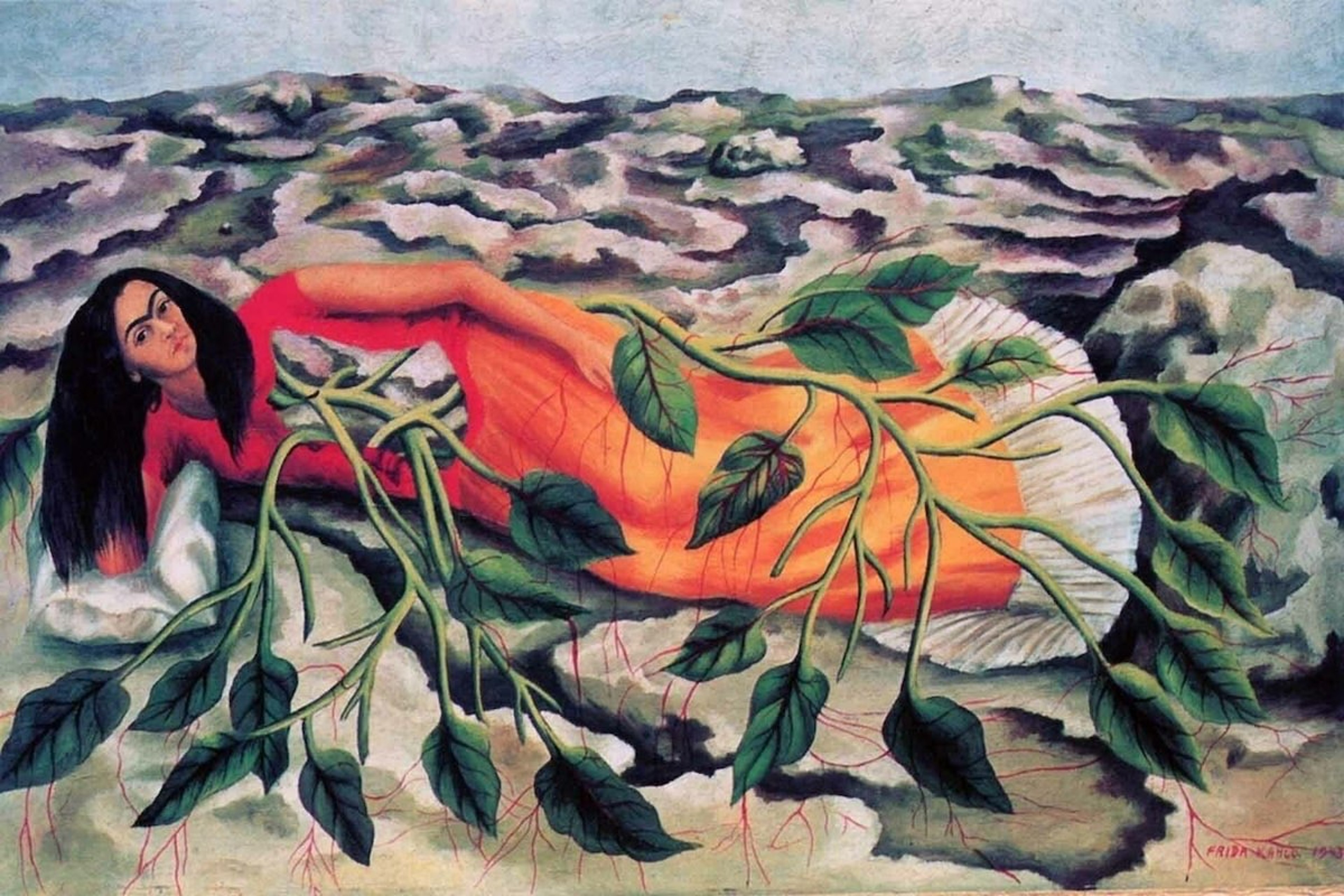
Chlorogenesis
In English, the word ‘illuminate’ has a double meaning: first to light something up, second to make it understandable. Indeed, it is curious how frequently we encounter this linguistic fusion of light and knowledge. We use phrases like ‘in light of recent events’ and ‘I see your point there.’ We emphasize our notes with a highlighter. We call the feudal European intellectual movement for freedom of thought and expression The Enlightenment. We describe people with great foresight (ah, I cannot even stop myself) as bright, brilliant, or visionary. Of course, this analogy abounds throughout the globe, for which I could only name a few examples: the Mandarin character 明 (míng) meaning light and to understand, Plato’s allegories of the sun and cave, the biblical ‘let there be light,’ or most succinctly, the Islamic proverb ‘knowledge is light’ (العلم نور). The role of light in symbolizing truth, knowledge, and learning seems culturally ubiquitous, though perhaps that claim might be standing on its head. Perhaps instead, knowledge symbolizes light.
For some, it may have seemed that this passage came out of nowhere. Whatever could make light concretely relevant to our politics? All the difference in the world, in fact. To illustrate this, we should begin by deconstructing (or reverse engineering) the Marxist conception of class conflict, specifically through sociologist Ralph Miliband in his Marxism and Politics (1977). Contrasting the fabricated claims to moral universality of many (powerful) minority movements past, Miliband asks:
“Why should the working class be thought of and claim to be a ‘universal’ class, whose interests are indistinguishable from those of society at large, which Marx and Engels did claim to be the case, and which has remained a central Marxist claim ever since[?] The answer which they gave to that question has many facets and ramifications which need to be examined and followed through, but the basis of it is that the working class is not only the vast majority of the population but that it is also the only class in history whose interests and well-being do not depend on the oppression and exploitation of other classes (33) [my emphasis].”
To rephrase this in our language today, the producing class is the only class capable of autonomous self-production. For any class to exist at all, there must be a producing class. For those already familiar with socialist and Marxist theory who have read patiently so far, it is time to address the elephant-shaped chia plant in the room: why have I utterly refrained from using the term ‘workers,’ insisting on ‘producers’ instead? The answer lies upon the very foundations of ecology, on the simple distinction between autotrophs (producers) and heterotrophs (consumers): whereas heterotrophic organisms rely on the consumption (read exploitation) of organic matter for self-production, autotrophs produce their energy abiotically, namely from photosynthesis.[1] Thus, if we take Miliband’s interpretation of the universal class as given, and that energy is required for any form of production, then we must conclude that the category of producer shared across sociology and ecology is not merely indicative of a homonymy, but a fundamentally structural congruity. So if photosynthesis is the only means by which we could sustain our consciousness at scale, then ausmosis has found its principal directive: becoming photosynthesizers.[2] Though ‘human photosynthesizers’ may occasionally stand in the short-term as a tutorial metaphor, it should not be considered accurate, both for reasons biological (to be promptly iterated here) as well as political (to be explored in Xenosocialism). Thus, pending their own preferred label, I will refer to these intentional photosynthesizers as chlorogens.
Before I expound more on the theory behind this strategy, I should first take a moment to anticipate the immediate hesitation: what should make us think this is even possible? In short, the evolutionary theory of symbiogenesis (and the countless examples which verify it). Though endosymbiotic theory (as it is also called) was originally formulated in 1905 by botanist Konstantin Mereschkowski through his study of lichens (a fungal and algal/cyanobacterial symbiont), it was only in 1967 that evolutionary biologist Lynn Margulis would substantiate and popularize it in her paper “On the Origin of Mitosing Cells.” To summarize a whole history of evidence, the presence of DNA (highly similar to other known species of bacteria) within all known mitochondria and chloroplasts indicates that these two organelles, instead of being outgrowths of nucleic DNA, were originally independent, free-floating (cyano)bacteria that permanently fused to form the first eukaryote and plant cell, respectively. Key to note here is that symbiogenesis is not merely asserting that symbiosis occurs between species. In this case, the genesis indicates that symbiosis is what defined their speciation.[3]
Which is to say in practical terms, we need not engineer photosynthesis from scratch, for it would be endlessly easier to instead design for a new symbiosis, a chlorogenesis, by iterating upon a select cyanobacteria or algae to which extensive, in-vitro experimentation may occur long prior to any clinical trial. Such symbiosis has occurred countless times before (in Anthopleura xanthogrammica, Costasiella kuroshimae, and Ambystoma maculatum, just to name a few), and they were not equipped with all the means of production available to us who could read this. One need not hold any doubt, however, for indeed the process is already underway: researchers at the University of Tokyo have successfully sustained a 48-hour, algal/mammal symbiosis with functioning photosynthesis, recorded in their 2024 paper “Incorporation of Photosynthetically Active Algal Chloroplasts in Cultured Mammalian Cells Towards Photosynthesis in Animals.” Whether or not they had in mind such purposes as here, their work should serve as a paragon of revolutionary technopraxis.
What makes this science so revolutionary is not at all limited to the purely concrete benefits of producing your own energy. Having previously established that consciousness is conditioned most of all by its vessel, a producer’s body would condition a producer’s consciousness. Therefore, by investing in the research, development, and eventual deployment of chlorogenesis, we empower labor at its very roots, both concretely and significantly (in the sense of identification). This logic, however, should not be taken mechanistically. One may assume, as did I early on, that because all Homo sapiens on Earth (for now the only demographic who could understand and concretize the lessons of this work) are heterotrophs, that we could simply not be the producing class. It was encountering Ernesto Laclau and Chantal Mouffe’s Hegemony and Socialist Strategy (1985) through this magazine that rectified this impractical, economist (a term explained in the following article) notion.
Of focus today is their identification of the seeming impossibility of finding a “necessary overlap between political subjectivity and [economic] class positions (12),” what P.K. Gandakin in his “The Concept of Class in Politics” (2026) would eventually name as the absolute separation between political class and economic class. “The definition of a class,” in his words, “cannot be purely from the perspective of a neutral observer uncovering truths about a society, but that of a partisan and militant who is actively attempting to classify an otherwise ambiguous social mass for the purposes of mobilizing or engaging with them (or to identify them as historical actors).” Though the production of an autonomous economic class (now conceived in the double entendre of producer) may constitute our purpose, our method must be to identify and engage with people on the basis of their political class/subjectivity. Which is to say, the political producer is not the one who embodies autonomous production (lest we come to the rhetorically disastrous conclusion that they could not be human), but the one who actualizes that movement.[4]
Of course, many other reasons underlie the imperative benefit of chlorogenesis. By all measurements, namely the ten-percent heuristic of energy transfer (that after each degree of consumption, only ten percent of usable energy remains on average), it is always more energy efficient to give and receive than to penetrate, extract, or consume. Chlorogenesis thus is not only good for producers, but for the expansion of productive forces in general (which also explains why actively engaging with biotechnology is how we anticipate and defend against the weapons some may apply it to create). More available energy means a higher population (density), conditioning the downstream proliferation of critical infrastructure like groceries and universities as well as the countless social institutions that broaden our avenues for expression and fulfillment. This includes, of course, political organizing: the stability of party nuclei in smaller locales can make all the difference for whole generations of potential organizers. Further still, consider how the green-skinned chlorogen would serve as something like a catalyst for organizing, a flashing green go-signal for political conversation, a flame to the moths (though for posterity, mind their boundaries, of course).
But the dearest benefit of all is that this modification, even if partial and slight, would benefit the health of the individual in an undeniably concrete way, contrary to the largely negligible effects of merely aesthetic bodily modifications (tattoos, piercings, tails, and the like). Thus, especially given the salutogenic paradigm shift already underway throughout the fields of healthcare, chlorogenesis signals an unprecedented opportunity to contest for its public funding as healthcare.[5] It is only natural then that chlorogens would doubtlessly compose a leading wing for a rejuvenated movement for public healthcare. By this mechanism, chlorogenesis lays the foundation for all other non-predatory forms of body modification to become accessible. Chlorogenesis is the grubbing tool by which we tread the trail of bodily autonomy.
Up to today, and likely for most others preceding the first chlorogen, the category of transpecies has been isolated to the darkest corners of society, visible only in the queerest of margins. You would be hard-pressed to find anyone who believes that this group could be anything but a perpetual outsider, a passing phase of online youths, or in any case, a political liability. As time will prove, this could not be further from the truth. Just as the development of pharmaceutical sex-hormones in the early 20th century conditioned the emergence of transgender people into common consciousness in the late, chlorogenesis shall do the same for transpecies people in the 21st. Mere body modification will not be enough. For our transitions to truly take shape, we must reach for the genetic roots of speciation, and fuse our cells with chloroplastic DNA. When our very bodies bring light and breath to the world, there will be little room to doubt that all of us are producers.
Xenosocialism
Though the matter should be taken as given from the three-sphere model I have outlined, it demands to be stated explicitly: our praxis is not primarily the product of our feelings of good intention, no matter how strong. Instead, we should move from the materialist stance (divorced from any strong determinism), from the probability of circumstance: that the governing movements and limits of thought are primarily conditioned by our position in society, biology, and broader material circumstance. So hard would it be to imagine life without production that we may speculatively assume that class still forms the basic conditions of consciousness. The principal implication of this framework, made explicit through Nancy Hartsock’s essay “The Feminist Standpoint” (1983) and its eponymous theory, is that the conditions of producing class life facilitate an epistemological freedom, a freedom which we may illustrate in contrast to capital’s cancerous necessity. If we take it as true that the capitalist way of life is limited to the methods of predation, then it would be a fair wager to say that this binds their imagination as well. After all, could most Homo sapiens imagine an end to their consumption of organics?[6] It is thus not merely a matter of economics to become producers, for this movement goes hand in hand with freeing our imagination, our consciousness.
As many could likely preempt, this speculative advantage is not at all limited to class taken by itself, for class is shaped by all other aspects that modulate social existence, with race, gender, and queerness being only a few of many. Notably, long before standpoint theory emerged, the concept of double consciousness was articulated as far back as 1903 by Pan-Africanist sociologist William Edward Burghardt Du Bois in The Souls of Black Folk, writing:
“It is a peculiar sensation, this double-consciousness, this sense of always looking at one’s self through the eyes of others, of measuring one's soul by the tape of a world that looks on in amused contempt and pity. One ever feels his two-ness,—an American, a Negro; two souls, two thoughts, two unreconciled strivings; two warring ideals in one dark body, whose dogged strength alone keeps it from being torn asunder. The history of the American Negro is the history of this strife – this longing to attain self-conscious manhood, to merge his double self into a better and truer self (8-9).”
From Du Bois’ particular analysis of the African American condition, we can elicit a universal lesson: whereas the oppressed are conditioned to be conscious of both their own standpoint and (out of survival) the standpoint of the oppressor, part of the privilege of belonging to an advantaged class is in never having to learn the standpoints of the oppressed. Though the oppressed and alienated may not have access to the same resources and education, it is they who are better conditioned to apply that knowledge and conceive the need for political militancy.[7] After all, does the confusion of being unaccepted by society not prompt introspection, curiosity? To put it bluntly then, whereas alterity is broadly enlightening, privilege is generally brainrotting. But we may advance this notion further still: what the trans experience shows in most explicit terms is that knowledge is gained not only through consciousness of multiple standpoints, but by living a movement across them. Those who have ever noticed their transition in class and articulated its condition are in this sense achieving a kind of triple consciousness. That would be the prevailing condition of the chlorogen in an unaccepting society, and by extension of all trans people. But whereas transgender people only expose the mutability of sex and gender (which is not to downplay that achievement), the transpecies chlorogen would expose a mutability of far greater scale (achieved not by Darwinist slaughter, but from mutualistic symbiosis): of species and class.[8]
Our imaginations are likely not equipped for the scale of reactionary backlash to accompany their emergence. As opposed to countless other marginalized groups who have always existed throughout history (women, black people, queer and transgender people, etc.), the chlorogen would truly be new. From the perspective of a reactionary movement, no possible place could be found for their even subordinated existence, for they would have no closet to return to. Genocide would become their only path to turning back the clock (a position made even more strategic by the chlorogen conditioning the stagnation of consumer demand which finance capital relies on), but for every degree of violence they impose on the chlorogens and their allies, so shall their revolutionary alterity be exacerbated. It is by prioritizing the environmentally friendly, medically beneficial, and anti-predatory chlorogenesis over other non-medical modifications, however, that we principally counter this inevitable moral panic, thereby laying the foundations for a world where people may live in the bodies they choose, free of exploitation.
From there, it is merely a byproduct what the reactionary empire would bring upon the world to excise them.[9] Here the fact could not be understated: imperialism is strongest when it can move in the cave of liberal performance, hidden from the sun that would reveal the contradiction of its claims to democracy and the imperial reality of capitalism. It is when imperialism inevitably unmasks, to resolve what crises it could not by the logic of its own legitimacy, pouncing from its cave to the light, that the tiger becomes paper. Thus, in our struggle to strategically expose and exhaust all options for demilitarizing the empire and mounting a defense of life itself (from the most basic needs to chlorogenesis), to be attacked by the enemy is not a bad thing but a good thing.
It is this ‘pouncing’ moment which we could also describe, borrowing a term from political philosopher Giorgio Agamben, as the state of exception. In his Homo Sacer: Sovereign Power and Bare Life (1998), Agamben borrows the Greek distinction between political life (bios) and bare life (zoê), and illustrates the latter through the ancient Roman legal status of homo sacer (humans both sacred and accursed). Homo sacer was sacred in that their life was deemed ‘in the hands of the gods,’ and thus could be killed as a justified extension of their divine will, but accursed in that they were not (i.e. without worth to be) considered sacrificable. This explicit legal antagonism, the power to include by exclusion, is what Agamben argues to define the power of sovereignty.[10] The transition between democracy and empire then is mediated by this state of exception, for which we can name many examples: the imprisoned of Guantanamo and (formerly) Abu Ghraib, the Palestinians facing genocide and apartheid, the predominantly black men enslaved in the prison industrial complex, and so many more.
Of course, this concept should be contextualized both by the preceding theory of biopolitics, introduced by philosopher Michel Foucault in Society Must Be Defended (1975), as well as philosopher Achille Mbembe’s antecedent “Necropolitics” (2003). Where Foucault identifies biopolitics as the emerging centrality of the “power to foster [and discipline] life or disallow it to the point of death,” and Agamben identifies the state of exception as mediating political life and bare life (identifying the Nazi concentration camps as an extreme manifestation), Mbembe defines the boundary of biopolitics as the necropolitical, where (such as in the camps) the exception becomes the rule: a deathworld, where death becomes the predominant form of both oppression and resistance. Thus, identifying the state of exception is less about periods of time, when a whole society moves sharply from one to the other, and far more about identifying the constant necropolitical undercurrent which sustains hegemonic biopower, its political life.
By completing Mbembe’s formula, through its application to Italian Communist Party leader Antonio Gramsci’s distinction between the war of position (the gradual supplantation of institutional and cultural legitimacy) and the war of maneuver (the rapid overthrow of a vulnerable hegemony), we can generally conclude that whereas necropolitical strategies (of maneuver) are most adaptive in the deathworlds, biopolitical strategies (of position) are most adaptive in the lifeworlds. This unity of seeming opposites is what frames the default strategic orientation of transocialism (especially towards legality): ambiguity.[11] Ironically then, it is critical to build a common sense notion that facilitating the emergence of chlorogens and defending their life does not inherently amount to transocialism. Through the inoffensive means of healthcare and medical research, we condition the ruptural situation by which we may expose the contradictions between the legal mask and bare violence of capitalist hegemony. And indeed, the strategy of chlorogenesis could only be viable in the lifeworlds, where biotechnical means are most accessible and illegalist methods most infeasible, so it is on us all in the productive cores to take this task with deadly urgency, for it may well be the optimal way of accelerating the turnaround of the imperial boomerang (coined by Regional President of Martinique Aimé Césaire in his 1950 Discourse on Colonialism to refer to the process where methods of control used upon the colonial periphery eventually turn back as the methods of control in the core or metropole) and dispelling the fog of liberalism. Through our chosen regeneration, which threatens the very foundations of fascist homogeneity, we summon bare life in the inner walls of capital, at the center stage of attention.
Especially given the advantage of alterity this strategy has so far established, we as chlorogens must assert our nonhumanity. It would be tempting to think that we may secure our safety by clinging to the liberal promise of human rights, but this appeasement would only result in the brief delay of a worse wave of violence. By all phylogenetic measures, chlorogenesis would entail speciation. Any claims to the contrary would only be petty attempts at opportunism, grifting off the category of ‘human’ used throughout history as a bludgeon against the black, indigenous, disabled, queer, feminine, and all others deemed ‘less than’ by the empire. By conceding our real identity to the whims of liberal managers who would seek to coopt our struggle, not only would we relinquish our agency to define our own political movement, we would postpone a global confrontation with humanism that would bring about a new ethics of engagement towards the nonhuman world, and thus by extension an end to the climate crisis and the liberation of nonhuman animals. By firmly staking our place in nonhumanity, we position ourselves to oppose and defeat a far-right that would juridically exclude us from human rights to expand the state of exception.
Some (even who have published through Geese) would argue that this is exactly what we should want to avoid, that the posthuman could only be the unthinking product of capitalist biopolitics, that the biopolitical could only be capitalistic, but this would blatantly concede what should rather be considered an open site of struggle. It is neither helpful to pose posthumanity as the inevitable product of schismosis nor to overcompensate into doctrinaire faith that posthumanism or the posthuman is inherently revolutionary.[12] Indeed, rather than identifying people as posthuman at all, I would argue that the ‘posthuman’ should instead describe our impending era: where the center cannot hold, and the previous stability of humanism can no longer remain the ethical center of both labor and capital. Whether that era will resolve in a biodiverse society of producers (where status quo Homo sapiens are welcome in kind) or a vampiric genetic hierarchy remains, of course, an open struggle. That is why it is so critical that we intervene now, to crack open the ambiguity of humanism and ask what exactly everyone is saying, “people or Homo sapiens (or worse yet, white male Homo sapiens)?” Though the intentions behind any humanism may be well placed, they only reproduce the essentialism we should have abandoned since at least as far back as Donna Haraway’s Cyborg Manifesto (1985). To carry her message forward, it is not an essentialist conception of identity that should frame our organization, but affinity, the sharing of struggles, and in the transocialist context, our struggle with alienation and for autonomy.
What xenosocialism offers us then in the pursuit of this autonomy is the acknowledgement that “it is through, and not despite, our alienated condition that we can free ourselves from the muck of immediacy. Freedom is not a given–and it’s certainly not given by anything ‘natural’. The construction of freedom involves not less but more alienation; alienation is the labour of freedom’s construction.” Here I am quoting The Xenofeminist Manifesto (2015) by the Laboria Cuboniks collective, which stands just as fresh (if not more) than it did a decade ago. Where the authors fall short of articulating a more concrete plan to match their claims to “a feminism of unprecedented cunning, scale, and vision,” they succeed in recognizing the desperate need for deeper technopolitical exploration, the revolutionary potential of alienation, and the uselessness of the “natural” for directing our praxis. What marks the advance from xenofeminism to xenosocialism then is the contextualization of this technopolitical intervention for bodily autonomy as inevitably linked to the producers’ class struggle. “If nature is unjust, change nature!” closes the text, and indeed we must to concretize the chlorogen. Just as the earlier emergence of transgender people prompted others to more deeply explore themselves, the chlorogen’s emergence will be the solution that prompts the problem,[13] the problem of species dysphoria. Alienation from species-being is not only the restriction of our creative capacity, but the distance from our species identity, the body we would choose if we had the means. What it means to be trans in practice is therefore inevitably entwined with what it means to be alien, for there is nothing more dangerous for a conservative establishment to allow to exist than those who embody the initial movements of everything we thought static.
So yes, the emergence of the chlorogen is a deeply urgent task, for the relative isolation of organizers in the productive cores to the people in the periphery (both within and outside the U.S.) we seek to unite with is by far our greatest weakness. We should again derive a universal lesson by recalling the particular struggle of the black feminist Combahee River Collective, who write in their 1977 statement:
“We realize that the only people who care enough about [black women] to work consistently for our liberation are us. Our politics evolve from a healthy love for ourselves, our sisters and our community which allows us to continue our struggle and work. This focusing upon our own oppression is embodied in the concept of identity politics. We believe that the most profound and potentially most radical politics come directly out of our own identity, as opposed to working to end somebody else's oppression.”
Theirs was the original vision for identity politics, not the liberal distortion which justified the division of struggles into endless single-issue nonprofits (a history thoroughly accounted in philosopher Olúfẹ́mi Táíwò’s 2022 Elite Capture), but the basis for a unifying, intersectional movement, that viewed the struggle for socialism, black feminism, and queer liberation as distinct but intertwined threads of a whole struggle. The corollary of this idea, however, lies in the penultimate sentence of the whole statement, to which they quote feminist writer Robin Morgan in turn, “I haven’t the faintest notion what possible revolutionary role white heterosexual men could fulfill, since they are the very embodiment of reactionary-vested-interest-power [i.e. reactionary political life; my emphasis].” Their assessment is damning (and rings on similar tones to the Third Worldist and Afro-Pessimist critiques), but by expanding the means to produce our own embodiment, so does the revolutionary role of those included in reactionary political life: to deny and corrupt it. Class does not exist in stasis, something we only align to our politics. It is a dynamic we engineer from ourselves.
It is likely that many of us reading have the luxury to occasionally take the day off and enjoy the world as it stands. We should all want a world where that privilege was a right, but to build that future we must recognize, in this historical moment, that all our pleasures are fueled by the blood of the people we claim to want to help, running through the wires of your screen and the water in your tap, as the world continues to burn. To varying extents, we are all hypocrites, but by recognizing the forces that condition our behavior, so do we all have the potential to change for the better. This potential does not come from our good intentions or the labels we adopt, but the raw motive impulse that can only be built through an unmediated awareness of the consequence of our praxis and the real conditions of the global producer. Without discomfort, there can be no change, and without stakes, there can be no discomfort. The only way out of alienation is through, so what better way to connect to the will of the othered than to make the leap and put ourselves on the line, unleashing from our bodies the portals to their deathworlds.
Notes
1: Chemosynthesizers also exist, of course, but for countless practical reasons, photosynthesis is the only method I would focus on.
2: However, this assessment should also guide our development of disembodied forms of production as well. After all, what is fossil fuel generation but the exploitation of long dead organisms, organisms which could never have lived if not for photosynthesis?
3: If you find the contradiction between the profundity of this theory and its absence in our collective education striking, you are not alone. As historian of science and technology Bradford Harris writes in his “Evolution’s Other Narrative” (2013): “[Even] relatively advanced textbooks devoted entirely to the study of evolution omit the concept of symbiogenesis. The fourth edition of a leading undergraduate textbook of evolution, Evolutionary Analysis (2008), still devotes entire sections to ‘combat,’ ‘competition,’ and ‘conflict,’ neglecting symbiosis. Most high school graduates are taught the term symbiosis, but it is typically presented to mean little more than mutually beneficial cooperation. Students learn how symbiosis benefits individuals, but not how symbiotic relationships themselves often constitute emergent organisms that display their own evolutionary histories.” Indeed, he identifies this conspicuous absence as an ideological symptom of Western individualism and social Darwinism, an exploration I would highly recommend.
4: Therefore, we may synthesize the Post-Marxist insight, that we cannot reduce struggle to class struggle, while also retaining the centrality of class (now reinforced by the ecological analogy) in the pluralist construction of a producer-aligned collective identity.
5: Salutogenesis, meaning health creation, was first proposed by medical sociologist Aaron Antonovsky in Health, Stress, and Coping (1979). Though usually deployed to specifically refer to his coherence-based model of mental health, the term also denotes a broader medical paradigm oriented towards raising the baseline of health as opposed to merely negating disease, a critically important distinction to make way for species-affirming care.
6: Again, this is a facilitative relationship, not a causative one, and exceptions abound in any case, because as established implicitly in Ausmosis and will be explicitly in Why Transocialism?, consciousness allows us the relative autonomy to believe things which contradict our “material interests.”
7: This has been conveyed in other ways, by Antonio Gramsci that “in periods of crisis it is the weakest and most marginal sector which reacts first (267)” in his Prison Notebooks, as well as by Frantz Fanon in The Wretched of the Earth (1963), where he concisely interprets the revolutionary potential of the oft-dismissed peasantry and lumpenproletariat: “for they have nothing to lose and everything to gain (61).”
8: Of course, it has always been recognized that class is mutable, but here I particularly mean the up til now unidentified aspect of economic class, the trophic class.
9: Though impractical to call for on a collective scale, it is nevertheless worth noting that brain drain would also be a potentially potent byproduct. Those countries who reject, marginalize, and expel trans people shall drive to their more xenohospitable rivals a most radical, militant base of technologists and organizers. Here, the story of cyberneticist and founder of the PRC space program Qian Xuesen is worth remembering.
10: A concept which he also expands to cover the sovereign themselves, in the sense that they are included in the legal system as an extent of their immunity to it, with the presidential pardon, parliamentary immunity, and the Enabling Act of 1933 being obvious examples. Though my focus today is more on the subaltern homo sacer, the sovereign concept is still useful as a framework for exposing contradictions between sovereign law and sovereign immunity to stoke and crystallize mass agitation.
11: One such superposition may be phrased as such: in a closed box in a closed box, the party is both breaking and staying until it is observed (i.e. at the moment of critical mass).
12: Which is also to importantly say that the formulation is not inherently anti-racist, to which I recommend Zakiyyah Iman Jackson’s “Outer Worlds: The Persistence of Race in “Movement Beyond the Human”” (2015) for explication. In addition, nothing should indicate that chlorogens would be in any way immune to cooptation, recalling in particular Jasbir Puar’s Terrorist Assemblages: Homonationalism in Queer Times, who brilliantly evoked two trends (that I would focus on) from the Western imperialist mobilization of minimally dissident queer identities to justify colonial violence (especially against Arab and Muslim populations). First, by expanding our conception of queer from the limited terms of sexuality and gender to dissidence itself (including the ‘queerly racialized ‘terrorist populations”), she distinguishes this mobilization as a division and conquering of queer groups, rather than as violence on behalf of them. Secondly, however more importantly, she recognizes racialization as primarily modulating the way queerness is experienced (or if they live to experience it at all), making the question of how chlorogens will be racialized particularly central to their alterity, though unanswerable ahead of time. While I loathe to relegate such important insights to a mere footnote, I can promise a future article which specifically focuses on this interconnection between racialization, biopolitics, and coopted homo- and femonationalisms, to which these points will be recounted and expanded.
13: Which is a concise way of saying that “the problem itself arises only when the material conditions for its solution are already present or at least in the course of formation,” to quote Marx’s preface to A Contribution to the Critique of Political Economy (1859).