
Nov 24, 2026
Dirtbags: A Response to Liberal Currents
Ant L. responds to Liberal Current's Alan Elrod and Nathan Goldwag.
by Ant L.
Two recent articles in Liberal Currents, “The Native Language of Social Media is Slurs” and “The Dirtbags Won’t Save Us”, have critiqued the American Left’s increased willingness to violate liberal norms of decorum and poise in public deliberation, as well as the trend of leftists online in particular to do so on purpose. The operative example of the latter being, self-evidently, pushing or even rushing past traditional American boundaries around the discussion of Israel and Zionism.
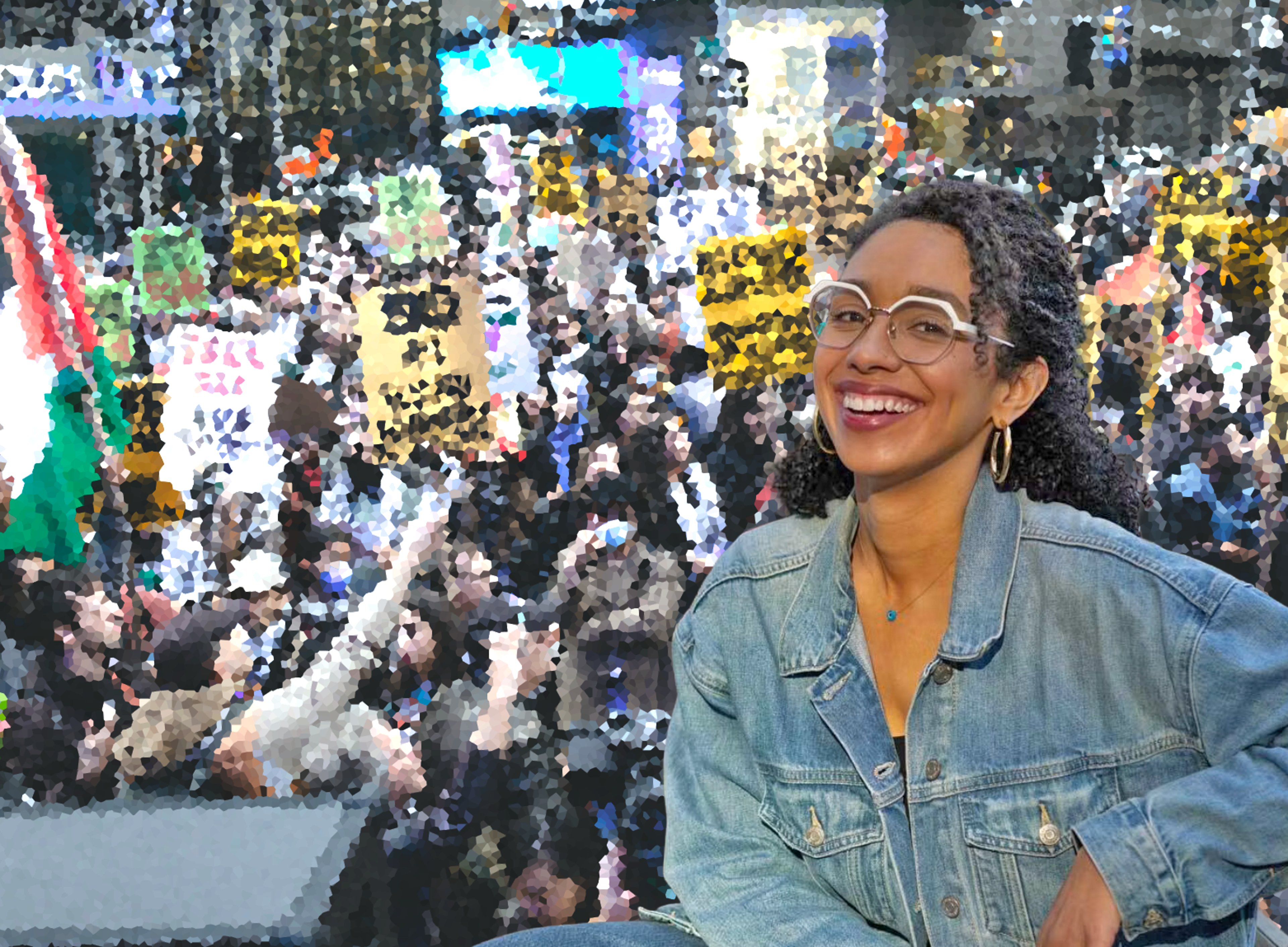
Taking both arguments in good faith, I welcome the opportunity to deliver a response from the leftist perspective (taken here to be that of a person involved in the organized left). Alan Elrod’s “The Dirtbags Won’t Save Us” in particular cannot be ignored, because of his choice to frame the essay around online comments by NY-13 Democrat nominee Darializa Avila Chevalier and identify her in particular as an example of this phenomenon. Chevalier will enter Congress as one of our standard bearers soon so there is no other option but to set the record straight. She must be defended.
Under regular circumstances, I would respond simply that Chevalier’s demonstrated moral clarity on one of the most urgent issues on the planet from the start (Israel’s genocide in Gaza) obviates any consideration of her internet posts from 2013 and thus Elrod’s argument is easily dismissed. A few months later, she would appear at the front of a protest in the Bronx after ICE shot into Oscar Belgal’s car, hitting him in the neck and endangering the other passengers in the car including his 5 year old son. It is hard to see how a person’s tweets can weigh heavier than that.
However, were I to leave it at that, I would be engaged in the same rhetorical practice as the left’s liberal critics, refusing dialog if I can’t dictate the terms. Therefore, I will respond as best I can. Elrod regards “dirtbagism” as a “potentially fatal threat to any sort of liberal democratic future for a country already undergoing authoritarian drift and mired in deeply felt social anxieties and animosities”. This is difficult to square with the total collapse of political viability for the liberal center and the rise of left populists in places like Michigan, where the downfall of Democrat coalitions led to the rise of Trump. Nothing resembling liberal democracy will survive in this country if our political leaders lack moral authority and a clear plan to address our society’s challenges: the center has neither and we have both. With that being said, it is important to consider my points of agreement with the liberal criticism of the left.
First, I will note that I broadly agree with the underlying claim in both essays, that the American left ought to strive for more intentionality and precision in our use of language. What I found amusing is that neither author considers that the vast majority of callousness, shock tactics, intentional goading, and even harassment committed by leftists takes place internally within the left itself, and the public facing version of the phenomenon pales in comparison.
Having spent endless evenings in 3-4 hour long meetings over the last few decades debating who has more of an inherent claim on the right to verbally abuse the other between two factional opponents, I have no rebuttal to the claim that we should update our values around speech. At times we find it difficult to debate resolutions or deliberate on the proper response to a crisis without moral grandstanding, overstating of interpersonal harm, vague insinuations of moral failings on the part of the interlocutor, the list goes on.
Perhaps of even greater importance is my second reason for agreeing broadly with the authors, the simple fact that the American left is no longer in the same position we’ve been in historically, one of extreme marginality in the public sphere and very little political power. Over the past 3 years, having established our moral authority in our condemnation of Israel’s genocide in Gaza followed by our demonstration of a robust and immediate response to Trump’s tyranny, followed by a wave of exhilarating electoral victories, we have gained a solid foothold in mainstream politics and an enhanced capacity to shape narratives in the public eye. Liberals have had exactly zero answer to any of these crises and in many cases have impeded our efforts in all 3 situations. In regard to the Gaza solidarity movement in particular, the overrepresentation of professed liberals among those retaliating against and punishing the students of the encampments makes it difficult to entertain liberal concerns about our posts.
Of particular importance is the inability of many prominent Democratic Party figures to fully condemn Hasan Piker in response to demands to do so, because the raw political calculus will not allow it. Piker himself recognizes the scope of his messaging power by refusing to comment on DSA’s internal politics and other affairs where he feels he has disproportionate capacity to impact the outcome.
With this newfound power comes new responsibility, and we have a serious mandate to be careful about what we say. As recently as a few years ago, an argument could be made, valid or not, that what leftists say online has very little bearing compared to the right wing’s constant spew of invective against minority groups, women, civil society itself, and so on. This is no longer the case. The popular appeal of right wing populism is fading as Trump leads America into an intractable war with Iran and fails to address the cost of living crisis. Many people are taking cues from us now. Thus, the left cannot simultaneously push for greater influence in politics and deflect criticism of our speech on the basis that it has no impact. We have the floor now, and must make responsible use of it. The things that make the Left stand out in the modern political landscape are our moral authority and our clear plan to address the existential challenges facing 21st century society. Our tendency to immaturity must be discarded on this basis.
I was disappointed to see that these authors did not go far enough in addressing how we got here, and why the left has become so indifferent, or even hostile to, American liberal norms of decorum and the liberal guardrails on discourse painstakingly constructed during the 20th century. Beyond that, I found it confusing that following waves of debate about deplatforming, Big Tech censorship, and so on, that professed liberals seem to have missed the lesson that censoriousness about speech in fact amplifies and empowers the speaker.
In a populist political environment, shock and disgust at inflammatory posts from the left, from liberals in particular, only bolsters the ethos of the speaker and demonstrates the speaker’s point. The cycle with Piker is familiar, we see a national media firestorm about something he said on a stream which creates an easy layup for the left: asking why the critics are more concerned with a Twitch streamer’s comments than the price of gas, war with Iran, and so on. Having seen this play out with Trump and Nick Fuentes, it is confusing why liberals would want to fall into the same trap in the other direction.
In sum, my core contention with both articles is that dirtbagism or online trafficking in shock by the left can be addressed as a symptom without addressing its underlying root causes, as if the left can simply be directed to stop what they are doing. I understand this impulse given the closer relationship between liberals and leftists compared to the liberal center and the populist right, but as I will detail, one particular issue has broken any semblance of trust between the two and made this strategy unavailable.
First, it must be said that liberal norms around speech, social solidarity, due process, reason, and pluralism are not sustainable in the absence of a lived experience on the part of the demos in which they feel that the good life is attainable if they follow the rules. It could be argued that this was the case in the United States from the postwar period up until the last few decades for a large part of the body politic (absent some notable exceptions, such as the underclass created by neoliberalism and mass incarceration).
Thus, trust in the system and its rules was able to reign via consent decree because many Americans felt that the social order they lived under was essentially fair. Good behavior depends on trust that it will be rewarded with a good life. The total collapse of this belief within various segments of America’s body politic has predictably been followed by illiberal political movements, cults, charismatic leaders of movements which go nowhere, gambling addictions, and the like. Thus, the appeal of shock and callousness for millennial and Gen Z leftists is a direct parallel to the appeal of Trump for his Rust Belt base. Liberal critics of the left seem to believe that we have abandoned them in error, rather than arriving at the best possible political positions we could under our circumstances. If anything our increased willingness to traffic in conspiracism or illiberal messaging is a direct consequence of being firewalled by liberals.
Today’s leftists, especially Millennials (like me) and Generation Z have grown up in a society which has taught us the diametric opposite lesson. American society in the 21st century somewhat openly rewards callousness, rule breaking, and individualism at all costs in both life and politics. It is easy to feel like a sucker for following any rules at all. Therefore, it is hard to feel like we ought to color between the lines in our online posts, given the indescribable injustice permeating our entire society, whether it be economic inequality, ICE raids, dozens of viral videos of police murdering unarmed Black men and women, the possibly irreversible destruction of our planet, and the final straw: the unbelievable crime committed against the Palestinians of Gaza which unfolded on our phone screens and which no liberal institution or norm was able to apprehend.
This brings me to my final and closing point. The left immediately and correctly identified the precise nature of the situation in Gaza, the intent of Netanyahu’s government, and the basic moral character of the situation. In return, we were dismissed, mocked, vilified as bigots, fired from jobs, incarcerated, expelled from college, put on blacklists, lost relationships, lost professional opportunities and had careers destroyed, banned from countries, the list goes on. All for grasping the truth of a deeply urgent situation earlier than others and acting on our deepest moral convictions sometimes at great peril to ourselves.
A good bit of this was done not just by faceless technocrats but by self professed liberals with whom we share workplaces and a media ecosystem. Thus, the argument that the left has something to apologize for with regard to our use of language fundamentally depends on the acknowledgement that we ourselves are owed an apology. It is one thing to observe that liberal norms are not actualized in the day to day experience and political realities of contemporary America. It is quite another, however, to observe a violation of liberal norms on the scale of Israel’s destruction of Gaza and notice that how it is discussed is being criticized at a louder volume than the situation itself.
A more responsible participation in public affairs on the part of leftists is an imperative regardless of what we ourselves have experienced, for the simple fact that our actions must be guided by our own internal values rather than dictated externally to us in response to the actions of others.
The apology we feel we deserve is probably not forthcoming, and we owe it to the world’s dispossessed to put one foot in front of the other and adapt to the new situation regardless. There is a chance, however, that things can be different going forward and we can be recognized for our capacity to help build a future where the material conditions exist for liberal values to be fully realized in practice. An easy example of what this looks like in practice is the embrace of Zohran Mamdani by some liberals who may disagree with him on some issues. This makes us want to work together and hear the other side, observing how we are allowed to participate in the discussion and not simply blackballed or dismissed. In the years to come, cooperation will be essential, and a little bit of trust extended in our direction will go a long way.