
Nov 16, 2026
We Need Crazy Politicians: An Essay on Political Professionalism and Passion
Professionalism keeps the politician on the surface of everything. Sarkozy argues that a marginal Left needs politicians unafraid to be a little crazy.
by Sarkozy
“Insanity in individuals is something rare—but in groups, parties, nations, and epochs it is the rule.”
Friedrich Nietzsche
The Story of O.J.
On October 3, 1995, a Los Angeles jury took less than four hours to acquit O.J. Simpson of the murders of his spouse, Nicole Brown Simpson, and her friend, Ronald Goldman. After retiring from a fulfilling career in the NFL, the All-American running back and well-loved media personality was charged with a double homicide, to the shock and horror of the American public.
The two victims were stabbed outside Brown’s home in Los Angeles. At the outset of the trial, the murder appeared to be an open-and-shut case, given the overwhelming amount of evidence that pointed to Simpson being the perpetrator. His blood was found at the scene, the victims' blood in his Bronco, and a bloody glove at his estate matching one left beside the bodies. In addition, Simpson was previously charged with spousal battery against Nicole Brown.
Despite this, the jury found Simpson not guilty at the end of the tumultuous trial. It is difficult to imagine how shocking the verdict was back then, given that we are decades removed from that time. But the verdict shook the country, and more importantly, it elevated the already-heightened racial tensions America endured during the 1990s. With the Simpson trial, race relations had already reached a boiling point, and it finally erupted with his baffling exoneration.
It goes without saying that America has a long and tragic history of racial divisions. Even during its most tranquil eras, the famed “melting pot” suffered from seemingly ever-present racial conflicts and ethnic divides between its many diverse groups. These tensions were at an all-time high during the O.J. Simpson trial, though, and this was due in part to another high-profile case: the police beating of Rodney King. A group of bloodthirsty cops was caught on camera savagely assaulting Rodney King, a Black man from Los Angeles who had led the cops on a high-speed chase before surrendering. The cops can be seen encircling him while he’s on the ground, taking turns whacking him as hard as they can with their batons, while a defenseless King cried out for mercy.
Nowadays, videos of police brutality have become much more common on the Internet. But at the time, the Rodney King footage was historic, as one of the first live, mass-produced “scenes of subjugation.” It was a recording that exposed the police’s sadistic treatment of Black people to a mass audience. The public could watch a form of barbarity that, before then, was usually “hidden” from larger society; realities the general populace had never witnessed because that violence always occurred on the peripheries, in the overlooked margins of civil society, became suddenly and viscerally apparent. The police were charged with assault and excessive force, but they were later acquitted, and the decision stunned America. Specifically, it sent the Black populace into a collective rage, triggering a wave of riots following the announcement of the verdict. Notably, none of the jurors in the King trial were Black.
Four years later, O.J. Simpson was also acquitted, but of double homicide and not excessive police force. This time, Black people celebrated the verdict. To make sense of why, we must realize that the Black community treated the verdict as a matter of karma for the Rodney King decision years prior. With the verdict came a collective sigh of relief - for a moment in history, a Black person was not a victim of some kind of cruel injustice; they were exonerated. Perhaps it gave some hope that the system could correct itself, even if that self-correction was also in itself a form of injustice.
But nowadays the great irony is that public opinion has flipped on the O.J. case. Society accepts that Simpson very likely did commit the double murder and, in hindsight, should have been found guilty. These days, Black people aren't eager to celebrate the acquittal, let alone even think much about O.J. Simpson in the first place. In retrospect, we regret those courtside cheers for a man who murdered two innocent people in cold blood. What happened?
American History X
At first glance, celebrating O.J. Simpson’s not-guilty verdict seems egregious. Should we not ruthlessly criticize the collective moral code of the Black community at that time? Were the feelings of happiness and relief felt by the Black community over a man getting away with double murder a textbook example of social anomie, mass ethical hysteria? An outbreak of total societal nihilism? Were the celebrations over the verdict an odd moment where black people went temporarily insane and abandoned their commitment to any rational and principled sense of morality and justice? Instead of accepting such a basic, reductive conclusion, we can make sense of the triumph represented in the O.J. Simpson verdict by viewing the whole endeavor as a form of catharsis, as a small yet satisfying strike back against a system of relentless injustices.
The Simpson ruling undermined the American legal system as a whole. What kind of system would let someone like O.J., who clearly murdered his wife and her friend, walk free? But more specifically, a free Simpson forced White America to grapple with their own racism and its unfair systemic privileges. White people had to contend with a systemic failure to enact justice, with the fact that an American institution sided with the blatantly guilty perpetrator of a gruesome crime.
Besides karma, the Black community's common sentiment about the verdict could be summed up as an ironic form of apathy. So what if O.J. Simpson got away with it? The murderers of young Emmett Till also got away with it - the men who beat the black teenager so viciously that the decimated image of his face made history at his open-casket funeral. The many “normal” citizens of lynch mobs, those hysterical hordes of all-American terrorists of the pre-Civil Rights era South, accomplices to torture and murder often for Sunday afternoon entertainment, “got away with it”. They continue to do so even today through cases that crop up every few months of black people being hanged that are hastily ruled “suicides” in the Deep South. The vast majority of slave masters, whose existence should be considered an abomination and an insult to decency and humanity, “got away with it”, as they lived and died happy and wealthy, treating their black subjects as less than nothing for over four centuries to no consequence whatsoever. So if O.J. Simpson “got away with it” this time, who cares?
Relative to the Black American, it seems like the White American is always an artful dodger of the swift hand of justice. On the other hand, it is not the case that the Black American is treated merely fairly by the justice system - for this would still be unequal since actual fairness does not assume the White American’s ability to dodge punishment. Unfortunately, the situation is actually worse - the relationship between the justice system and Black America is characterized by a lopsided and violent antagonism - in a word, a classic dynamic of oppression. This dynamic assigns a special role to the Black subject: they are the outlet for necessary social abuse in the form of unbridled institutional excess.
Such abuses are free of the guilt that arises in the collective consciousness of any so-called “progressive” society. American society achieves this self-exoneration for its anti-black violence via ideology, considered in the most general sense. A soldier prepares for war by filling his head with a slew of false and degrading beliefs, propaganda about the enemy nation, so that he can fight and kill a mythologized object that is already registered as deserving of death. It comes without any pesky moral reservations or qualms. Likewise, American society washes the blood from its hands in a deep reservoir of dehumanization. Forged mainly by intellectuals in civil society, this dehumanizing ideology operates like a treasure trove of anti-black concepts, ideas, prejudices, opinions, beliefs, notions, concepts, stereotypes, practices, narratives, histories, etc., that all function to justify and maintain anti-black oppression.
Modern psychology often repeats the idea that the body “keeps score” of unresolved traumas. Groups of people also “keep score” in the form of generational trauma. It is through collective memories of the bruises and injuries endured, the tears and cries shouted out, the often repressed yet sometimes emancipated expressions of anger, righteous fury, and justified indignation, and the defeated sighs of exhaustion after every setback. Out of the sea of longstanding oppression emerges a Leviathan made up of those grim collective memories.
Because of this, historically, the Black American is cursed with a feeling of disdain and distrust for the justice system, a reaction that doubles as a survival instinct as much as it does a desire for emancipation from the justice system. If we bear in mind the whole history of American black oppression, the order built on unchecked subjugation, a structure of domination that permeates every aspect of oppressed life, it becomes clear that we have no moral right to judge the celebration of O.J. Simpson’s acquittal.
The black community turned a blind eye to a blatant act of injustice for all the times white America did the same. However, even with the consideration of black oppression, it still seems morally reprehensible for a whole community to side with a murderer. How can people be so cruel? What about Nicole Brown and Ronald Goldman? They didn’t deserve to die the way they did. Furthermore, supporting the acquittal as a form of karmic justice seems to reject a socially transcendent ethic that should hold a moral line regardless of particular social circumstances. After all, in no social formation whatsoever does it seem justified to, say, abuse a puppy. So regardless of our considerations of social oppression and the whole structure of oppressed society, the evil of a heinous murder like this transcends social circumstances. We must always consider murder wrong; murderers should be imprisoned, and support or celebration of their freedom is morally repulsive. We can safely assume the supporters of O.J. Simpson aren’t a population of pro-murderous sociopaths; we can assume they hold some semblance of common morality.
If we make the assumption of common morality, then we must conclude that the only way the black community could feel vindicated by O.J. 's acquittal is if it performed the social suspension of the ethical, an act carried out collectively over the course of O.J.'s trial. Note the distinction here from Kierkegaard’s teleological suspension of the ethical. In contrast, this suspension is fundamentally paradoxical because it elevates a socially derived ethic above the already socially derived universal ethic we should suspend only for God. In other words, for this single “moment” (suspension), the black community had to silently agree to treat right as wrong and wrong as right. No divinity, since such desire for karmic justice is human, all-too-human. It is only appropriate that the suspension here dramatically displaces God and grounds itself in This-World.
Given that this social act is performed by an entire group, the suspension in question is no small feat; a community doesn't suspend its ethics like this every day. So a question arises: how does the suspension happen? Or, to put forward a deeper question: what social conditions determined, and also enabled, the social suspension of the ethical? What higher purpose, one found squarely in our world, does it serve? For this essay, I will consider only a specific type of ethical suspension, one in which an entire group makes the suspension for a single individual. So we will not regard suspensions made for groups of people, companies, nations, or even non-human things like events, decisions, wars, etc.
A group can and will ethically suspend an individual as long as that individual sufficiently fulfills a necessary social function for that group. The dynamics of the ethical suspension, like whether such a suspension is actually made in the first place, how far it goes, and smaller details like how much the individual can transgress against common morality and still be treated well, depend first and foremost on the social group that grants it, as well as on the social function of the individual and, most importantly, the context under which that function is performed.
Passion Pit
Chantal Mouffe distinguishes between passions and emotions in her theory of affect. She explains her theory most clearly in her 2018 essay, The Affects of Democracy. While emotions are often associated with individualistic feelings, passions are distinct in that they are often associated with conflict. Conflict is central to Mouffe’s entire political framework - they are called antagonisms in her theory - she defines antagonism as a never-ending process of conflict-mediation between collective identities. Antagonistic relations never reach a final ground. Politics is constituted by the impossibility of reaching such ground. She opposes this view to political rationalism - the belief that there is a reasonable solution to the fundamental conflict between collective identities that undergirds all politics. Here we can see her describe antagonism in her own words:
“To assert the ineradicability of antagonism requires acknowledging the impossibility of reaching a final ground, and instead recognizing the dimension of undecidability and of contingence that pervades every order.”
Passions, or affects, play a crucial role in constructing political identities. For Mouffe, there are no absolute, essential identities, only “forms of identification” determined by common passions. To elaborate, she draws mainly on three thinkers: Freud, Spinoza, and Wittgenstein. She admits that such affects are libidinal - they are grounded in desire; they follow the rules and regulations of satisfying the same pleasure principle central to Freud’s psychoanalysis. In Spinoza’s philosophy, “affection” describes a situation where the desires of a given body are directed by some external force - it is motivated to desire something, but the motivation lives outside of the body subjected to affection. As for the construction of collective identities, they are related to Wittgenstein’s “forms of life” - inscriptions in discursive (signifying) practices rather than intellectual argumentation. Ultimately, the affective (libidinal) dimension of collective forms of identification serves as the motivating force (affection) behind political action. She talks about the three thinkers here:
“Bringing together Spinoza, Freud and Wittgenstein, I propose seeing inscription in discursive practices as providing the affections which, for Spinoza, bring about the affects that spur desire and lead to specific action. This recognizes that affects and desire play a crucial role in the constitution of collective forms of identification, and that they are the motivating forces of political action.”
The example Mouffe gives in her essay is of allegiance to democracy - which is a belief not arrived at by social agents through rationalizing about democracy. Instead, such beliefs are constructed or “formed” only in the process of playing ‘language games’ that provide a certain identification with democracy itself:
“Allegiance to democratic values is a question of identification; it is created not through rational argumentation but through an ensemble of language games that construct democratic forms of individuality. Wittgenstein clearly acknowledges the affective dimension of this allegiance, which he likens to ‘a passionate commitment to a system of reference’.”
Currently, communism and socialism are not independent political forces in the United States - they are embryonic, nascent, but ultimately too fragmented and marginal to be considered proper movements with actual drive. The only way socialism could possibly develop is through intervention. This is because a small force always "bursts onto the scene.” To make a mark, such a force always has to come on the scene waving around massive guns, guns so big that socialism can barely lift the barrel. So communism must intervene on the political landscape if it ever aspires to actually change the world. This intervention implies a rupture, a sudden tear in the very fabric of social reality. Without this “bursting forward,” it remains a secondary component to larger, more mature political projects, representing a mere historical detail rather than History itself.
In the democratic tradition, politicians behave like professionals par excellence. More than with professionals in other fields, the politician strives not only for a strong, clean, respectable reputation but also a spotless public record. They are entrusted with moral leadership, not just in Gramsci’s hegemonic usage of the term but literally, in the sense that the politician is expected to lead and do so ethically. Furthermore, in democracies we elect officials to represent parts of the body politic. We have grown to expect certain positive personality traits from our politicians: level-headedness, charisma, high energy, humor, confidence, etc. But this expectation is a double-edged sword since those who attempt to express these traits are considered untrustworthy just for trying. Everyone is aware of the game that our lawmakers play out in the open, how performative and calculated every single public moment has to be. The professional world is inauthentic; look no further than corporate America as the shining example of deep disingenuity in practice. We know that this society demands a little fabrication from time to time. But a politician who leans too hard into this fakery is highly suspect. A similar case happens with defense lawyers - society wants lawyers to practice the highest form of professionalism, but simultaneously, the defense lawyer's job is, categorically speaking, to lie. Their priority isn’t the promotion of justice and the greater good - it is to represent their legal client in court.
Crazy Politicians
Professionalism, being the general application of agreed-upon standards of conduct, implies the continued use of reason. But reason further presupposes that the politician maintains a level of sanity. To possess and maintain the qualities of an ideal legislator, the politician must be of sound mind, or at least appear that way to the public. But American political history also includes a history of absolutely “crazy” politicians. These larger-than-life figures usually had wild personalities backed by utterly ridiculous historical anecdotes. Despite being popular, these politicians often held strange personal beliefs and opinions. They are mythologized and immortalized not only for the legendary details of their illustrious political careers but also for their flamboyant publicity stunts. With that being said, there were plenty of crazy politicians who, despite earning their place in history by “having a few screws loose” at the right time, failed to accomplish the political goals they set out. For this reason, we will restrict our analysis to those crazy politicians who actually succeeded in their efforts.
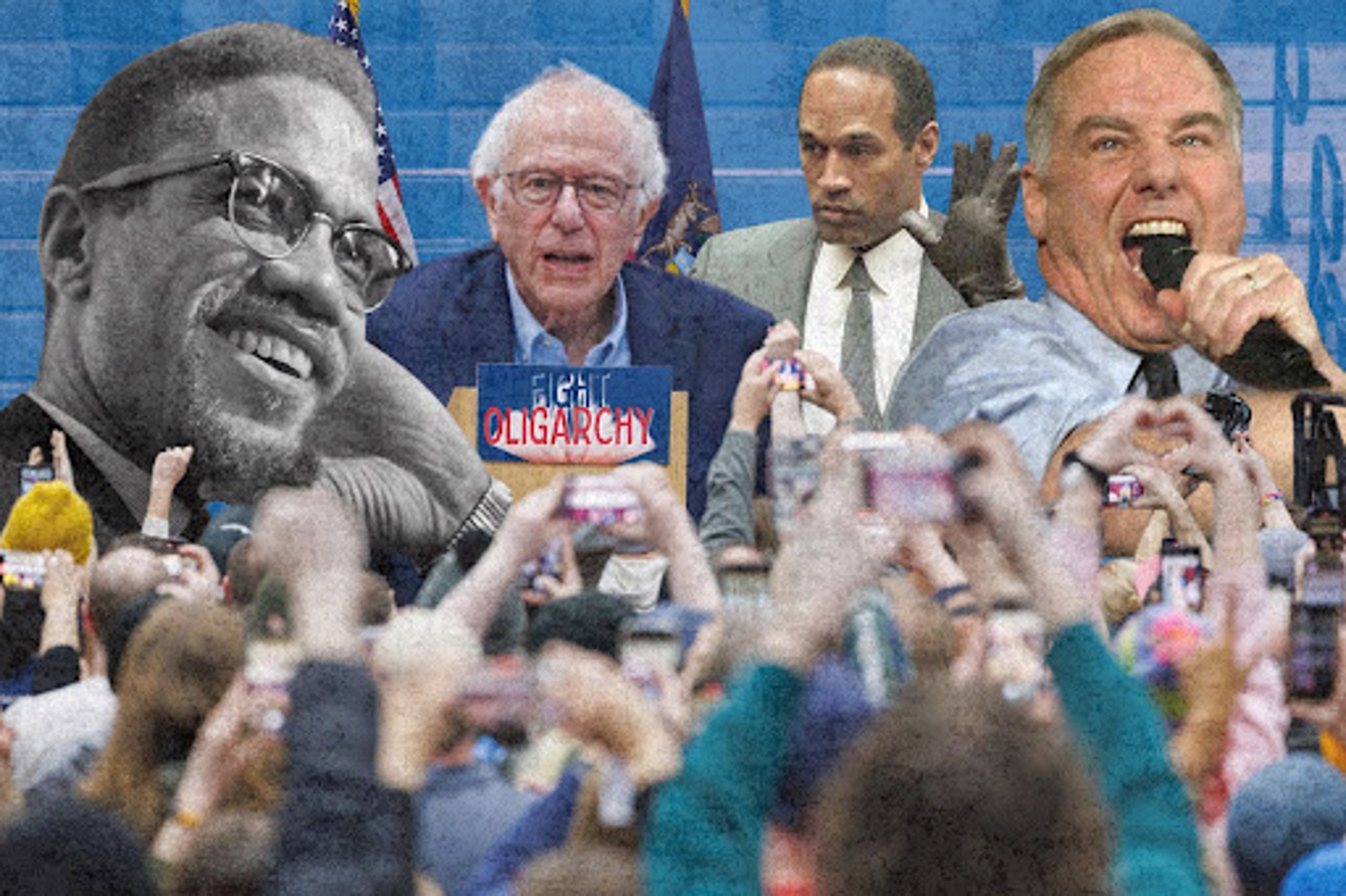
When thinking of crazy politicians, we have to think of presidents like the sword-brandishing early Democrat-populist Andrew Jackson, or the trust-busting “big stick” wielding Theodore Roosevelt, or even the genuinely insane Civil Rights personality Lyndon B. Johnson. We have to recall the memory of the fervently passionate socialist they called “Kingfisher” Huey Long, the silver-fixated zealous populist William Jennings Bryan, and the intensely paranoid anti-Communist Joseph McCarthy. These men were not remembered as professional politicians, ever. Instead, these crazy politicians advanced their political initiatives while pairing them with an overly idiosyncratic temperament. Indeed, they were all crazy in different ways, but they were all united in crossing the boundaries set by the stuffy expectations of professionalism.
Politics and the construction of collective, antagonistic identities are constituted by affects, as Mouffe describes. The problem here is that professionalism precludes the very affectual dimension that constitutes politics. The politician can never venture into the heart (the emotional seat) of politics and thus always stays on the surface. Again, it does this via a fake personality, a facade that erects an insurmountable barrier of inauthenticity between the politician and the people. The crazy politician, in contrast, doesn’t overcome this barrier; the politician pierces right through it.
Indeed, Communism necessitates rupture, which must repudiate the whole image of the professional politician and replace it with genuine novelty in the form of a legislator: the crazy politician. The various “passions” that Mouffe describes are not professional in and of themselves. This isn’t to say that the perfect politician can’t embody these passions in their own political work. However, archetypical professionals must wither away if we ever want to embody the kind of affection that truly activated the people to develop in a politically maximal direction.
Maximalism makes sense here: both socialism and communism are extreme ideologies relative to our current political order. Although socialism is on the rise and is much more well-established than communism, both positions are regarded as outlandish to a vast majority of Americans, especially in the liberal-conservative political terrain. Existing deep within a radical bubble, leftists often lose sight of just how peripheral their politics are in reality. But every outsider has to choose how to overcome their marginal existence: they can either imitate what works or dare to reject it all. The revolutionary position is obvious.
What’s so crucial about the affectual is that political support is less a matter of strict rationalism and intellectual argument than of “passionate commitment”. We tend to regard the carefully conservative leader just as highly as the original trailblazer, the chosen representative of our many subject positions. To function as the collective symbol for the inner world of a mass political subject, the lawmaker has to be unbounded by the inhibitive norms and expectations set by the cold, regulatory society of capitalist production. To borrow a Nietzschean concept, we call for the Dionysian side of the dialectic to also “burst forth” from its own margins, since the Apollonian side (order, rationality, organization) is overrepresented in the practice of political professionalism.
Let’s return to the homicide case of O.J. Simpson to both clarify and elaborate on this characterization of the crazy politician. The question we face now: was O.J. Simpson considered a crazy politician, in the most positive sense of the phrase, by the Black community that celebrated his acquittal? The answer: no, not even slightly. O.J. Simpson was regarded as a black celebrity and role model; that much is true, but he was also seen as a figure that conformed to the rules and regulations of white society a little too closely. Simpson’s racial existence can be expressed as a subtle differentiation: he was not a Black Man, but a Man who happened to be Black. This self-perception becomes doubly apparent when we remember his famous response to being told he was black: that he’s “not Black, he’s O.J.” The only response we could offer to this sentiment comes from the wise words of Jay-Z: “Okay.”
If analyzed naively, this self-identification and prioritization of O.J. 's manhood over his own blackness may appear to be rather well-intentioned, as it seems to challenge an anti-black ideology that seeks to drown humanism under a sludge of racialism. But this confuses Simpson’s racial insecurities with the practice of radical humanist freedom. So we shouldn’t go too far down the confused path of apologetics for Simpson, instead reminding ourselves that his view of himself is nothing less than a tragic case of Black erasure, an advanced form born out of O.J. 's profound psychological denialism. This tendency to deny his own Blackness can be described dually as a defense mechanism and a survival tactic, a failure to “come to grips” with reality. I can only assume this was necessary for O.J. to live out a very peaceful, unexamined life.
The Black community's sobriety with Simpson meant that they were under no illusions during their karmic celebration. They did not support Simpson or the murder of Nicole Brown, but rather they supported the symbolic disillusionment with American justice that a free OJ Simpson would forcefully bring to the foreground of culture. Simpson got away with murder, but so did the murderers of Emmet Till. So did the countless white lynch mobs that roamed the South like a perpetual pack of bloodthirsty predators. So did all those “innocent” slave masters, whose centuries-long practices of plantation barbarity are forever lost to the unspoken parts of American history. What is left as the remainder of this destructive system of injustice is ultimately Black affects, epitomized and grounded in the tireless tears, persistent furies, and the endless exhaustion over centuries of white oppression and American hypocrisy. And so the Black subject, reacting justly to the Simpson case, constructed a contingent subject position during the moment of that fateful trial. They identified themselves and their struggle with the not guilty verdict. For the Black community, this political moment clearly represented a thoroughly collective “passionate commitment.”
The call for crazy politicians might strike some readers as idealistic, impractical, unfeasible, or just downright unwise. It may seem unnecessarily roundabout to trek through the O.J. Simpson trial just to say we need to have crazier lawmakers. But luckily for us, our generation was given a living example of an absolutely crazy politician - the 45th and current president, Donald J. Trump. Where do we start? It's been nearly 9 years of increasing madness from Trump. His disintegrating state of mind has been revealed to us largely through the absurd things he says at live events like press conferences or bill signings. Even worse is what he says on social media. His personality is truly baffling - it evades any logical rhyme or reason and escapes prediction.
Trump’s demeanor is berserk - in public statements and debates, his goal is to be the person in the room who lacks the most decorum. His insults against his opponents have taken on a life of their own - Crooked Hillary, Sleepy Joe, Low Energy Jeb, Little Marco, Marjorie Traitor Greene - the list goes on. The man declared that the entire nation of Mexico was “bringing rapists and drug dealers” across the border and didn’t bat an eye. For this, he was elected against the professional Hillary Clinton. When he lost, his supporters stormed the Capitol, while he encouraged chants to hang his own vice president.
Donald Trump repudiates all political common sense. Since emerging as a serious contender for president, he has actively and consistently opposed every form of professionalism. As noted earlier, Trump’s policies are so purposefully outlandish that one has to question whether they are really that bad and if he’s secretly working to undermine the future authority of his very own office. We must remember the forgotten insanity that was the border wall, coupling it with its modern absurd version - the invasion of Greenland. After four years of clean, professional “deliverism” from President Joe Biden, the madman returned to office. Did he taper his insanity? No - Trump got even crazier. He began his new presidency by injecting other deranged sycophants into the government - people like Elon Musk, Stephen Miller, Robert F. Kennedy, and Kash Patel- people who are deranged, at the very least, in the eyes of the non-conservative side of America. His actions and policies are buffoonish - his incessant tariffs, the Big Beautiful Bill, a war with Iran that even his own constituency doesn't want. Trump ordered the kidnapping of the president of Venezuela. This is all proper madness.
This continues to baffle the liberal supporters of classical political decorum, of professionalism in politics. It is because they have an overly rational view of politics. Their awareness of the affectual dimension of collective identification that Mouffe speaks of is minimal at best. I think socialists and communists need not make the same mistake of being confused by crazy politicians and, more generally, by crazy politics. Instead, there is an opportunity to learn from the current administration's effective lunacy. Our future politicians have the opportunity to capture and use this efficacious mania, this hysterical style of representation, to make history. Again, the minimalist and extreme position of communism and socialism is what motivates me to call for crazy politicians.
In the simplest terms, what qualifies a politician as crazy is successful politics combined with a flamboyant personality. The politician has to experience and express a form of subjectivity that encapsulates the construction of the popular will. For this reason, crazy politicians are largely made, not born. Take Abdul El-Sayed as another example. We should consider him a budding crazy politician. On the campaign trail in Michigan, the epidemiologist has recently adopted a tough, take-no-shit, snap-back personality to match his starkly progressive policy proposals.
By barking back at Trump’s anti-Muslim tirade and calling Vance a weirdo, El-Sayed has grown into a fighting dog. It's all working quite well for his campaign, given his rising poll numbers. El-Sayed’s popularity can be understood as a result of his newfound temperament. Through this temperament, El-Sayed is tapping into the popular will. He’s reading the heart of hearts of the masses. He finds that they really do want the opportunity to react to Trump’s insanity directly and cathartically but never get the chance. However, El-Sayed couldn’t have possibly prepared for his new role in advance, save for basic media training. It was Trump and others' blatant racism that forced him into the position of the progressives' prize fighter. El-Sayed is slowly opting for the crazy approach: responding not professionally but scathingly to those racist remarks. This banter cannot come out of thin air. What we are witnessing is the construction of an anti-Trump affect. El-Sayed is the one driving it, building himself up as the fearless progressive foil to Trump’s bitter reactionary craziness.
In El-Sayed's case, it is true that the fight made the dog, and the dog wasn't made to fight. So then how do we “make more dogs?” We have to urge the progressive-socialist wing of the Democratic Party to go crazy! This wing is the true horizon of the democratic revolution within the Party. They must enter into high-profile conflicts and struggles with other political forces (other politicians, political commentators, organizations, journalists, media outlets, influencers). Here they can throw off the yoke of professional politics and actually go on the offensive for a change. After all, professionalism is as defensive as it is totally inert. It will never overcome its own self-necessitated inauthenticity, and so it will never be able to break with itself. Professionalism guides a static world. And even though professionalism is changing, that does not mean it is doing so for the better. The only change we need to track is its slow death.
Ultimately, as communists, we should always encourage the ruptural form, however it appears socially, whether it be political, economic, cultural, etc. As theorists and analysts, our role remains the same as always: we must help carry out any critiques of prevailing social forms by forming new concepts yet subordinating those concepts to their pure function as propaganda. Therefore, the crazy politician is yet another narrative representing a future political break, coming soon on the horizon, but a break at the level of individual politicians and not at that of a class. The theoretical details involved in getting the working class to “lose its collective mind” require analysis beyond the scope of this essay. This may disappoint our historical materialist readers. But we can make a compromise with historical materialism by performing genuine class analysis now, carefully tracing the journey of an emerging popular will before it becomes the heart and soul of a new crazy politician.