
Aug 25, 2026
What is a Subculture? A Reply to E. Day
Subcultures have never been a retreat from politics. They have always been terrain of class struggle, and socialists who forget this abandon some of the richest ground the left has.
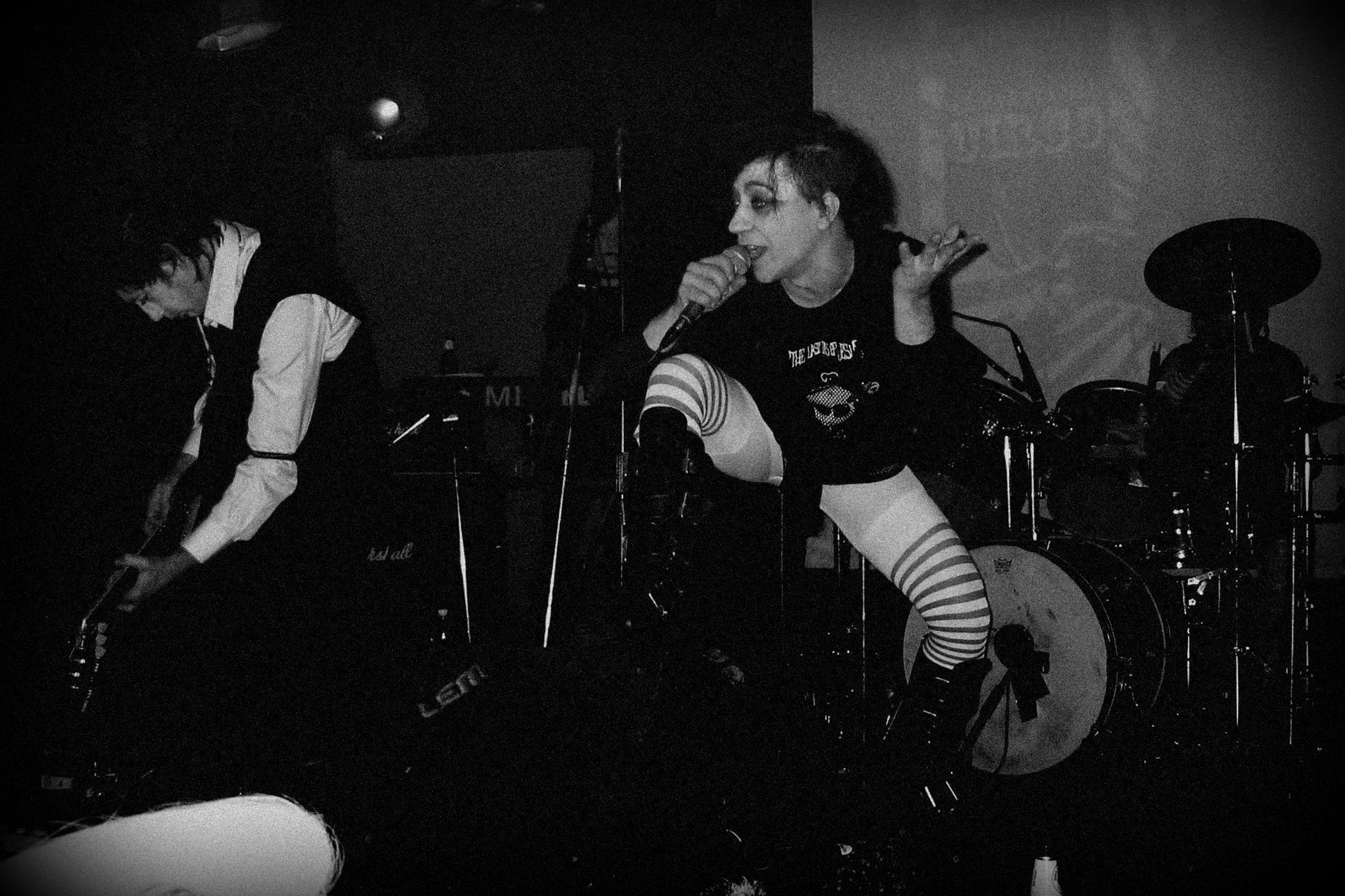
I’d like to thank the writers at Geese Magazine for raising the issue of subcultures and socialist politics, as I think it’s quite important. But there’s a problem – “subculture” has become a stand-in for something else, which is clear in the article: a kind of self-satisfied voluntary marginalization. I don’t want to claim that this is not something real – we all know it when we see it – but the question of subculture is, to me, much bigger than this. And it’s also important for understanding how the internet and digital culture are part of politics. So what exactly is a subculture, and how are we to understand subcultural politics? To begin to answer this question, it’s useful to have a bit of history of the concept.
The notion of a subculture – a distinct culture operating from within, but at a remove, from the dominant culture – originates in urban sociology of the “Chicago School” in the 1920s – arguably a major origin point of what we think of as sociology today. Focused on “social problems” of the time, mainly youth crime and deviance, the Chicago School was notable for arguing that such deviance was a product of social structures, rather than individual pathology. As heterogeneous masses converged on the roiling cauldron of factories, warehouses, and stockyards of the Second City, slums filled up while institutions like schools and the family faltered. Marginalized youth formed their own groups where social needs could more readily be fulfilled. As Fredric Thrasher put it in his classic study The Gang, “Gangs represent the spontaneous effort of boys to create a society for themselves where none adequate to their needs exists” (32). Apparently antisocial behavior – violence, theft, substance abuse – could be understood as practices that provided meaningful structure for participants, means to achieve status and security, in situations where a “normal” life course could not be had. This was further developed by sociologist Albert K. Cohen in his classic Delinquent Boys: The Culture of the Gang. Subcultural practices were not simply different, but pitched against normative values. “That is, the delinquent subculture takes its norms from the larger culture but turns them upside down. The delinquent’s conduct is right, by the standards of his subculture, precisely because it is wrong by the norms of the larger culture” (28). The Chicago School intervention against “psychogenic” theories of deviance thus had three central components: subcultural behavior was learned socially (not a product of psychology); it met universal human needs in ways for people who could not access them according to the normal ways; and it did so often by inverting mainstream values.
This was a quietly radical proposition: that “deviance” did not represent an external threat to mainstream values, or even the failure to adequately propagate them, but rather was a product of those values’ dominance. Cohen was explicit on this: “the problems of adjustment to which the delinquent subculture is a response are determined, in part, by those very values which respectable society holds most sacred. The same value system impinging upon children differently equipped to meet it is instrumental in generating both delinquency and respectability” (137). Rebellion and conformity were not two forks in a road, but a dialectical diptych ensconced within a single social totality.
Naturally, this appealed to Marxists, and it hit like a bomb in the intellectual milieu at the Centre for Contemporary Cultural Studies (CCCS) at the University of Birmingham, when it reached those shores via Outsiders, a 1963 book on deviance by the second-wave Chicago School sociologist Howard Becker. The CCCS had been set up in 1964 to rescue working-class British culture from the immense condescension of UK academia, which then still evaluated literature for its “elevating” qualities. These left populist proclivities blossomed into something more ambitious when Stuart Hall, a New Left Review founder, took over the CCCS a few years in, and pulled it in a more explicitly Marxist direction. This meant a continuation of the project of taking working-class expressive practices seriously, but with a new emphasis on embedding them in an understanding of a conflictual capitalist totality. That is to say, subcultural practices were borne of conflict, and further – they were a form of class struggle in themselves, but one that intellectuals had been ill-equipped to understand.
This was vitally important for Hall and company because it helped address another problem they’d faced as Marxists: the relative paucity of working-class socialist militancy in the postwar period. Britain’s “New Left” phase (the one that gave the New Left Review its name) had kicked off early, with the energies released by the crises of 1956, coalescing around the Campaign for Nuclear Disarmament–only to sputter out a few years later in the wake of the Tories’ surprise victory in the 1959 election. In addition to the crisis for British Communism that Krushchev’s speech and the invasion of Hungary precipitated, postwar affluence, mass media, and new consumer goods had scrambled the prior coordinates for leftwing domestic politics. The traditional working-class culture cherished by cultural studies founders Richard Hoggart and Raymond Williams seemed to be evaporating before their eyes. As Hoggart bitterly put it a chapter from The Uses of Literacy on the contemporary “candy-floss world”: “The hedonistic but passive barbarian who rides in a fifty-horsepower bus for threepence, to see a five-million-dollar film for one-and-eight-pence, is not simply a social oddity; he is a portent” (250).
For Hall and CCCS, this was not a reason to despair, but to study. Working-class culture was fragmenting, but those fragments had much to reveal. Supplementing Chicago School symbolic interactionism with sophisticated strands of newly-translated continental cultural theory – most notably, structural semiotics, Althusserian conceptions of ideology, the theory of hegemony as laid out in Gramsci’s Prison Notebooks – the stylistic contortions of “mods” and “teddy boys” could be understood as a new generation working through the contradictions postwar transformation represented, including the cultural erosion Hoggart bemoaned. As Phil Cohen put it in a pathbreaking 1972 essay:
"The succession of subcultures which this parent culture generated can thus all be considered as so many variations on a central theme—the contradiction at an ideological level, between traditional working class puritanism, and the new ideology of consumption: at an economic level between a part of the socially mobile elite, or a part of the new lumpen. Mods, parkers, skinheads, crombies, all represent in their different ways, an attempt to retrieve some of the socially cohesive elements destroyed in the parent culture, and to combine these with elements selected from other class fractions, symbolising one or other of the options confronting it."
This analysis was sharpened in the work that represented the CCCS’s most influential product: MA student Dick Hebdige’s book Subculture: The Meaning of Style. Published in 1979 as punk reverberated through British society, Hebdige argues that subcultural aesthetic practices are not expressions of a class identity, but a form of class struggle. Punk’s ironic use of safety pins and swastikas, the reliance on slapdash cut-and-paste and reappropriative artistic techniques of bricolage, constituted, in Hebdige’s memorable phrasing, “semiotic guerilla warfare” that assaulted bourgeois norms and “respectable” working class propriety, and carved out a space for counterhegemonic ways of existing. Hebdige found the interracial solidarities among punks and reggae fans to be particularly noteworthy.
CCCS’s subcultural work came in for a critique, much of it from within its own quarters. More empirically minded researchers thought that the politics ascribed to kids dressing provocatively was overheated – after all, if you talked to them, they didn’t have any kind of politics at all. Feminist critics like Angela McRobbie thought the way “subculture” was defined left out a lot of the practices girls and young women engaged in (in fact, the Chicago School originators were often explicit that they were only interested in boys). Others noted that subcultures had social dynamics that seemed less than emancipatory, and more resembled dominant culture in miniature. Sarah Thornton’s research on rave culture pointed out that a lot of what was going on was not really socialism, but niche commodity production. Further, subcultures were not egalitarian. Instead, they produced their own hierarchies of taste and style, which she, riffing on Pierre Bourdieu, called “subcultural capital.”
Yet the concept still has some weight to it, if only because the politics of culture are still complex. At the risk of reductiveness, the CCCS argued that subcultural style was an expression, albeit coded, of working-class politics, and, therefore, part of the raw material of any future socialism. Style was politics, properly understood. Subcultures like punks and mods were inherently political, if not explicitly so, and the moral panics of the time around them attested to it. Elevating the implicit politics of these identities to that explicit level would require political work presumably of a more traditional style, though the CCCS was never clear on what that would be. Hall never thought working class issues would be solved subculturally – that was, of course, why socialism was required. Rather, subcultures demonstrated that, in spite of a resurgent capitalism, working-class antagonism persisted, continued to shape history in new ways, and that it wasn’t worth stomping your feet over it. You had to get with the times.
Those times have changed. The CCCS had to discern class struggle during a time when capitalism was enjoying unprecedented credibility and international communism was reeling. We are in a very different moment from the heyday of the CCCS. Since the global financial crisis of 2007, capitalist accumulation soldiers on; but its legitimacy is crumbling, as are its major institutions: political parties, law enforcement, educational institutions, you name it. Gramsci described this situation well in his work on crisis:
It may be ruled out that immediate economic crises of themselves produce fundamental historic events; they can simply create a terrain more favorable to the dissemination of certain modes of thought, and certain ways of posing and resolving questions involving the entire subsequent development of national life.
It would certainly seem that we are on such favorable terrain, as all manner of fringe and archaic ways of thinking about politics and society converge on the landscape (on our screens, to be precise). Liberal pundits like to refer to this state of affairs as the loss of consensus reality, but it is really nothing more than the crumbling of their hegemonic bloc. Critic and theorist Mark Fisher popularized a saying (attributed either to Slavoj Zizek or Fredric Jameson) that “it is easier to imagine an end to the world than an end to capitalism.” This is what he called “Capitalist Realism”: not only can we no longer pursue alternatives to the present state of things, we can’t even fantasize about them. But a cursory look at your social media feeds will show you people imagining the end of capitalism in all sorts of ways, from perspectives all over the political spectrum. Anti-modern Christian trad lifestyles, neo-fascist pagan tribalism, Fully Automated Luxury Communism, Unabomber-fetishizing primitivism, normie run-of-the-mill social democracy with New York Mets characteristics, and, undoubtedly, red-flag-waving send-in-the-tanks antirevisionist Marxism-Leninism (with or without anime characteristics) – a breathtakingly motley assortment of utopias and dystopias are constructed, compared, and debated through memes, AI slop, YouTube videos, and, of course, long pointless arguments on forums and social media. Each has a set of unique signifiers: significant objects, pet theorists, cherished manifestos, logos, flags, and so on. They often require some kind of insider knowledge to understand – in fact, if academic research on memes has one consistent argument, it is that memes create boundaries between those who get them and those who, as the meme goes, require context.
What all this begins to look like is very similar to an online version of the subcultures the CCCS analyzed a generation ago, but with a twist. The CCCS argument was that the politics of a subculture could be discerned through their style, the aesthetic lines in the sand they drew with the mainstream. In online politics spaces, politics becomes part of style. You proudly flaunt your flag emojis, your hammer-and-sickle unicode, partake (ironically – or?) in the Maoist Standard English spelling of “Amerikkka” to mark yourself as part of a group. Maybe you even do a bit of cosplay, or even LARPing at a demonstration. You relentlessly attack the minor ideological deviations to your right and left, and you absolutely, positively distinguish yourself from liberalism, the dominant “parent culture” of American politics. It hardly matters if you’re a goth or a punk – you could be a Siegepilled neofascist goth or an AK-packing Gonzaloist goth. What’s more important is how you construct and categorize your political identity through a careful parsing of political distinctions: reform or revolution? Councils or party? Do you uphold the righteousness of the Democratic People’s Republic of Korea? You can even fill in any number of online surveys that offer to categorize and chart your flavor of communism for you.
Needless to say, this curious inversion, by which subcultures become explicitly about politics, and politics become part of an aesthetic, has something to do with the internet. It’s become somewhat trite to blame everything that seems wrong about culture and politics on social media, despite all the truth in that statement. But we also shouldn’t ignore that politics is a highly profitable, and increasingly dominant, part of our media landscape. During the 2024 election cycle, almost $16 billion dollars was spent, and the vast majority of that was on advertising and other methods to garner media attention, like rallies. To compare, that year Coca-Cola spent around $5 billion on marketing and advertising globally. Our culture is increasingly saturated with politics, not in the rarefied semiotic way the CCCS discussed, but in the mundane sense of election campaigns sucking up a massive share of our attention. Ultimately, here I have to do the annoying academic thing and say “more research is needed,” as that’s what I’m currently researching – hopefully I’ll have it all sorted out in another year or two. Part of this research is also on the kind of sectarian communist politics that Day denounces as useless, so another plea for forgiveness for not adequately addressing that.
So, instead of a strong diagnosis, I want to conclude with some observations on the relationship of subcultures and socialist politics. As the CCCS emphasized, subcultures are here, and so they are part of our politics, including socialist politics. I’m tempted to emphasize especially socialist politics. If you’re a Marxist, you’re part of a project that, to a great extent, is dedicated to mastering esoteric jargon and textual references obscure to outsiders but deeply resonant for insiders. Our history is one of intense disagreement, philosophical hair-splitting, and organizational division based on issues whose stakes often make little sense to most people, and even to many of us in retrospect. I’ll admit that when I read Marx’s critique of the Gotha Program, I think that, in places, he’s pouring it on a bit thick. And as Marxists we are still extremely marginal in the U.S. political landscape, perhaps more marginal than we have ever been. We might think of it like the first-gen Chicago School sociologists: our marginality is not chosen, but produced through the institutional structures of American society, which to a great extent were designed to limit political and economic democracy. We might even take a bit of pride in that marginalization, at least in quieter moments.
But of course we aspire to something much bigger than debating the minutiae of value theory amongst ourselves in musty church basements. We have a world to win. Many of the organizations throughout history who shared this goal, and came closest to realizing it, understood the value of creating a culture independent of the mainstream. The German SPD created an entire socialist lifeworld, with cycling and boxing clubs (and, of course, reading and study groups) separate from the state and bourgeois society. In the Netherlands, where I currently live, the entire pre-war society was “pillarized,” with socialists possessing their own media outlets, schools, and social life, with limited overlap with Catholic and Protestant pillars. Anton Jaeger even evinces a bit of nostalgia for this in Hyperpolitics. Say what you will about never hanging out with churchgoers, but at least it was a social institution! In one of the more evocative passages on the relevance of culture to socialist politics, Vivienne Gornick, in her book on the CPUSA, recalls that many members – they referred to them as “our people” – were already cast out of the mainstream. She writes:
These people had no external nationhood; nothing in the cultures they had left, or the one to which they had come, had given them anything but a humiliating sense of outsidedness. The only nationhood to which they had attained was the nationhood inside their minds: the nationhood of the international working class. And indeed, a nation it was—complete with a sense of family, culture, religion, social mores, political institutions.
We shouldn’t let our eagerness for mass presence neglect the ways movements build, nor the appeal to many Americans for something different. A good deal of the energy for anticapitalist politics is incubated precisely in subcultural spaces, whether online or off. Which leftist today has never been to a punk show, has not formed passionate attachments to niche art forms? Which leftist today came to their beliefs independent of anything they saw online? How many of today’s communists travel on a path that began with memes and, from there, to Discord servers? And even to grad school? To my mind, it’s less a question of abandoning the investments and ideas we develop in subcultures in an effort to reach the mainstream, and more about continually raising the problem of how to articulate a set of political values that remain unpopular, even nigh unimaginable, to most working people.
There is not one set of answers on how to go about that. As Stuart Hall liked to say, with politics there are no guarantees.