
Aug 3
Zohran Mamdani Needs To Fire Jessica Tisch. But Who Will He Replace Her With?
Mayor Zohran Mamdani’s decision to retain Jessica Tisch as police commissioner remains one of his most controversial decisions.
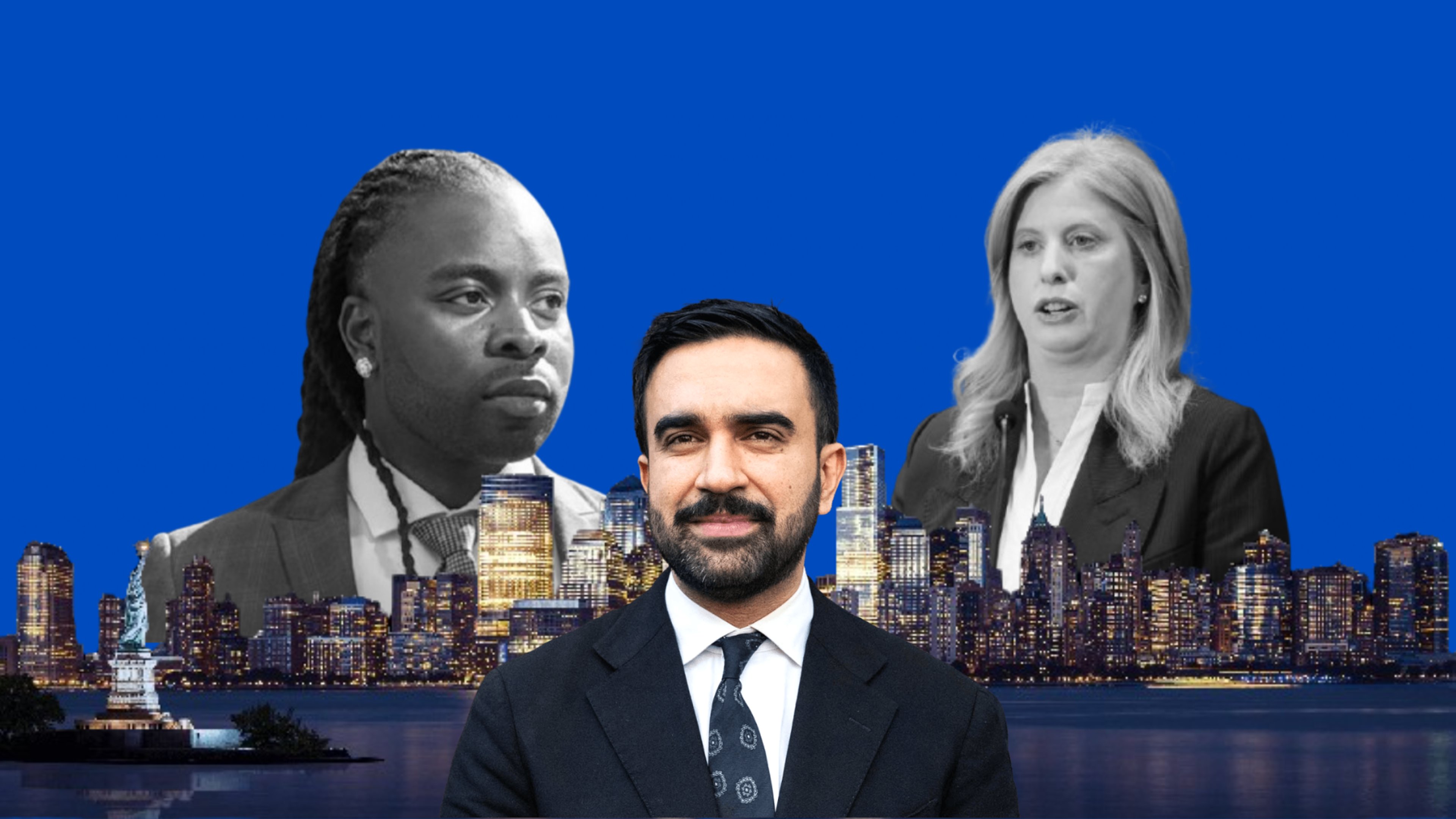
Of all the wide-ranging views in New York City, pollsters must be hard-pressed to find anyone who’s happy about both Zohran Mamdani being Mayor and Jessica Tisch being Police Commissioner.
In January, Tisch became the first NYPD Chief in 60 years to stay on from one Mayoral Administration to another. This unorthodox move was a clear sop to New York’s ruling class, who are wary of Mamdani and his radical credentials. There is a slight overlap between Tisch’s anti-corruption managerial initiatives and Zohran’s professed police reform positions. But, beyond that, the Muslim Socialist Mayor and his Zionist, broken windows-minded Commissioner are at political and philosophic loggerheads.
Among those critical of Tisch but defensive of Mamdani, the common wisdom is that, once a new departmental scandal arises in which Tisch has some level of culpability, she will finally be cut loose. Mamdani’s critics from the left argue that this should happen sooner rather than later. But the question of what progressive choice would replace Tisch remains obscure. Further, it is unclear whether or not Mamdani actually plans to take on NYPD corruption and abuse in any serious way as Mayor. Given recent developments like his reversal on the department’s gang database as well as Mamdani’s slowness to make good on his promise to dissolve the Strategic Response Group (SRG), he may very well leave office without curtailing the NYPD’s inordinate power at all.
Assuming for a moment, however, that the man who once called for the NYPD to be defunded and dismantled still has some desire to change the renegade department, he would, of course, want to do so carefully. The entrenched, centuries-old bureaucracy that allows police officers to harass, assault, and kill New Yorkers with impunity won’t be dislodged overnight. There is little to no precedent for a major city’s police department being overhauled by progressive forces in the 21st century. Transforming it requires a bold, yet patient and historically-minded approach.
We can learn a lot about the challenges the modern police reform effort faces by looking to the past. In the post-WWII era, liberal reformism was a surprisingly prominent strain throughout America’s criminal justice system, particularly in New York. As historian Jarrod Shanahan illustrates in his 2022 book Captives: How Rikers Island Took New York City Hostage, Riker’s Island was initially conceived of by New Deal era progressives intent on retraining New York’s working class “flotsam and jetsam” into being model citizens.
It is also this context that explains the career of California police chief Charles Gain, whose time leading the Oakland and San Francisco police departments in the 1970s provides a number of instructive lessons for those who seek radical changes to policing in New York City today.
Gain’s Early Reforms
Charles Gain began his career as a beat cop in 1940s Oakland and recalled feeling “disillusioned by all the police corruption and I hoped to have higher rank and do something about it.” In 1968, over two patient decades later, as Oakland was gripped by tension between its police department and groups like the Black Panther Party, Gain was appointed top cop to ease the turmoil. It would not be an easy task.
Gain began his tenure with a promise to make the Oakland PD, which had become synonymous with the beating and macing of protesters, a “model of due process.” This meant prohibitions on stopping “suspicious” vehicles, arbitrarily breaking up groups of people on street corners and, most divisively, a ban on officers discharging their weapons when not acting in self-defense. One of Chief Gain’s most controversial executive orders, which explicitly barred officers from shooting at fleeing suspects, made Oakland Mayor John Reading “frankly upset.” Reading accused his Police Chief of “capitulating to extremist groups” and giving criminals a "license to burglarize” as he asked the Oakland City Council to overturn Gain’s directive. But, given the discontent from Oakland residents with police violence, which, to this day, often puts civilians in danger, the Council demurred. In the coming years, as police-involved shootings and killings declined, the move proved to be popular, particularly among Black Oaklanders.
From many perspectives, Gain’s work was successful. Four years into his tenure, Donald P. McCullum, head of the Oakland NAACP, noted a “positive attitude towards the police” in Black neighborhoods. The goodwill between Gain and liberal groups like the NAACP, of which he was a member, was not shared by the Black Panthers, whose sometimes bloody confrontations with the OPD continued under Gain. Chief Gain criticized the Panthers for inciting violence, but exacted zero tolerance when two of his own men opened fire on Black Panther headquarters one night while off-duty and drunk. Gain fired and charged the officers, deeply alienating his subordinates who gave their Chief an overwhelming vote of “no confidence.” These real changes played into a sense among Oakland police officers that Chief Gain spent more time talking to civil rights and community groups than he did with them.
The reformer was undeterred. He upped the time recruits spent in police-community relations training from 40-60 hours to 159. These sessions taught budding officers about “the city, its heterogeneous makeup, [and] the fact that we don’t just have one public but many publics” all in service of “producing a more socially aware police officer.” Gain also instituted off-the-record “peer pressure” panels in which aggressive officers faced scrutiny from their colleagues and, in a number of cases, were persuaded to be less punitive. Though a general unease may have persisted among the Oakland PD’s rank and file with their Police Chief’s new-left adjacency, these measures did establish enough trust to win their cooperation.
Perhaps Gain’s most relevant innovation for modern NYC, however, is his introduction of a Family Crisis Intervention Program, which is quite reminiscent of Mamdani's proposed Department of Community Safety. Under this new program, officers dispatched to domestic disputes were instructed not to arrest the belligerent parties but refer them to city agencies. Though it was still officers, and not social workers, who were sent, Gain succeeded in emphasizing de-escalation and reform over punishment and violence in Oakland policing.
Eventually, Oakland’s ‘Charles Gain experiment’ won national plaudits in Newsweek which, in 1972, profiled his “changed force.” Gain was primed to lead an even bigger department. After a few stints across the country in places like Knoxville, where he served as Director of Public Safety, Gain returned to the Bay Area to become undersheriff in San Francisco just as it was getting a new, progressive Mayor: George Moscone.
The “People’s Mayor”
Moscone had been elected in November 1975 in an election that would go on to be compared to Zohran Mamdani’s upset victory 50 years later. After besting conservative Democrat Diane Feinstein in the first round, Moscone went to a runoff against hard-right Catholic Republican John Barbagelata. Barbagelata weaponized then State Senator Moscone’s relationship with the already-notorious Jim Jones and the People’s Temple which, after losing by a narrow 4,400 votes, Barbagelata accused of helping his opponent steal the election.
Mayor Moscone’s mandate was small and his allies on San Francisco’s Board of Supervisors, which included the first openly Gay elected official in California, Harvey Milk, were one seat shy of a majority. Nevertheless, the “People’s Mayor”, as George Moscone became known, was determined to reform city institutions. None were as worthy of change as the San Francisco Police Department, known for its parochial attitudes and aggression towards the city’s growing Queer population.
As it happened, the incumbent police chief, Donald Scott, was retiring. Moscone would have a chance to overhaul the SFPD with a reformer. Mayor Moscone turned to Charles Gain, who, in addition to sharing his progressive views, had led a police department and served on a Presidential commission. With rising street crime and a pending anti-discrimination lawsuit against a police force heavily composed of conservative Irish and Italian men, Gain would have his work cut out for him.
A key part of Gain’s legacy was, with the help of Mayor Moscone, to integrate the SFPD. But he is also remembered in San Francisco for aesthetic changes of a different kind. In keeping with his “sociological” approach towards policing, Chief Gain repainted the force’s black and white police cruisers baby blue to seem less intimidating. He also replaced the American flag in his office with a potted plant. In addition to upsetting his officers, these moves contributed to the perception that Gain’s supercilious concerns distracted him from preventing robbery or homicide.
Public safety continued to be a political liability for Mayor Moscone, even after he added cops to public transit and boosted the SFPD’s budget. Eventually, San Francisco’s crime rate did decline, which Moscone eagerly attributed to his and Gain’s policies. In reality, such a connection is rather tenuous, since crime rates rise and fall for myriad, highly variable reasons that can’t be reduced to one Mayor, police chief, or really even one city. Judging from statistics alone, Chief Gain could easily be described as a tough-on-crime conservative. By the end of his tenure leading the SFPD, not only had violent crime gone down but the rates of arrest and felony conviction had both gone up. In 1978, after Proposition 13 left municipalities like San Francisco with less revenue from property taxes, Gain lamented that he had too few cops on the beat. Even critics like Board of Supervisors President Quentin Kopp, who ran for Mayor on an explicitly anti-Gain platform, conceded that the hippy-friendly policeman had been “aggressive” against crime.
Charles Gain’s real transgression was not being too lenient on crime but trying to change San Francisco’s policing culture. Before his appointment, the SFPD devoted an inordinate amount of time to entrapping and harassing Queer residents of the Castro district. As if ending this practice wasn’t enough, Gain also went out of his way to recruit Queer officers. This, along with Gain’s crackdown on previously overlooked infractions like drinking on the job, horrified the department rank-and-file.
The police union rebuked its Chief with an internal poll registering only 46% support for the reforming crusader. And then things took a darker turn. According to journalist Randy Shilts, by 1977 rumors circulated that a faction in the SFPD was plotting to assassinate Charles Gain and Mayor Moscone. On November 27th 1978, just over a week after the People's Temple mass suicide, disgruntled former Supervisor Dan White entered City Hall and murdered two of his political nemeses, George Moscone and Supervisor Harvey Milk. As the city entered a state of shock, Diane Feinstein, who was next in the line of Mayoral succession as Board of Supervisors President, was sworn in below a ceiling still stained with blood.
Moscone and Milk’s dreams of a radically tolerant as well as social democratic San Francisco were dashed. Chief Gain’s civil rights institutionalism would no longer be encouraged, and would have to contend with a figure later known for flying the Confederate flag to welcome Southern delegates when San Francisco hosted the 1984 DNC. This dynamic of the moderate Mayor Feinstein being stuck with a left-leaning Police Chief serves as a peculiar inversion of Mamdani and Tisch, and was likewise untenable. On May 21st 1979, Dan White was found guilty, not of murder as was widely anticipated, but of manslaughter, thanks to the infamous and absurd “Twinkie defense” which explained White’s actions as the product of a temporary high-fructose corn syrup-induced mania. Everyone in San Francisco to the left of Diane Feinstein was appalled. Queer San Franciscans took to the streets, smashed windows and burned police cars. Apparently, the non-intimidating nature of those baby blue SFPD cruisers rubbed off on the officers themselves when, faced with a crowd of 5,000 angry marchers outside City Hall, they retreated inside to hide from the mob. Moscone’s spirit lived on.
Chief Gain ordered his men to stand their ground, but not attack. Later, however, a renegade group of officers chased protestors through the Castro District with nightsticks, beating them while shouting anti-Gay slurs. Eventually, Gain took control of these officers and ordered them to stand down. Nevertheless, his tenuous legitimacy had taken a serious hit, and Feinstein was given an opening to get rid of him.
Chief Gain would prove harder to dislodge than Feinstein and her allies thought. Though unofficially selected by Mayor Moscone, Gain had to be formally appointed by the San Francisco Police Commission to initially become Chief. Mayor Feinstein would need permission from the very same body to fire Gain. Feinstein privately requested Chief Gain’s dismissal in the summer of 1979, but the five member commission, which included three holdovers from the Moscone era, refused. A few days later, on July 5th, she made the request public in a press conference with a caveat that she did not want Gain to leave until January 1980. The mixed message was widely regarded as a mistake that pleased no one, including SFPD patrolmen, who were bewildered by the waffle. Gain was able to parlay the chaos into a brief public relations coup with a front page photo in the San Francisco Examiner holding his paycheck and a quote “I’m still on the payroll.”
But the commission, faced with public pressure from Mayor Feinstein, succumbed to her wishes. They replaced Gain with Cornelius P. Murphy, a departmental insider who promised to be Gay friendly. The experiment was over.
After Gain: Lessons for NYC
As Gain retired into obscurity, both the Oakland and San Francisco PDs erased his legacy with a return to corruption and disregard for civil liberties. Following his replacement, the Bay Area saw a stark resurgence of aggressive policing resistant to oversight–a problem that continues to haunt it to this day.
So what does Charles Gain’s career tell us about policing in New York City now? Any attempt at reforming the NYPD from the Mamdani administration will be met with contempt and sabotage from NYC’s police union and large sections, if not a majority, of the force they represent. As Gain illustrates, police reformers do have some recourse through disciplinary measures. When he was interim Police Chief in Seattle, Gain implemented a rule terminating officers who lied or refused to participate in departmental investigations. However, as his time in San Francisco shows, there are hard limits on police reformers who don’t have buy-in from a critical mass of the force.
The stories of NYC’s last two progressive Mayors illustrate this conundrum. Although Bill de Blasio absorbed some credit for presiding over the end of “stop and frisk”, he only did so after it was eliminated by a Federal Court and initially only wanted to tweak it. Nevertheless, Mayor de Blasio was attacked constantly by figures from the NYPD and its union, which doxxed one of his children, even though he achieved no meaningful changes to departmental policy. To find a New York Mayor willing to stand up to the police, we have to look further back. The last serious attempt to reform the NYPD was by DSA’s first Mayor of New York City, David Dinkins, elected in 1989, who tried to change the composition of the Police Civilian Complaint Review Board and was met with a riot from off-duty cops led by Rudy Giuliani. Ultimately, Dinkins was able to make the CCRB majority civilian–but it remains an advisory body, yet another reform limited by blue power.
With this history in mind, it wouldn’t be terribly surprising if Mayor Mamdani decides to leave any challenges to the NYPD’s power to a future Socialist Mayor. But to do so would be a major betrayal of his many supporters who have experienced harassment or violence from the NYPD, this writer included.
There’s no denying that Mamdani has a major opportunity to change policing in NYC, thereby influencing cities around the world. It’s an opportunity that may not come again. To take it will be very difficult without a cooperative Police Commissioner, and harder yet without a sizable contingent of cooperative officers. Charles Gain’s obstacles in Oakland largely stemmed from being at odds with the Mayor. In San Francisco, they stemmed from the rank and file viewing him as illegitimate, in part because Gain was the first Chief never to have served in the SFPD. To succeed in reforming the police, Mayor Mamdani must find an ideological ally from within the NYPD’s ranks that remains aligned with his vision of criminal justice. Luckily, such a person does actually exist.
Edwin Raymond: A Replacement for Tisch
In late May, Mayor Mamdani fired scandal-ridden Sheriff Anthony Miranda and replaced him with retired NYPD detective Edwin Raymond. The move received little fanfare but has serious implications.
A Flatbush native, Raymond spent 15 years in the NYPD as a Lieutenant, Sergeant, Detective and Brooklyn North Community Affairs commanding officer. During over half of those years, Raymond was one of the lead plaintiffs in a federal lawsuit against his own police department. As Edwin Raymond and 11 of his fellow officers demonstrated, the NYPD followed an illegal quota system mandating minimum numbers for arrests, tickets, etc. Quotas were banned by NY State in 2010 and are an obvious contributor to harassment and frivolous arrests. Eliminating them for good will require more than legal fiat. It demands bold departmental leadership from someone with a working knowledge of the NYPD, its internal dynamics and incentive structures.
Edwin Raymond’s 2023 book An Inconvenient Cop is a personal memoir as well as a comprehensive review of everything wrong with modern policing. With citations of everyone from Malcolm X and James Baldwin to Alex Vitale and Jean-Michel Basquiat, it is also a very thoughtful look at how policing can be transformed. Inspired by the legendary story of NYPD whistleblower Frank Serpico, Raymond details the process of deciding to record private conversations with superior officers to build a case, all while trying to hold onto his job. As Raymond argues, police reform initiatives are too often concocted by political figures with no working knowledge of policing. They come up with solutions, like the instruction that officers aim for a suspect’s foot or hand–when the real problem, as Raymond identifies, is that cops are shooting too many people to begin with.
A departure from the era of Charles Gain, who counted racial integration of the SFPD as one of his crowning achievements, Edwin Raymond views “cosmetic diversity” as a “weak panacea.” Raymond has seen firsthand that replacing the white ethnic NYPD cops of yore with Black and Brown ones has done little to dislodge the racist ideas embedded in broken windows policing. Nor does “implicit bias training” do much to curb discrimination when the NYPD’s overarching policies are riven with discriminatory logic that officers have little choice but to apply.
Raymond recommends a review of all new and existing departmental policies to root out implicit bias. Such a policy review, along with the rest of Raymond’s proposals, will make some on the Left uneasy. For many in the “Defund the Police” movement, the best we can do short of abolition is to cut police department budgets and redirect the funds to social programs. To try and rework the internal dynamics of police departments has, especially in the 2020s, been considered beyond the Left’s ken.
This is an undoubtedly principled position. Yet, even if we are able to reduce the NYPD’s budget, which is $38 billion less than NYC’s Department of Education, refusing to change the police force itself will leave the NYPD’s most pernicious practices untouched. Maximizing harm reduction, in this case, demands we use the leverage New York’s Mayoralty provides to implement Edwin Raymond’s program. We cannot just defund the police, we must also fundamentally alter their social functions.
In addition to a stronger Civilian Complaint Review Board, more whistleblower protections, and the outsourcing of all internal investigations to external bodies, Raymond advocates a new system of “informed discretion” to replace broken windows. Under such a framework, officers would log the warnings they give for minor infractions into a database for future reference if the suspect reoffends, rather than default to issuing a summons. To ensure that these changes are actually made and sustained, it will require replacing the NYPD’s many notorious “bad apples” with a new crop of what Raymond calls “social justice minded” recruits. This call for new woke officers to replace the current crop is where more discomfort from the Left will inevitably set in. Should we expect Mayor Mamdani to cut a video encouraging DSA members to sign up for officers training school?
Thankfully, there are measures short of such a call. About a month after the 2025 primary, then-Assemblyman Mamdani faced his first serious test as the Democratic nominee: Shane Tamura, a former football player suffering from CTE, entered the NFL’s building and opened fire on a number of people including fatally wounded NYPD Detective Didarul Islam.
The common wisdom among NY politicos was that Mamdani would be unable to navigate the awkward contradiction of being a decarceral leader and addressing the murder of a police officer. Thanks in large part to the shared faith of Mamdani and Islam’s family, they were wrong. Islam’s funeral was attended by a number of NY politicians like Governor Kathy Hochul and Mamdani’s opponents, Andrew Cuomo and Curtis Sliwa. Zohran, who had paid the Islam family a two hour visit the day before, was the only official who stayed behind to join the family in prayer.
Like over a thousand other uniformed NYPD officers, Didarul Islam was Bangladeshi, one of the department’s fastest-growing demographics. Shamsul Haque, who founded the Bangladeshi American Police Association, endorsed Mamdani’s Mayoral campaign, as did the Jamaica Integrated Bangladeshi Officers Network. By drawing from Bangladeshi and other South Asian as well as Muslim immigrants, Mamdani and Raymond could break with the past by ushering in a bloc of new recruits to achieve police reform rather than instrumentalize them for another group’s dehumanization. There is a ready and willing population in New York–not just people like Islam, but countless more working class New Yorkers–who do not want to see violence, harassment, and exemption from consequences in their police force. Mamdani can activate them.
As Sheriff, Edwin Raymond has a boutique assortment of duties including civil order enforcement, cannabis licensing enforcement, evictions, property seizures and tax enforcement. Sheriff Raymond may be able to make progressive changes around the edges of these processes, but with a staff of less than 200, the opportunity to prove his more holistic ideas in practice will be limited.
But it is the fact that he is currently in an executive role that will give Sheriff Raymond the credibility to hopefully take over the NYPD. For this to happen, Mayor Mamdani has to have a genuine desire to replace Tisch with a reformer like Edwin Raymond and not a more neutral figure like Rodney K. Harrison. Rather than search for Mamdani’s true motivations through psychoanalysis, we have to look at the balance of forces in New York City to determine the feasibility of a Raymond appointment. For him to get the nod, Mayor Mamdani must have confidence in the Left’s ability to enact and sustain a police reform agenda. Is NYC-DSA prepared to whip the City Council into giving the CCRB authority to terminate abusive officers? Are liberal reform groups prepared to organize rallies in support of Commissioner Raymond when his policies face inevitable backlash? The answers are in our hands.
One thing is clear: a status quo that pairs the Democratic Socialism of Mamdani with the failed regressive ideologies of Tisch cannot last. For a Left trying to foment the beginnings of a humane world, taking on police power is a necessity. The opportunity to challenge it in a structural way has never been larger in New York City. Mayor Mamdani should look to Edwin Raymond as the one to help him seize it.