
Jul 20, 2026
A Socialist’s Marriage: Commitment against Atomization under Capitalism
Marriage under capitalism has been historically structured as a property relationship hinged on women's submission to men. Socialists are building something else entirely—and the male supremacist right is terrified.
by Carrie S.
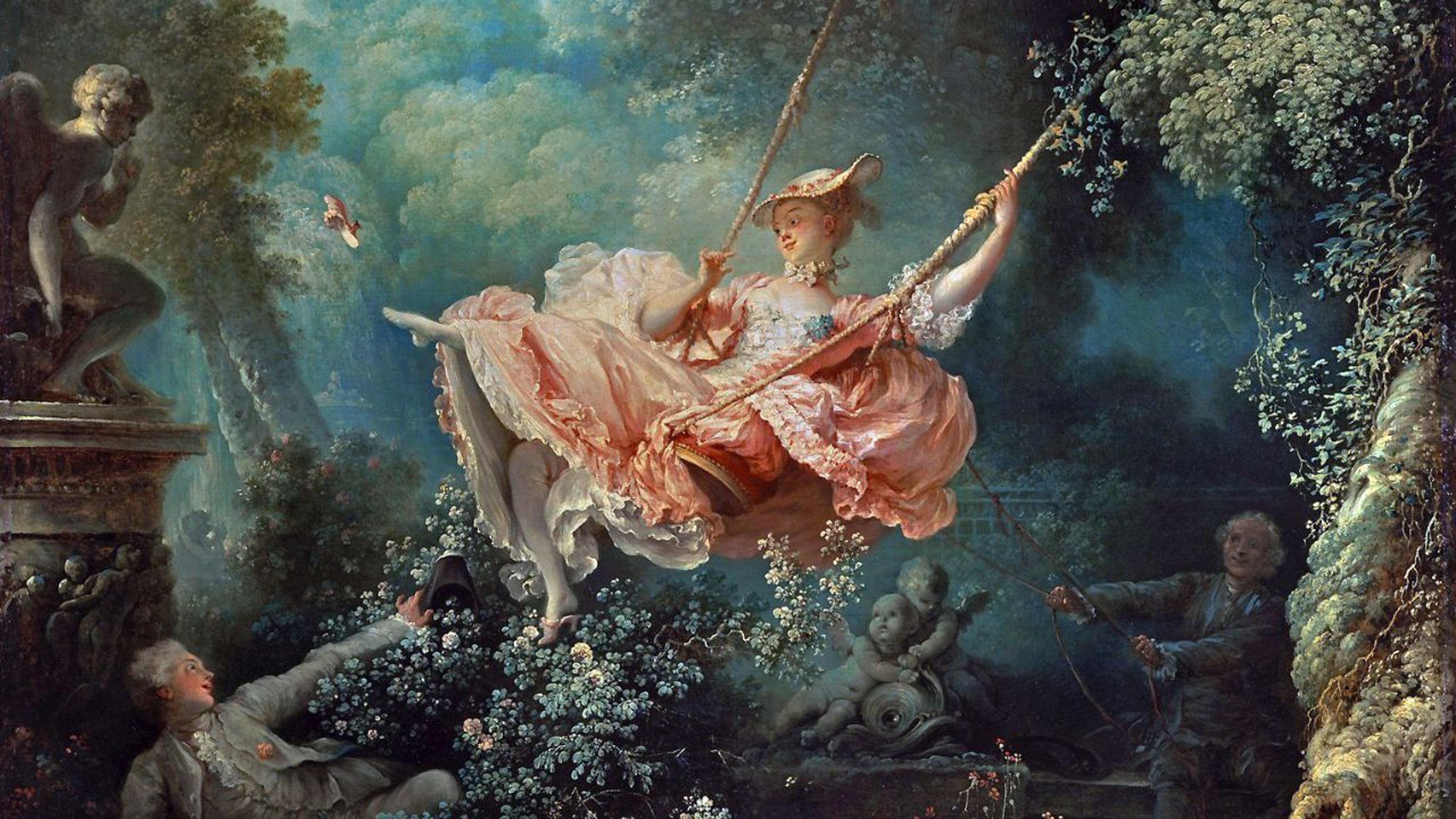
Jean-Honoré Fragonard, The Swing, oil on canvas, 1767
“Thus, what we can conjecture at present about the regulation of sex relationships after the impending effacement of capitalist production is, in the main, of a negative character, limited mostly to what will vanish. But what will be added? That will be settled after a new generation has grown up: a generation of men who never in all their lives have had occasion to purchase a woman’s surrender either with money or with any other means of social power, and of women who have never been obliged to surrender to any man out of any consideration other than that of real love, or to refrain from giving themselves to their beloved for fear of the economic consequences. Once such people appear, they will not care a rap about what we today think they should do. They will establish their own practice and their own public opinion, comfortable therewith, on the practice of each individual—and that’s the end of it.”
—Friedrich Engels, The Origin of Family, Private Property, and State
My partner and I are child-free and married. The former designation is fairly common in our DSA chapter, while the latter is a little more rare. This slightly broader reality is due, no doubt, to a combination of liberal sexual social mores, the relative freedom of child-bearing persons in reproductive planning, and economic pressures making elaborate weddings both desirable and cost prohibitive. In my case, my child-free and therefore ostensibly non-traditional marriage reflects my personal preferences as much as my material conditions: I like having a constant partner, and between working a full-time job, aspiring to pet ownership, and co-running our chapter’s book club, my nervous system can’t take the additional responsibility of a child.
Friedrich Engels and Karl Marx theoretically had conventional home lives that were not dissimilar to the life of a modern stereotypical socialist-communist-anarchist: an opinionated, beanie-bedecked man somewhere between 25 and 55 with Marx in one worn back pocket, Kropotkin nestled by his heart, and a little-seen girlfriend who labors quietly in support back home. Marx met Jenny von Westphalen when they were both in their twenties and had seven children together. Engels had no children (other than his work) and married two sisters in succession: Mary and Lizzie Burns. None of the women in these relationships produced literature of note that I’m aware of, but it’s quite possible their contributions to their partners’ writings went undocumented.
Even so, both Engels and Marx held an unconventional view for their time: they were painfully aware of women’s unfair degradation at the hands of patriarchy (i.e., the State). While their analyses of domestic history from ancient collectives to regulation by modern states are overly simplistic and tend to generalize, the idea that individuals should be allowed to pursue love without the bondage of capital was intrinsic to their joint philosophies.
I do not bring up these people to imply they provide any sort of guidebook for marriage or, even if they did, that it would matter in a modern context. I mention them only to illustrate that the need to address the complexity of marriage in the context of communist philosophy is implied in our foundations as socialists in the Marxist tradition.
Walking by just now, my husband chuckled to see the working title of this article, “A Socialist Marriage.” The notion that either of us could have any input on how people approach their own relationships is indeed amusing. Fortunately, that’s not what I'm doing here. Instead I’m asking simple questions: “How do we weigh our fight for socialism against our relationships? How do we balance justice, fiduciary responsibility, time management, self-care, caregiving, and love? Are those even reasonable questions to ask when the whole world is at stake?”
Obviously, none of these questions are new or limited to leftist discussions. In My Scientology Movie, a documentary starring Louis Theroux, an actor playing David Miscavige, the head of that tenebrous organization, said his ability to channel “righteous anger” made him more convincing than other aspirants to the role. It made me wonder: to David Miscavige, does any challenge to his authority and dogma put the fate of the whole world—many worlds, even, according to his religion—at risk? Quite possibly, if he’s a true believer. Religions throughout history have shared similar all-or-nothing tendencies.
Now here is the problem. It could be argued that that rage, that righteous conviction no matter how twisted, is related to the socialist’s ideological passion against capitalism, and authoritarianism—against everything we perceive as an affront to our shared humanity. The leftist’s desire to spread our ideology burns bright—overwhelmingly so when we are faced with constant and brutal reminders that so many have been seduced by such a dehumanizing system as capitalism. If there is a cause, a righteous cause, that calls to us, nothing else should matter. None of us matter. All that matters is the cause.
That sort of thinking can become dangerous all too quickly. This is why honoring relationships with other humans—socialization, in fact—is essential to the socialist. While I would not say that marriage is itself essential for socialization, it is an extreme example of socialization, for better or worse. A cause, even when righteous, must be carefully weighed in is objective importance for the individual against such relationships lest it become less of a cause and more of an obsession centered on the self’s desire for actualization.
Socialization and Marriage
On a promotional episode of a Warhammer podcast, Robert Evans of Behind the Bastards fame talked about how Warhammer gave him a broader perspective on the horrifying realities of war. This perspective was not developed through grimdark battles but because the veteran across the table scolded the 12-year-old for laughing at actual photos from the Iraq War. More recently, a young person I know went to their first in-person protest with my DSA chapter dressed, as they put it, “in Unibomber cosplay.” I’m sure all of us have similar stories of social gaffes and strange and (presumably) unwanted distinctions within our communities. I remember having to apologize frequently for about a year after COVID lockdown for making inappropriate and hurtful comments purely by accident. It’s readily apparent that without consistent socialization, humans get a little weird.
How do we resist Marx’s fourth consequence of the worker’s estranged labor, “the estrangement of man from man,” in a world where every in-person party or dinner with friends feels like a protest?
Marriage is an extreme form of socialization, of intimacy, no matter the specifics. (Good socialization or a folie à deux depends on the relationship.) One would hope that modern marriages are not about the exchange of property or headship and submission, the dominance of a male. They are more about developing long-term relationships of mutual interdependence with another human. Even if he could not imagine the burgeoning variations of relationship forms between male, female, and nonbinary people we have in modern society, the Engels I quoted at the beginning of this article would have been fascinated to see how theoretically egalitarian marriages play out: compromise, sex, love, responsibility, listening, appreciating. In sum: effort. Just as there are no shortcuts to assuming a baseline of experiences or needs in a truly non-authoritarian socialist group, nothing can be taken for granted in a modern socialist marriage. Every day requires one partner to assess and respond to the needs of the other, to pick up slack where the other falters, and to let the other pick up theirs. Perhaps most importantly, that fact is that one can always leave.
The Right hates this equality in marriage. In direct opposition to our fledgling attempts at un-gendered love and mutual respect, it makes a lot of noise about the importance of the nuclear family, defined as “one husband, one wife, and any biological, adopted, or fostered children.” Just recently, Tennessee signed a resolution designating June “Nuclear Family Month.” The stated intent is to recognize God's “perfect” family unit. The presumption and arrogance of referring to any one type of family unit as perfect is both repugnant and deeply hypocritical, but there is a reason the Right does this. They are aware of the power they have in passing judgment on intimate relations.
Even if you ignore its deliberately hostile parallel with LGBTQIA+ Pride Month in June, the existence of Nuclear Family Month implies that to leave this perfect unit is to be no longer perfect. While LGBTQIA+ Pride Month asserts that you should be proud of who you are intrinsically as a person, Nuclear Family Month indicates you should be proud of forming a specific kind of family. Leaving, say, your abusive or neglectful or simply lazy partner is to break that which is perfect. It is an affront to God and Country. You are shamed and should feel shamed, they say. This state-sanctioned bullying gives abusers more leeway to be cruel, to be neglectful, to spend all their time in groups that perpetuate insurrections and storm town halls while expecting their families to clean their clothes and cook their meals, knowing full well there will likely be no personal repercussions.

Etruscan "Sarcophagus of the Spouses," c. 520 BCE — she reclines beside him, which scandalized the Greeks.
We on the Left have no such abstract ties binding us to our partners. We believe in material conditions. We believe in the painful reality. If a partner spends all our money donating to a local political race or an online group, we have a right to say, “I cannot handle eating only ramen another week.” If our partner loses their job because they needed to chain themselves to a tree to stop a forest from being bulldozed, we can say, “I can’t afford our apartment alone. I’m moving back in with my parents.” The socialist chooses to be bound by moral and social rules based on our shared humanity rather than on vague notions of the perfect, the abstract, and the unapproachable holy. We have responsibilities to those who need us, and when we fail in those responsibilities, those we love can choose to leave. To try and stop them would be to deny their equality with ourselves. Within that context, modern marriage allows us to reframe our material responsibilities to one another as well as our freedom to leave those responsibilities in opposition to the complementarian servitude lauded by reactionaries who force the ideals implied by Nuclear Family Month upon society.
And this further reframes our starting questions. We should not be asking how we balance our Cause with our personal lives, but how much of our Cause is our personal relationships?
Other Ways to Fight
I can already hear responses to this stance. “If you were fighting Nazis, would you be worried about whether or not your spouse approved? No, because you’re fighting Nazis.” “A good spouse would be tying themselves to the tree next to you. Leave them if they don’t approve." “Aren’t you free yourself? Why are you chaining yourself to someone else’s opinions? Lose your chains!”
Well, yes, obviously you should fight Nazis. Obviously, you should save the forest.
To think in terms of all or nothing, however, leads to burnout. It leads to black-and-white morality and David Miscavige and cults again. Or perhaps it boils down to “leave your worldly goods behind and follow me.” History is filled with people who left behind everything to pursue a religion or an ideology. (Famously, Augustine of Hippo abandoned his partner and his son to become Saint Augustine.) I would argue, however, that those people were individualists. Adventurers. They did not view themselves as what Marx would call part of a “species” and therefore were not socialists. Socialism is, at its heart, this principle: we are not individuals; we are one, and we live to support all parts of the self. This includes the family. Not family in the etymological sense of “servants of the household;” rather, family in the very modern sense of people who are bound together by love, compassion, support, and respect. When socialists choose to marry, we should view it as not just a good thing, but also a natural extension and elaboration on our socialist principles.
There are plenty of historical reasons to buck up against this concept. Marriage was often not much of a choice. For the last few millennia, people in Europe and West Asia who were assigned female at birth had to choose between being married or joining a religious collective. Not doing either was to court the risk of poverty or disinheritance. Some dodged these fates, often by merit of wit or luck. Generally, however, marriage was a matter of survival. Those who fled such situations did so knowing it was in defiance of society’s expectations and the flails with which it could punish them. In such dehumanizing circumstances, it is an assertion of one’s humanity to say, “Fuck the social contract. Fuck society. Fuck marriage.”
Today in many places, however, things are a bit different. Relationships are, usually, joined in voluntarily and remained in voluntarily (for now and disregarding the not-insignificant economic pressures capitalist society places on us). Our social contracts, only some of which are codified through legislation, are intended to honor our shared humanity. Marriage in that state is a good, whatever form its specifics take, because it represents the choice of shared commitments and responsibilities. It’s a tangible agreement for humans to care for and take care of one another.
So in that context, as a married, committed person with others who rely on you, should you fight Nazis (i.e., ICE) with every option at your disposal? Should you chain yourself to the tree?
Yes, of course you should. But as socialists, we differentiate ourselves from the Right by accepting the consequences of our actions. There is no obligation for our partner to stay with us. And we have no right to strip our partner of food and housing. We cannot steal from the poor to fight; that would make us no better than a Jan 6-er who expected his wife to have dinner ready after the insurrection. To be a Leftist in a marriage is to accept that your partner does not have to agree with you about a mode of action. They do not have to sacrifice themselves for you. They do not have to support every decision you make. Your partner does not have to be in the same place on a socialist journey to still be your comrade in arms, an ally. Just so, it does not make you a bad Leftist to decide to not tie yourself to the tree today because you need to support a sick partner. You must weigh your responsibilities against the benefit of your actions for the cause. You must ask yourself if the cause would not benefit more from asking your friends to stand with you hand-in-hand in front of the forest than for you to be tied to a single tree. Perhaps you should rally support, disperse both the honor and the risk amongst a group so that you still have a home to go back to at the end of the day. You can be part of a cause instead of an adventure. Isn’t that the whole point of unions?
And yet, at the end of the day, if you still believe that chaining yourself to the tree is the best option, if sacrificing your and your family’s and friends’ comfort for the cause is still that important, then so be it. Sometimes we have no choice at all.
I have already lost one family to the madness of the far right. I have watched propaganda deteriorate the critical thinking skills of people I love over the course of decades. When the far right couldn’t convert me to its sick worldviews, it alienated me from my family by convincing them I was mad. While that process started when I left my mother’s home at sixteen, it was only recently that I heard, “Oh, so you have Trump derangement syndrome,” spoken thousands of miles away by someone who sees me once a year. So when you read my words and say, “Ah, she is a centrist,” I can honestly reply, “No. I have already lost everything for the cause. Everything I have now has been built upon the ashes of my old life, sacrificed for my beliefs.” I am a better person (and better off) for having made the choices I have made. Every day, while I do wonder if perhaps if I’d stayed I’d have been able to save the others, I rest in the knowledge that my choices are my own, and there are many ways to fight for the cause. To lose one battle is not, as some would have you believe, the end of humanity.
Martin Luther King, Jr., Malcom X, Rosa Luxemburg. All were martyred for their cause explicitly because they were able to rally movements behind themselves that lasted far beyond their deaths, not because they were adventurers. Trapped in a prison for most of his life, George Jackson was far more effective in promoting Black Marxist-Leninism than his brother who died while attempting to free the Soledad brothers by taking hostages at the Marin County Civic Center. In these cases, it was not the individual’s sacrifice that propelled the movement forward; it was the boring, constant commitment that generated change which in turn threatened the establishment. It was having infrastructure—family, labor unions, community leaders, supporters and comrades—that made history possible.
By recognizing this lesson in such an intimate social connection as marriage and applying it to our other relationships, to our comrades, we become better socialized humans. (This is not to say marriage is the only way to develop this understanding. In its extremity it is simply a very useful vehicle for understanding. Paulo Freire explored similar themes in Pedagogy of the Oppressed, but not all of us are teachers.) We are better socialists. To fully be socialists working towards what Marx would classify as communism, we must see that we are a unified species. The Right wants us separated. The Right wants us to be one more dead activist, one more broken family.
We are not individuals separated from the world and our relationships. Our work stretches beyond our individual lives, through our networks, down generational lines. Only together, in love that acknowledges our shared humanity, our varieties of weaknesses, needs, and desires, are we strong.