
Jul 14, 2026
Dallas, Transit, Hyperlocal Politics, and Concretization
Peter Y. details the socialist and class struggle in the the DFW metroplex, the fourth-largest in the country.
by Peter Y.
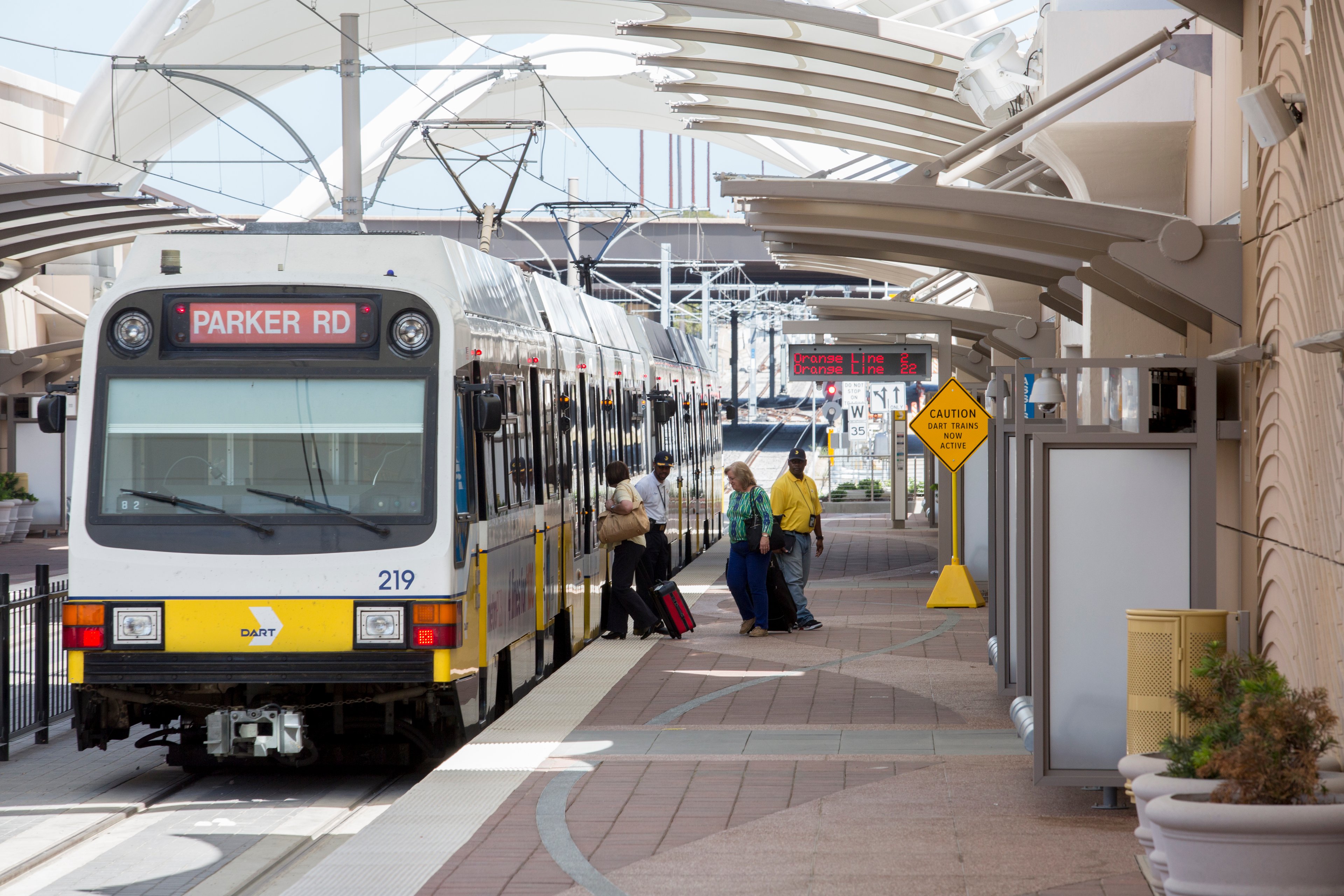
DART Digital Library
Dallas: The Largest City No One Thinks About
It may come as a surprise to many that the Dallas-Fort Worth metro area ranks as the fourth most populous metro area in the nation. It will likely overtake the Chicago metro area for the third spot in the 2030 U.S. census. Dallas has also long been at the center of American fascism and the far right: in 1920, it was estimated that one out of every three men in the city was a member of the Ku Klux Klan. Dubbed the "City of Hate" following the assassination of JFK in 1963, the metro is still at the forefront of American reactionary politics; organizations like Patriot Front, Proud Boys, and Oath Keepers have found the city a fertile ground to organize openly. The Metroplex (a term invented by Dallas elites) has long been home to many of the nation's wealthiest fascists—from the enigmatic McCarthyist and ardent racist H.L. Hunt, who was estimated to be among the world's richest men circa 1948, to modern-day titans of the MAGA movement such as Ray Washburn (married into the Hunt oil fortune), Andrew Beal, Dallas Cowboys owner Jerry Jones, and right-wing funders like Harlan Crow.
These influences permeate through to the weeds of municipal governance. Dallas’ largest claim to relevance in the discourse is as the poster child of suburban sprawl. This design is not tangential, but the center of shaping public consciousness.
What the hell is a polar bear doing in Arlington, TX
In late 2025, the city councils of the suburban towns of Plano, Irving, Farmers Branch, Addison, University Park, and Highland Park voted to put their cities' continued membership and participation in Dallas Area Rapid Transit (DART) to referendum. DART is the largest transit agency in the state of Texas and covers the majority of the urbanised eastern half of the DFW metro area. These suburbs represent about 25%(~650k people) of the population and contribute about 33% of revenues of DART member cities. It is important to note the unique funding mechanisms Texas transit agencies operate under; transit agencies in Texas are directly funded by municipal sales tax; the State does not dedicate funding to them. The sales tax in Texas is capped at 8.25%, of which 6.25% is collected by the state and 2% by municipalities. To join an agency like DART, a municipality must pledge a portion of its sales tax to the Transit Authority for as long as they remain members. DART requires a full 1% from its member cities.
In February of 2026 the DART board came to a settlement with 3 of those 6 member cities to call off withdrawal elections. The 3 smallest municipalities, Addison, University Park, and Highland Park, continued with withdrawal elections scheduled for May 2nd. Of these remaining cities, Highland Park and University Park represent communities that are unique for a socialist organization like DSA to work in. Together these cities are referred to as the Park Cities, they form an enclave within the City of Dallas. They are also home to the highest income census tract in the US. Many of the far right billionaires previously mentioned call these two cities home. They share a school district that was the last district in Texas to integrate in 1975. Many within the DSA chapter were convinced that the residents of this community were at odds with socialist politics by dint of their class position.
Impetus to engage in the Park Cities
While it might seem odd for a socialist organization to spend resources organizing somewhere like the Park Cities, we must look closely at the circumstances and get in the weeds of municipal governance. University Park is home to a large university, Southern Methodist University, whose student body largely lives across town lines in the city of Dallas; their campus bus service is operated by DART. The ultra wealthy communities have a large demand for service workers whose working class composition largely skews toward people who are more economically and socially vulnerable. DART provides an expansive paratransit service to the disabled. In very practical terms there is also a large tax equity dilemma: the growth of and simple geography of DARTs infrastructure investment over the last 43 years. The Park Cities are the only suburbs to have access to all light rail lines within a quarter mile of town borders. These rail lines fall on the Dallas side of the border and will continue to serve the cities even if they vote to pull out paying their share of funding.
The loss of these towns’ revenue contributions would impact the rides of folks across the Metroplex. It was important for our local chapter not to leave this issue without a voice, we did not see the traditional political parties organizing on this issue. Outside a handful of small transit advocacy organizations and small democratic party clubs, there was no one to carry the flame.
Overview of an Issue Campaign
Our campaign structure wasn't unique. We targeted specific groups and relied on our volunteer network—our single greatest advantage. The meat and potatoes of the campaign centered around door knocking, turning out speakers to city councils, engaging with media, and reaching out to local advocacy groups and Democratic clubs. We attempted to work with the ATU local on this issue, but with limited success.
Opposition in the Park Cities stemmed from a 501c4/state PAC/dark money organization: The Highland Park Community League. This organization has endorsed every city council member and mayor that has been elected in the Town of Highland Park for the last 50 years. It is backed by several of the community's billionaires, including Ray Washburne. We knew from the start we couldn't match their ad spend in newspapers or digital, but like any astroturfed operation, they had virtually no ground game.
In January, we engaged with a loose coalition consisting of Democratic clubs, issue advocacy groups, unions, and lobbying groups. It was immediately apparent that they could not self organize a campaign. The coalition could not decide on a messaging app to do basic communication without an hour of deliberation.
Texas municipal elections largely take place on off-cycle dates. To illustrate, the general primary for federal and state office occurred on March 3rd of this year and saw 24% voter turnout, which was a record for a modern midterm in the state. The municipal elections occurred on May 2nd of this year; these elections see turnout percentages from 3-8%. Hyper-localized turnout spikes do occur, however—typically around school board bonds and other high-stakes local referenda.
For this campaign we knocked 4,000 doors in the Park Cities and Addison, translating to about 10,000 contacts. We found the most engagement from working with the Park Cities area Democrats, and retired civic leaders in Addison. We won the election in both Addison and University Park. Addison was a landslide. In University Park on the other hand, we won by a mere 201 votes.
Reflections
The DFW metroplex does not have a particularly robust left-wing presence. The most progressive congressperson in the metro was Jasmine Crockett. Her voting record in congress placed her as one of the most conservative members of the “Progressive” caucus. She is an ardent zionist and stooge of the crypto lobby.
I am not opposed to DSA's party surrogate strategy or the realignment project, but a blanket approach for an organization this divided is premature. More to the point: DFW's progressive space is such a void that we face unique opportunities. I believe that in a place like DFW, our main strategy should revolve around identifying areas of political rupture that cannot or will not be resolved by the existing political structures. It is not to tail the existing party but to loudly declare what socialist governance is and stands for.
I do not say this as a critique of the party surrogate strategy, but rather as an extension of it. One of our chapter members is running a grassroots campaign in the Democratic primary, with one of the lowest cost per vote in the state. In this heavily gerrymandered Republican district, the local Democratic Party either does not care to or cannot dedicate resources towards running a serious candidate. The member is clearly running on a left-wing policy platform, even when not associating with the socialist identity that DSA candidates use (they are not currently DSA endorsed); their volunteers have been harassed and in one case shot at. How can the party surrogate strategy and socialist identity fit in an area like that? There is clearly an appetite for an anti-Zionist candidate who speaks to the politics of the working-class.
It was our job not to convince people of the viability of a socialist political project, but to show what a socialist political project is. The American polity for a wide range of issues does not need to be told what to believe. It cannot be a central conceit of any campaign to just convince the masses of our righteousness or that they need to see the light. The issue of urban form and transportation are not some subsect of economics. It is at the heart of culture and human interaction. One of the more common refrains we heard from voters was ‘we live in the middle of a city, of course we need a transit system.’ It was not an issue that people need convincing on.
Despite pushback from the traditional Democrats we brought into the campaign, we never shied away from declaring ourselves socialists or naming our work as a socialist project. We had to make clear that the politics of livable cities and a functional urban environment are inherent to the socialist project—not a side project to further party building. Our activity grew out of the struggle that has organically arisen in Dallas. The capital class that has captured politics is completely out of touch with the views of the masses. As socialists, we must identify the lines of struggle and meet them where they are, stating our movement's position clearly.
If this method attracts disillusioned liberal or members of the Democratic Party, good. If it appeals to the Urbanist and Transit nerds, good.