
Jul 13, 2026
DSA’s NPC Votes Against All-Member Polling, Raising the Question: What Does Democracy Look Like?
On Sunday, DSA's National Political Committee voted down an all-member poll on presidential endorsement, potentially delaying it until the August 2027 convention.
by J. Ryder and Mike From PA
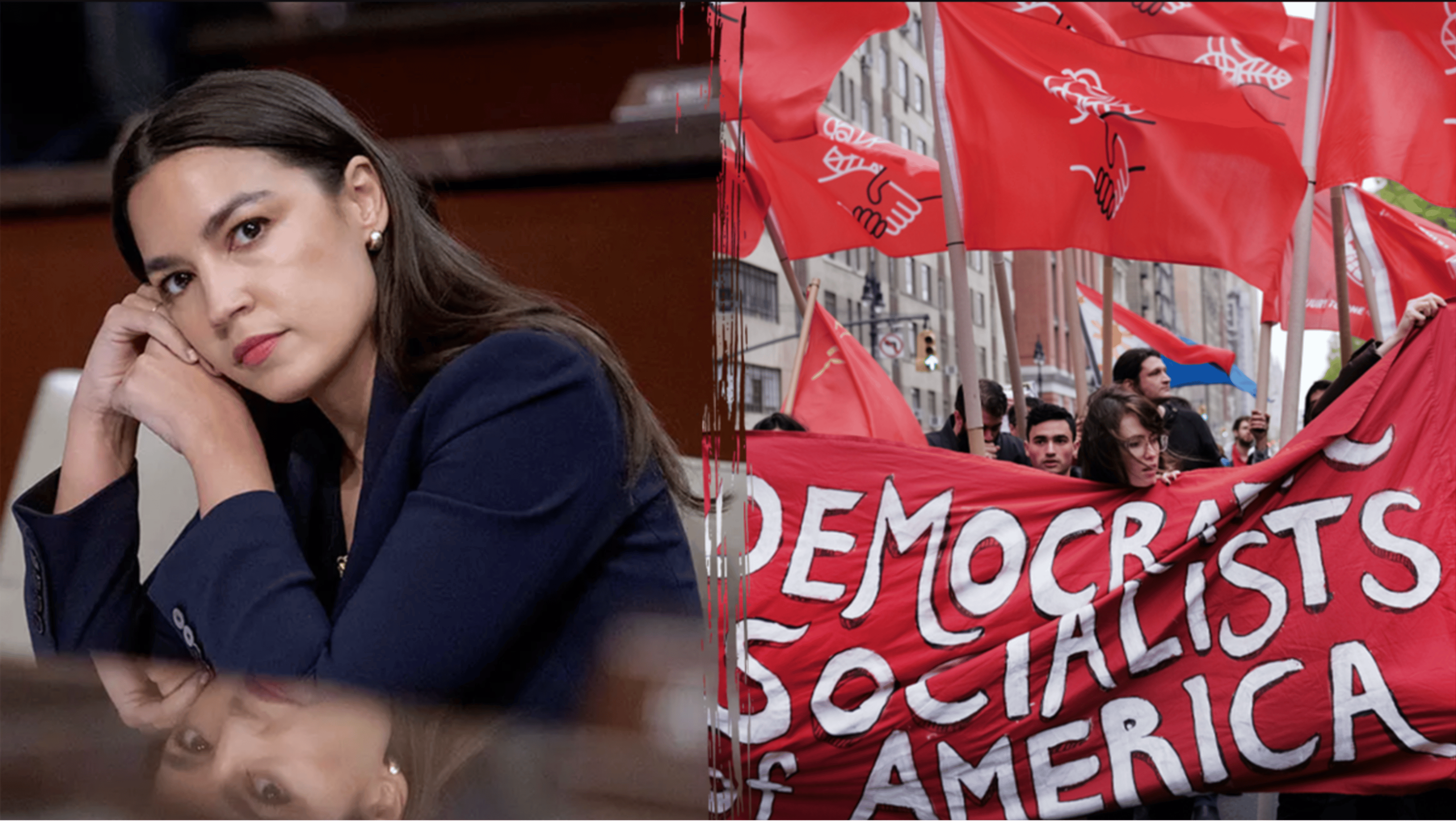
AOC Contemplates Victory while DSA Members March behind our Banner
On Sunday, the Democratic Socialists of America's leading body, the National Political Committee (or NPC), voted against a proposal to send out a non-binding all-member poll to gauge whether the organization's membership supports pursuing a national endorsement in the upcoming presidential election—a question that, in practice, revolves around endorsing the insurgent Democratic congresswoman, DSA member, and 2028 hopeful Alexandria Ocasio-Cortez. Instead, the NPC approved a proposal centered on chapter-level voting that will require additional deliberation before an organizational decision is made.
DSA staff member Michael Grochowski remarked that they have "Never seen this many members registered for an NPC meeting" to observe Sunday's meeting—a measure of how central the endorsement question is to the organization’s political life. Ultimately, the result was a vote to postpone the question, potentially until the August 2027 convention. Many critics have noted that such a delay may cost precious time to mobilize mass energy around AOC’s anticipated presidential run, and that the organization must be prepared ahead of time to endorse her as soon as her campaign formally begins. The poll would have likely led to a strong majority for AOC–which may be exactly why certain elements in the NPC who are opposed to endorsing her campaign also opposed the poll. What could have been an opportunity to involve mass membership and take a proactive, prepared approach to what could be the most important race in DSA’s history instead resulted in widespread membership frustration with the organization’s ability to adequately meet the 2028 moment.
Historically, Presidential candidates have declared their candidacy at the beginning of the year prior to the election. This would mean that if AOC were to declare her candidacy in January or February of 2027, and DSA were to wait until the convention, there would be at least six months between the commencement of her campaign and DSA's formal involvement. Such a gap may result in the introduction of opportunistic political actors to guide the affairs of her campaign in less-than-desirable directions from the perspective of organized socialism, isolating DSA from the political moment. This means that DSA members will be vaguely directed to deliberate internally instead of focusing on utilizing the mass energy from her announcement.
Many prominent DSA members were quick to vent their frustrations on the matter. NYC-DSA Co-Chair Gustavo Gordillo stated on Twitter that:
DSA’s national leadership (the NPC) just voted to overturn our convention & took away rank and file members’ right to vote in an all-member poll on presidential endorsement. The NPC taking away our members’ right to vote while NYC-DSA members send them ~ $2M per year in dues.
Gordillo’s statement is based on the claim that, in 2025, membership decided that the 2028 presidential endorsement process would involve an organization-wide democratic poll, similar to that utilized previously for Bernie Sanders’ 2020 campaign. Critics have since disputed Gordillo’s statement, stating that the all-member poll was not directly implicated in the previous convention decision and that the NPC’s alternative decision-making proposal is in line with the intention made in 2025.
R33, Unite Labor & the Left to Run a Socialist For President and Build the Party passed the 2025 convention 687–471, tasking the NPC with building a left-labor coalition, and states: "If a coalition that DSA is a member of decides to endorse a presidential candidate, the NPC shall hold a national all-member referendum on whether to endorse that candidate." However, the NPC has not built such a coalition, and it has rejected a referendum. The referendum also states: “if there isn't sufficient interest in forming a broad left-labor coalition, DSA should still attempt to endorse a viable and politically aligned presidential candidate.” This has created a divergence of opinion on the ‘true spirit’ of the resolution. Was the referendum a guarantee that all members would decide DSA's presidential endorsement—or merely a mechanism for deciding whether to follow coalition partners who had already endorsed?
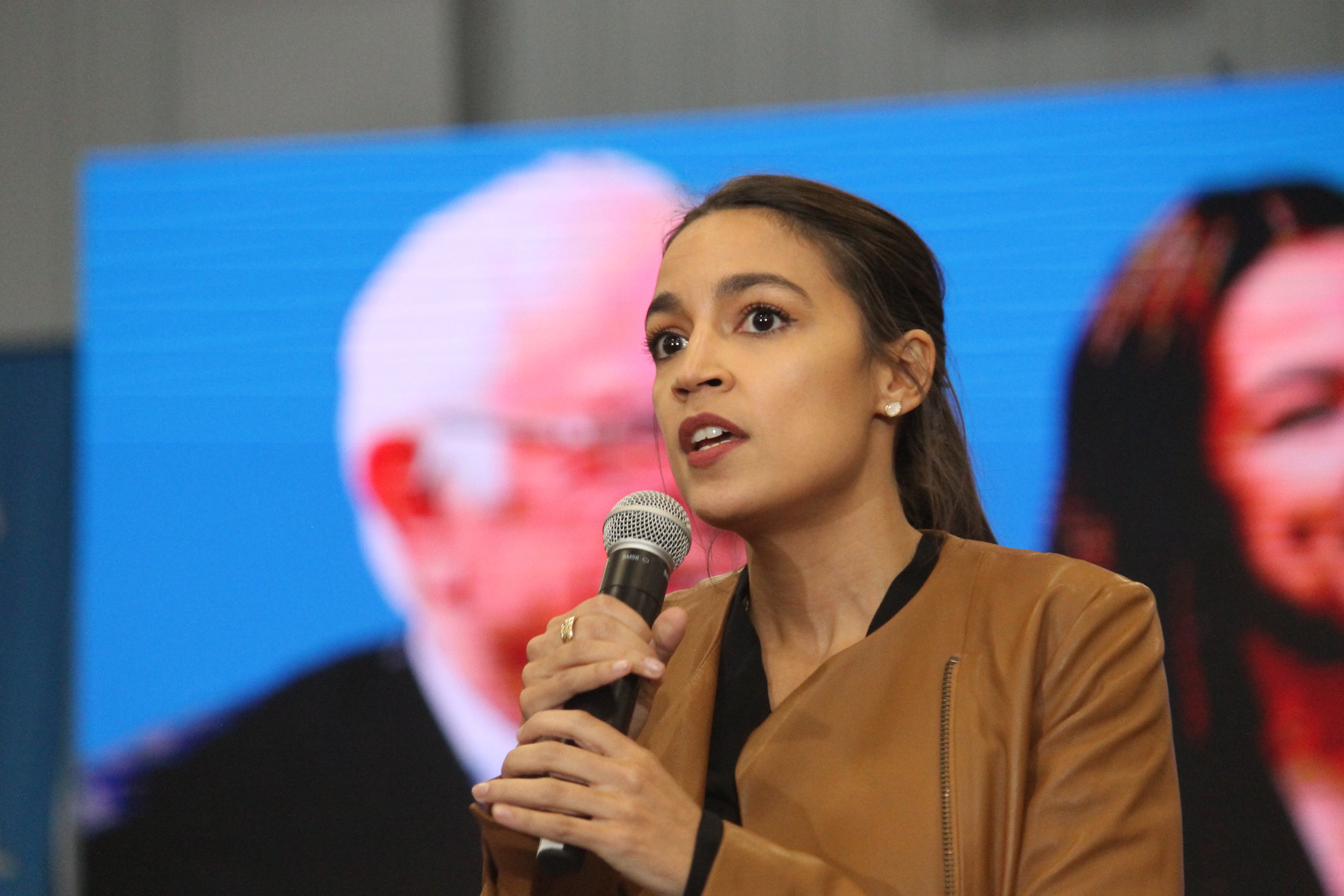
Rep. Alexandria Ocasio-Cortez speaking to attendees at a rally for Bernie Sanders in Council Bluffs, Iowa. - Matt A.J.
This interpretive debate is representative of increasing internal polarization within DSA. The organization continues to find itself with two diverging lines on issues of mass politics and its implications–especially in the wake of the insurgent socialist electoral victories in the 2026 Democratic primaries so far. On one side of the debate, there are those who argue that DSA should retreat and absolve itself of the messiness of mainstream political conflict to protect its organizational reputation among its coalition partners (a point of contention that has only gained traction in the wake of the Graham Platner scandal), while others see meeting people where they’re at as the key to the emergence of socialism as a national phenomenon and cogent political pole.
Proponents of the proposal for an all-member poll argue it was not intended to subvert democratic deliberation or substitute for DSA's constitutional processes, as its detractors have claimed. Rather, they argue it could have served as a consultative instrument; a means of directly asking DSA's now 120,000+ members how they view what could become one of the most strategically consequential electoral questions in the organization's history. Such a poll could have provided national leadership and chapters with a clear picture of political sentiments that exist across the organization as a whole.
Instead, the alternative adopted by the NPC reportedly places greater weight on participation through chapter meetings and local deliberative bodies. Supporters of this model argue that important political decisions must emerge from collective discussion rather than digital plebiscites, and that organizational democracy requires ‘active’ participation over ‘passive’ membership.
But even behind these justifications, it is not difficult to feel the real debate is about endorsing AOC herself—or, in other words, the AOC Question. Most believe that a poll of the membership would result in a strong majority in favor of endorsing AOC, giving those who want to endorse early an unfair advantage in deliberation. Others argue that this is itself part of the democratic process. Those are legitimate concerns, but they raise another question that deserves equal consideration: what kind of organization should DSA aspire to become?
Members of all stripes within the organization are quick to boast of the undeniably impressive growth in membership over the past decade as evidence of DSA and socialism’s renewed appeal in the United States. Yet, much of that membership participates only intermittently in chapter life. Many members are constrained by work schedules, childcare, geography, disability, or other obligations that make regular attendance difficult. Others remain politically engaged outside of DSA but have yet to find a clear pathway into sustained organizational activity.
Additionally, if AOC does decide to run, there is no question that DSA–whether as a formal organization or through its membership–would rally to support her. Regardless of the national organization’s final decision, DSA as a mass political force would be impossible to disentangle from AOC’s campaign. Whatever reservations one may have about AOC, her campaign would represent a historic opportunity for democratic socialism in the United States and would drive an unprecedented expansion of DSA’s already rapidly expanding membership.
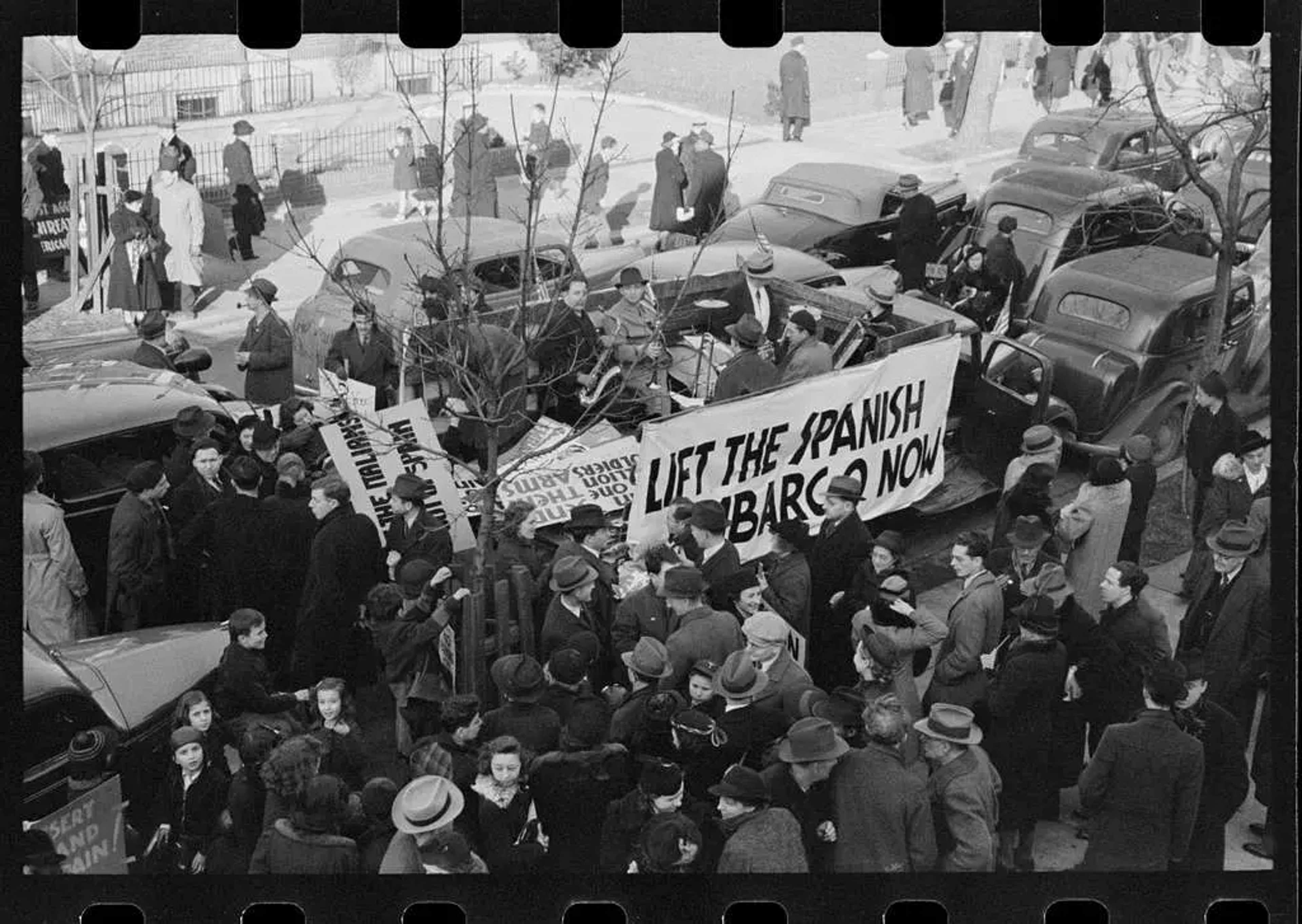
Life the Spanish Embargo Banner in Crowd.
These new members would be joining as a direct result of the campaign and would be excited to organize and canvass for her, representing a key opportunity to develop political participation in the organization and socialist consciousness among the broader public. This campaign would place questions of class politics, labor, public investment, healthcare, housing, and socialist identity before millions of people on a scale America has never previously experienced. But to take maximum advantage of this groundswell, DSA must clarify its approach to the campaign.
The idea that the motion of millions here would benefit DSA should be clear to most everyone, as the history of the organization’s membership growth has indicated. Almost invariably, mass struggle in conjunction with major electoral campaigns and nationally visible figures has driven the organization’s growth and influence. As Gigi G. puts it in ‘We Can’t ‘Onboard’ the Working Class’:
In 2015, DSA had roughly 6,500 members—a notable but marginal organization by any measure. Then, Bernie Sanders ran for president. Sanders did not run an orientation pipeline. He did not run a reading group. He ran a political campaign that named an enemy, proposed a program, and asked millions of people to fight for it. DSA's membership surged. By the time of Trump's election, it had roughly tripled.
In 2018, Alexandria Ocasio-Cortez—a DSA member, running on DSA's endorsement, with DSA volunteers on the doors—defeated a ten-term incumbent in a congressional primary. DSA's membership roughly doubled again, to nearly 60,000. No internal development program in the history of the organization has produced anything within an order of magnitude of that single campaign's effect on membership.
In 2020, Bernie's second run generated another wave. Then, George Floyd was murdered by Minneapolis police, and the largest protest movement in American history erupted across every major city in the country. Chapters across the country mobilized members into the streets, organized mutual aid, and joined coalitions with police accountability demands ranging from abolition, and community control. This was not an "external event" that happened to DSA. It was a political crisis in which DSA members acted and the organization's membership surged past 90,000. The internal facing 100k membership drive, launched in the same period, rode the momentum of a membership already activated by struggle but failed to realize its objective.
From 2020-2024, during the Biden presidency, DSA ran few major campaigns and no galvanizing national fights were underway. So, DSA slowly declined to about 51,000 members in October 2024…
From 2024-25, Trump's second election and Zohran Mamdani's historic mayoral campaign—a DSA campaign from beginning to end—ceased the decline and rapidly pushed DSA past 100,000 members for the first time.
Every major spike in DSA's membership corresponds to a political development and in all cases, a development that DSA itself participated in or created. Every period of decline corresponds to the absence of such developments.
Any critical internalization of this correlation should make clear the burning necessity for DSA to endorse and engage in AOC's presidential run. This internalization has already been made by the membership, who, by any realistic prediction, are vastly in support of her potential campaign. In her 2026 Congressional re-election, she secured a whopping 85% of the vote for endorsement.
Instead, refusing to directly and promptly answer the AOC Question risks giving disproportionate influence to the relatively vocal minority of members who are not in support of an endorsement. Active members are indispensable to any formation, but no mass movement can afford to confuse its activist appendage with its body as a whole. Doing so risks producing decisions that reflect the politics of internal organizational life to a fault while failing to capture the views of the broader socialist constituency that DSA exists to organize in the first place.
The issue is therefore larger than a single endorsement. Does DSA understand democracy primarily as participation within its organizational structures or as an ongoing effort to expand political participation itself in conjunction with mass struggle? A mass-political organization should constantly ask how peripheral members can become more politically engaged, and how those who are not members can be brought into the political struggle. Democratic mechanisms should not simply register the voices of those already in the room; they should help bring more people into it, especially when those people already identify with the cause.
That is what made the all-member poll an attractive proposal. It would not have resolved the endorsement question by itself—nor would it have eliminated the need for debate, organizing, or convention decisions. Rather, it would have represented an important exercise in mass democratic engagement: one that recognized DSA's dues-paying members not as passive supporters on a mailing list but as advanced political actors themselves whose opinions deserve not only to be heard, but also to be implemented.
During this period, all of us should deliberate. But deliberation is not only the formal proceedings of a convention; it is also the ongoing condition of political life. It happens in our chapters, our campaigns, our publications, and our discussions and debates with one another, whether or not we schedule it.
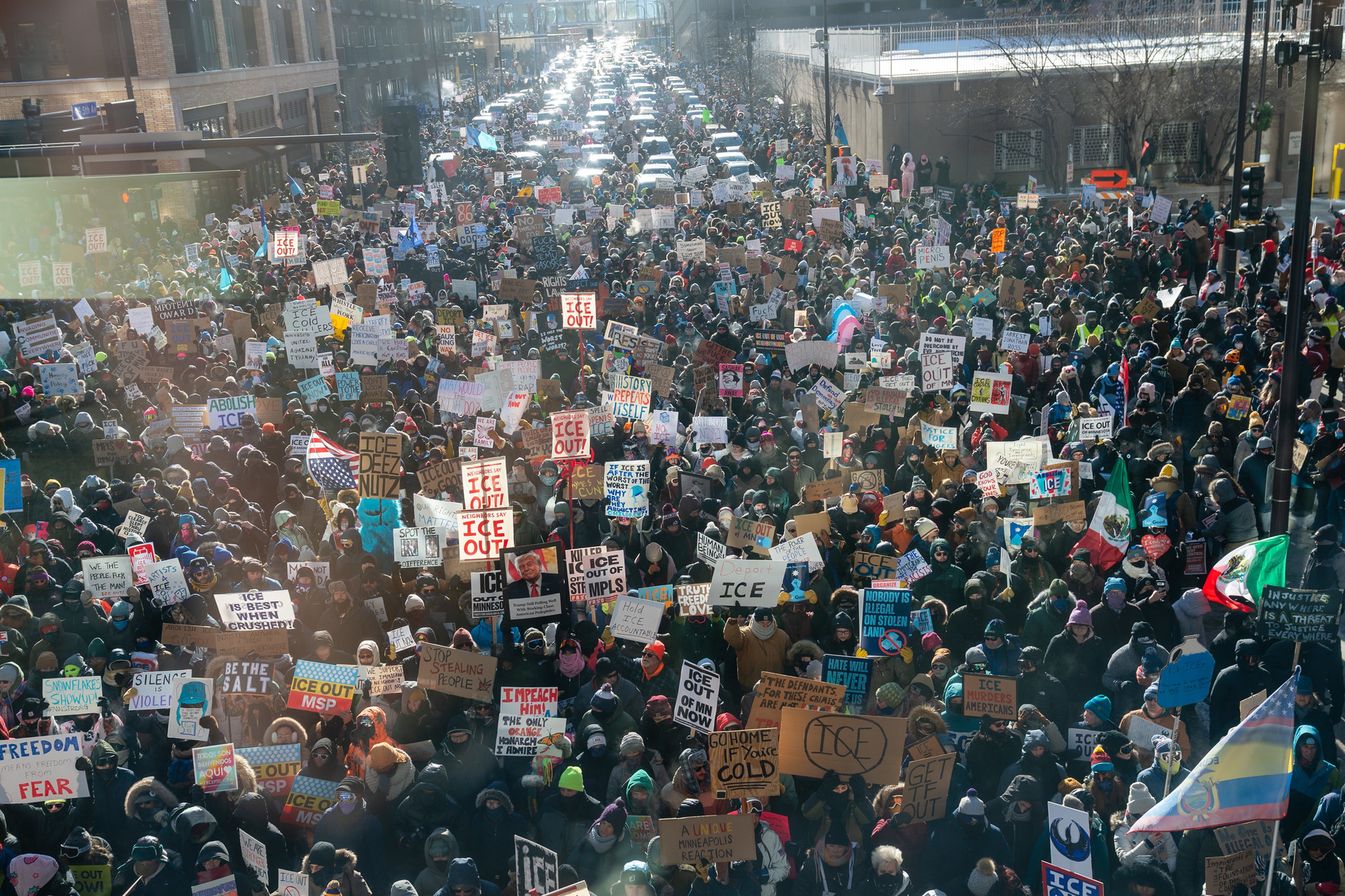
Thousands of protesters march during the Ice Out of MN march in Minneapolis - Lorie Shaull
To "wait" for the August 2027 National DSA Convention to finally deliberate the AOC Question at the highest level would be sheer incompetence at a time when we can ill afford it. It would mean losing months at a time when weeks, or even days, decide everything. These would be months in which the campaign would be built, staffed, and shaped by insiders who are likely not socialists and have no interest in socialism as a broader political project.
To "wait" would be to announce to the millions of people who will be moved by this campaign—who are not on our membership rolls, who have never attended a chapter meeting, who are ready for someone to organize them politically—that we have not yet decided to do so. They are the people we speak for. They are the reason this organization exists.
To "wait" would be to make the convention exactly what active DSA members of every tendency fear: a paper-pushing ratification exercise. The campaign would have been built without us, its members drawn from our own supporters and our own ranks and organized by some other body, long before the August Convention was held. Such a convention would be a wretched, useless thing, capable only of sideline commentary, approval, or disapproval of little consequence to anyone outside of our immediate sphere. By letting this decisive moment pass us by, we would have made it as such ourselves.
We must take care to deliberate and decide on key questions before they escape us: How will we get involved in the coming socialist moment? How will we use the massive wave of populist energy behind a potential AOC campaign to grow our chapters and spread our politics? The period in the lead-up to the campaign also provides an opportunity to prepare hundreds of socialist candidates for the down-ballot races. If AOC runs, it will certainly be one of the most significant opportunities yet for radical and genuinely progressive candidates to be elected to Congress and act as real “tribunes of the people.”
As discussions surrounding 2028 continue, the broader strategic question remains unresolved. If DSA seeks to become a genuinely mass socialist organization, its democratic practices must continually expand the circle of participation rather than narrowing it. The strength of a mass organization lies not only in the commitment of its activist core, but also in its capacity to activate those who have not yet found their place within it.