
Nov 17, 2026
Solidarity Forever Forever: In Defense of Socialist Subculture
Socialists shouldn’t be ashamed of their subculture; they should build it into a hegemonic counterculture.
by Daniel C.
This is a response to Death To Subculture: DSA & The Left Must Abandon Dead Traditions.
“In our hands is placed a power greater than their hoarded gold, greater than the might of armies magnified a thousand-fold; we can bring to birth a new world from the ashes of the old, for the Union Makes Us Strong”
Solidarity Forever, Ralph Chaplin.
In 2018, during my first year of undergrad at Western Kentucky University, another longhair stopped me as I walked up a hill to history class. He saw my Industrial Workers of the World T-shirt and, recognizing it as a left-wing subcultural signifier, asked me to join a meeting with some of his friends. While the Maoist Food-Not-Bombs chapter I was introduced to didn't take kindly to my idea of “creating more liberals” by founding a yDSA chapter, my new friend and I did it anyway.
WKU yDSA wasn't very effective; we got very little done, aside from some strike support and the occasional poli-ed meeting. We were young, inexperienced, and very bad at organizing. We had trouble taking one another in good faith; we had trouble distinguishing the personal from the political, and we had trouble merging two subcultures: a subculture of queer southern young adults drawn to us by the fact that we were a welcoming student club in Bowling Green, Kentucky, and a subculture of “radical” straight white men much more experienced with leftygram than mass action. The neuroses unique to these two subcultures created a rather unpleasant but probably familiar-to-this-readership cocktail of backbiting, infighting, arcane ideology, and posturing that was actively detrimental to getting anything done.
I looked like a caricature of a college leftist at the time. I wore a big baggy black Lenin coat and flat caps. I once tried to start a May Day rally of one. I was the college commie, and I achieved very little during those years besides running some supplies to striking UAW workers at the Corvette Plant near the school, getting canceled for not wanting to include the S.C.U.M. manifesto in our yDSA’s reading list, and being “called in” for saying that Black small businesses aren’t revolutionary (I ended up avoiding the social consequences of that one after driving up to Louisville to get tear-gassed during the Breonna Taylor protests).
All of this is to say I know what it means when an organization drinks “saltwater,” as E. Day puts it in “Death to Subculture.” I know how an organization’s practices can actively corrode the development of political power, alienating and putting off the people you’re trying to recruit.
However, what Day doesn’t realize is that the saltwater isn’t subculture: it’s unseriousness. It’s a lack of what Gramsci called for: “Sober, Patient, People” who can speak plainly, follow through on promises, and deliver even a portion of what they say they can. Luckily, through political struggle, unserious, inexperienced people can become serious and experienced. One of my officers at WKU yDSA is now on the yDSA NCC; another led a union drive at the Chicago Starbucks roastery all the way to an election and is now Chicago DSA’s membership coordinator. I work as an organizer with a teacher’s union. I don’t wear flat caps anymore.
Day’s article mistakenly blames a broken engine on a bad paint job. Subculture can help similar people find each other through shared symbolism; it can help bind groups together through song, but it cannot make an organization or organizers effective or ineffective. A repulsive subculture is a symptom of repulsive organizational practices or personally repulsive organizers. An appealing subculture results from welcoming, effective organizational practices and sober, patient, serious organizers.
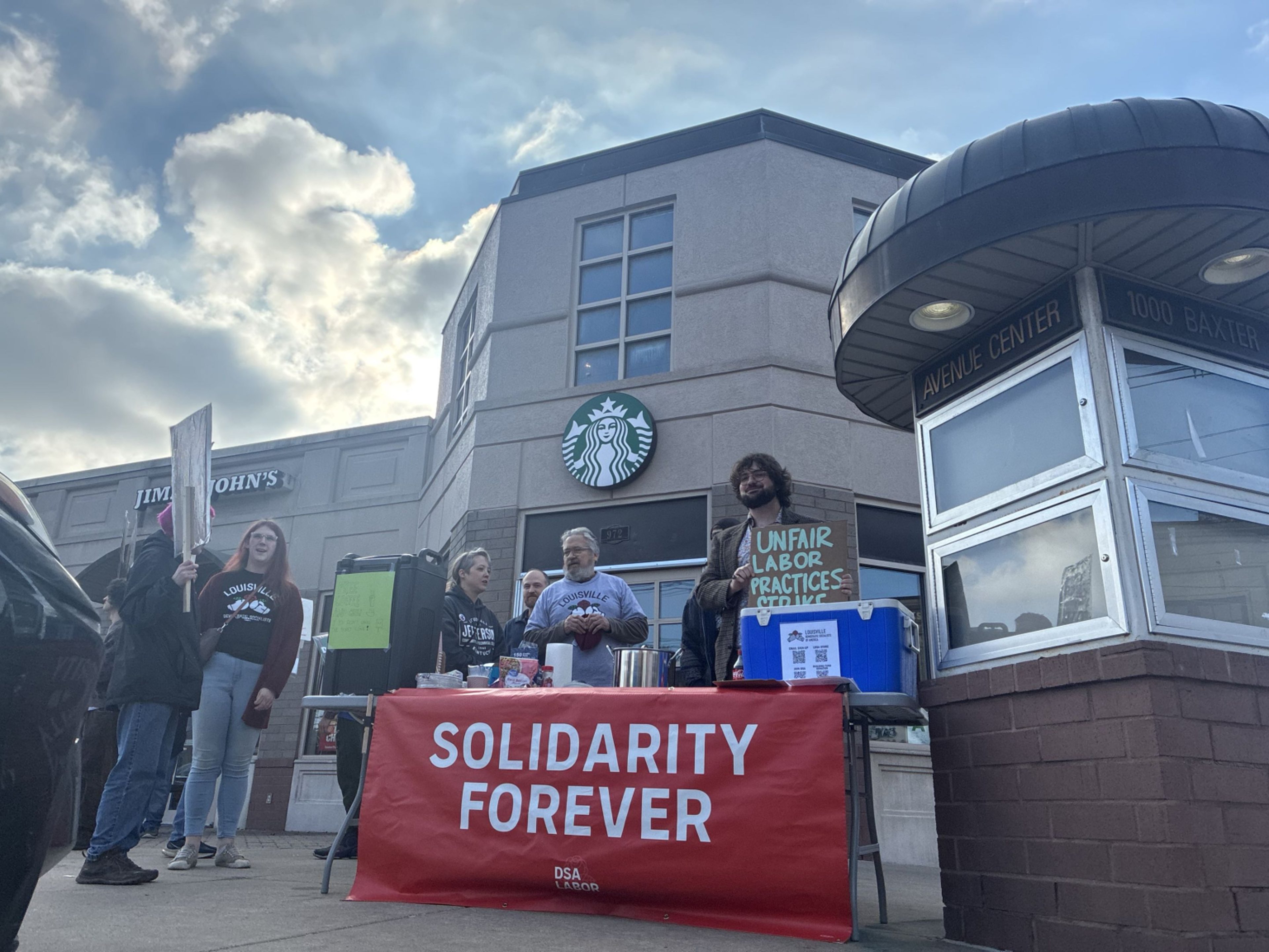
The left’s symbolism is only as good as the people introducing you to it. “Solidarity Forever” has a different energy when sung after a triumphant supermajority strike than when written on the back of an agenda at a poorly attended meeting. Earnest passion can feel cringe when you don’t believe in your ability, or the ability of the people you’re singing with, to follow through on that passion. Left-wing symbolism loses its affective force in alienating and sectarian spaces, spaces divorced from the mass struggle where that symbolism was first forged.
There are absolutely elements of the left’s subculture that need to be terminated with extreme prejudice. Our language is often inaccessible, leaving interested fellow travelers confused and overwhelmed. We love to one-up each other intellectually with obscure references and appeals to ideological purity, often with new members in the room, listening in and feeling they could never know enough to speak up. We will ruthlessly tear down “Lib” opinions without paying mind to people's need to belong before they fully believe.
These are the sources of the Left’s marginalization, not our subculture.
Solidarity Forever doesn’t suck; we do.
Day’s article begins with a definition of subculture that’s designed to support the article’s thesis but isn’t an accurate representation of what a subculture actually is: “the ritualistic fetishization of communist/socialist/trade-union political thought, culture, or tradition from centuries past that no longer reflects (or historically has never reflected) the modernity of political subjects.”
No; subcultures are communities of shared symbology, knowledge, and social practices both distinct from and embedded within a larger hegemonic culture. Every practical and geographic realm of human activity has a subculture. Subcultures are subdivisions of what Stuart Hall called “Social Consciousness" that are engaged in an ensemble of relationships with the social realities they emerge from and shape themselves. You cannot intentionally destroy one or intentionally liquidate one into the monoculture. Gatekeepers can capture them, and salesmen can commodify them; new people, ideas, social realities, and relationships with other subcultures can reshape and redefine them–but even intentional, organized effort would struggle to bring “death” to subculture, let alone a magazine article.
This brings us to the “Left’s” subculture specifically. The first question is: what is the American Left? Are we talking about members of explicitly Communist and Socialist organizations? Are we talking about the Online Unorganized Left? Are we talking about the progressive wing of the Democratic Party, radical non-profits, or the trade union movement? The fundamental issue when digging into any of these constituent parts is that they are interlinked personally and symbolically, and that these linkages extend into queer, punk, and broader youth subcultures.
If you take the narrowest possible definition of the Left as organized Socialists, Communists, and Anarchists, you could identify a subcultural crisis and nadir of influence and appeal somewhere between the SDS’s collapse and the Sanders campaign. A period where warring insular Marxist cadre organizations spoke to themselves, each other, and no one else in the dead language of the old left, where anarchists debated lifestylism ad infinitum, and Socialists spent their time avoiding the other two in nonprofits and unions, trying and failing to piece together a labor left without the left. It was a period where we were swilling seawater and shrinking.
That period is now over; the American left has taken decisive steps out of marginality toward influence and relevance. These steps resulted from organic changes in the working class's composition and from tactical decisions that leveraged those changes to win power. The American left might have come closer to relevance in 2007 if there had been a democratic mass organization committed to avoiding dead-end third-party campaigns and an amount of downwardly mobile, college-educated workers similar to the 2020s, but ditching Solidarity Forever for John Meyer’s “waiting on the world to change” wouldn’t have done the trick.
Even if abandoning our subculture were possible, it wouldn't let us escape marginality. A wholesale abandonment of symbology inherited from the Old Left and golden age of the trade union movement would be an obvious retreat into self-hatred. We should adapt and modify that symbology to appeal to differing modern demographics. Still, we should never forget the fundamental case we are making: that together the international working class can bring a new world to birth from the ashes of the old.
We will need to hang banners from the Socialist Political Pole we are constructing together, and Solidarity Forever specifically is just the right hymn to sing around it. I use the term hymn deliberately; as Eric Blanc pointed out in his recent controversial article on how Evangelicals organize, important truths are absorbed through “routine, repetition, and ritual.” Across the country, no matter how focused or scattershot a DSA general meeting is, no matter whether the campaigns are accessible and well organized, no matter whether the organizers are sober, patient, and welcoming, I can expect the meeting to end with Solidarity Forever. Because of that, I can expect the first-time attendee, whether they sing along or not, to leave with a basic understanding of who we are and what we are about. Solidarity Forever makes it clear, in easily understood language, that together we are a working-class mass movement forging a new world. Solidarity Forever has gained greater emotional resonance and symbolic force as the Socialist movement reaches a height of influence and power not seen in a hundred years. It would be a pointless blunder to drop it right as it bubbled up out of the people and burst out of our subculture on the night Unionist Troy Jackson defeated fascist collaborator Susan Collins.
DSA’s successes in places like New York City–where we have aligned unions, won elections, and become the de facto nucleus of a workers’ party and counter-hegemonic bloc–do not result from abandoning our left subculture. These successes result from sound strategic and tactical decision-making, intentional recruitment and leadership development, and favorable political and demographic terrain. The path towards expanding DSA outside of our core of largely white, downwardly mobile renters does not run through purposeful modifications to our symbols or culture. Positive changes on those fronts flow from organizational practices, resulting in a broader, more representative, more inclusive, and more effective hegemonic left-wing counterculture.
This broader left counterculture will incorporate the music, rituals, practices, and language of the differing subcultures in its orbit: Queer, Punk, Immigrant, Labor, Academic African-American, and a myriad of others. While there is always the risk of collapsing into the old, sectarian, off-putting left-wing subculture, there is also the opportunity to cohere a counterculture whose universalism and pluralism make it more than the sum of its parts. This process of coherence or collapse will result from political victory or defeat, leadership development or organizational sclerosis, not conscious choice. For example, DSA-LA didn’t start playing reggaeton and salsa at meetings and parties because it consciously chose to abandon left-wing union ballads, but because it had built a bench of Latino organizers who knew bangers when they heard them, and the resulting playlists contained both. Maybe this is where Day’s article hits on something valuable: we must be flexible and embrace the many organizers who come to our movement on their own terms. This doesn’t just apply to politics, but also culture too.
At its worst, a left-wing subculture can be off-putting and alienating; at its best, it can serve as a through line for a new counterculture, uniting the pro-social, community-building aspects of the subaltern subcultures drawn to it by the promise of a new world. Whether that promise is taken seriously, and whether that solidarity can last forever, depends on if we can win and whether we welcome the people we want to win over.
If we can, and we are, Solidarity Forever will not ring hollow.