
Aug 7
Sowing the Seeds of Liberation: An Interview with Omowale Adewale
An interview with Omowale Adewale on the Black Panther legacy, the arts, and Black food sovereignty.
by Santeru
A common aphorism used to inform stewardship—be it of the family, the community, or in the political realm—is that the best leaders are good followers. The phrase seeks to uncover a counterintuitive but material dynamic, holding true for many of the leaders who have risen to be representatives of the current American socialist movement. There is often a distinct, authentic inclination towards service that marks those chosen to speak for the People; one that bears sharp contrast to the tendency towards careerism or the thirst for self-glorification that brands the political trajectories of too many of our other public servants.
There is, however, an alternate, more revelatory reading into the adage of the leader as a follower. Taking a step back to assess the larger tradition of American radicalism to uncover a unity between the leader of the present and the follower of the past attunes us to appreciate the ongoing, collective nature of struggle. The modern activist is more effective when keeping in mind the lineage they find themselves in. This lineage has been seeded and watered with the toil and gained experience of those who worked the metaphorical and literal land before us. I, as a comrade and follower of my subject for this interview, learned to walk in the path of this activist tradition. Though begun many years ago, it is still ongoing today and will continue as long as we keep marching.
As a leader, Omowale Adewale frames his path towards founding the annual Black VegFest, set for this August 8th in Brooklyn, NY within the larger tradition of Black radicalism and the struggle for liberation. Here he shares lessons gained from the Black Panther Party and active organization around the Arts and their expression of material struggle, discusses connected branches of international ecosocialism, and lays out the vision behind the upcoming celebration.
Peace, Omowale. Since meeting you as the Executive Director of G.A.ME (Grassroots Artists MovEment) at Hunter College in the early aughts, it was clear you and your cadre were informed by both the Black revolutionary tradition as well as various international liberation movements. As an introduction to the readers of Geese, please let us know a little about the people and movements that have shaped your political outlook and strategies through your history as an organizer.
My mother Cleo Shiver was a former block organizer with the Black Panther Party in Brooklyn between 1969 and 1971. Not to be confused with ancestor Cleo Silvers who was a Black Panther organizer in NYC. My mother was my first inspiration and guide in movement work. The movement had a lot of music. These songs "Free Huey" and "the Murder of Lil Bobby Hutton" made organizers Griots. My mom wouldn't call herself a Griot but she was. She sang a lot of these Panther songs to teach me growing up. There were songs about every Panther who was being harassed and railroaded during COINTELPRO. Organizers were being taught to inform and entertain the community. All of my commitment to Black liberation and practice comes from my mother taking me to community conversations, labor demonstrations, civic campaigns, social justice protests but also school involvement, because my mom was one of those mothers.
Significant analysis and practice has been forged under the leadership of Chairman Omali Yeshitela of the African People's Socialist Party and Uhuru Movement. My introduction to the Uhuru Movement was through M-1 of dead prez who invited me to a meeting in Brooklyn in 2000. Chairman Omali's analysis focuses on empowering the poor working-class. That is day-by-day, brick-by-brick organizing. Some portion of the poor working-class will be attempting to vie for social status and economic hierarchy just as the petty bourgeois class. It is this class that has the purpose and position to internalize the critical importance to lead a revolution. That purpose is to change your current position. That position is what Chairman Omali calls the view of the slave. The view of the slave allows the slave to always reject colonialism. Centuries of bondage and settler colonialism has informed this analysis. There's nothing colonialism can shapeshift into to solve the problems of poor working class Black people.
For the last 16 years, I have been an organizer at the Malcolm X Grassroots Movement (MXGM) focused on food sovereignty and farmland equity. Some of that work was influenced by political prisoners Baba Jalil Muntaqim and Baba Herman Bell. Baba Jalil has discussed his work with Baba Herman at Victory Gardens. Both were freed in 2018 and 2020. It's a miracle we even have them. They have valuable lessons from the Black Power movement. Veteran Black Panther Baba Sadiki "Shep" Olugbala has been a mentor for years, because of his level of high integrity and commitment. Baba Sadiki's eldership is able to share wisdom and receive wisdom. In the 1970's, when Baba Sadiki and his comrades were under siege he was running the Black Panther's Black Community Newspaper for the Bronx and Harlem. He co-leads the campaign to free Kamau Sadiki, the last Black Panther imprisoned in New York. Mama Dequi Kioni Sadiki introduced generations to political prisoner advocacy work. She actively advocates for political prisoners and organizes freedom campaigns on behalf of political prisoners. Mama Dequi's work has helped to bring home her partner Baba Sekou Odinga after being confined for 33 years. Baba Sekou passed away in 2024 but not before leaving a lasting mark on Black life and liberation. It was an honor to learn in brief spurts. I was overjoyed to bring this liberator of Assata Shakur to Black VegFest in 2022. My Brooklyn comrade Mama Sala Cyril centers us in community security. She has served as an invaluable cadre coordinator and teacher in our community for years.
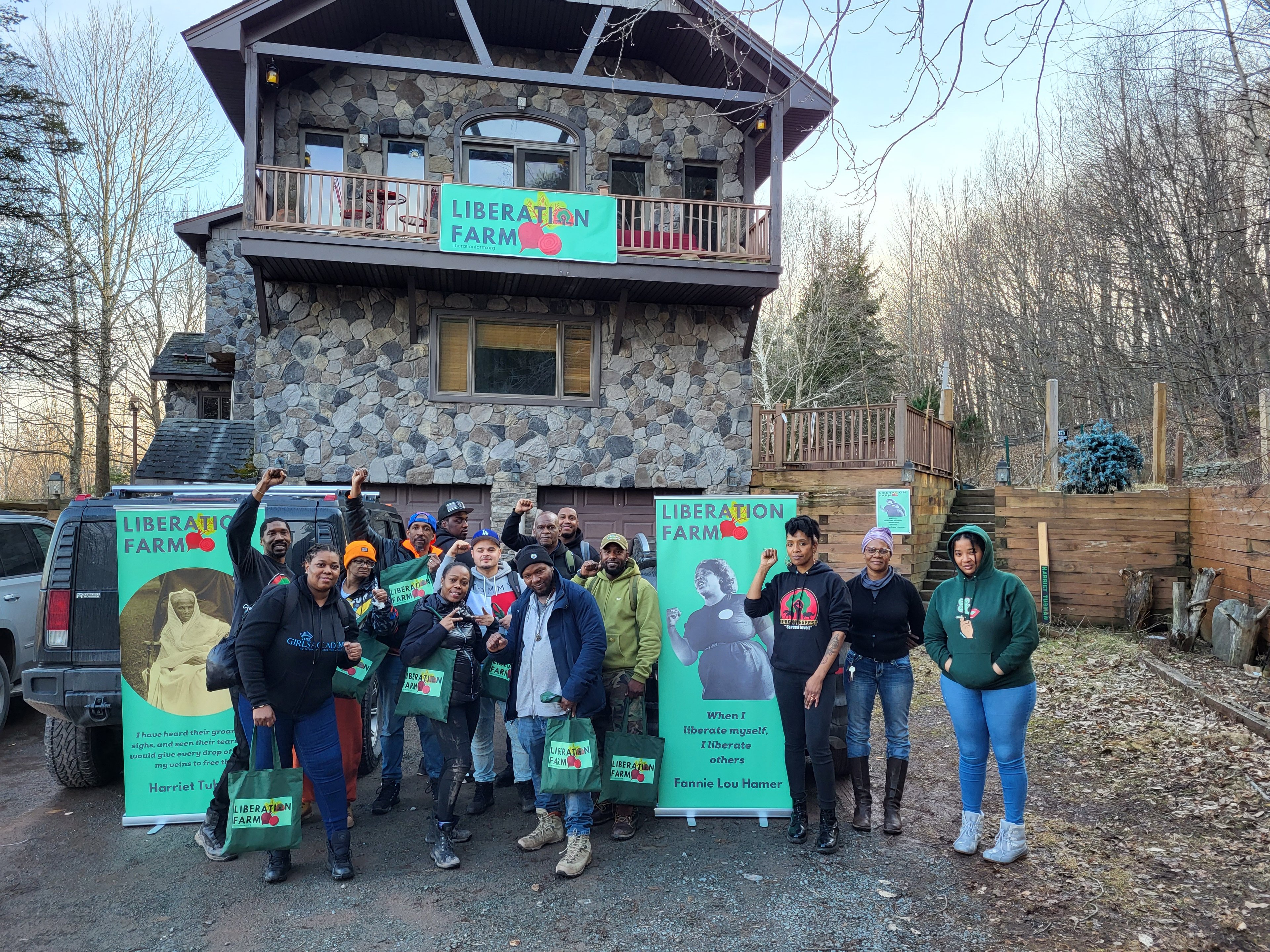
Liberation Farm teaches Brooklyn middle school students urban agriculture at the Weeksville Heritage Center 2023
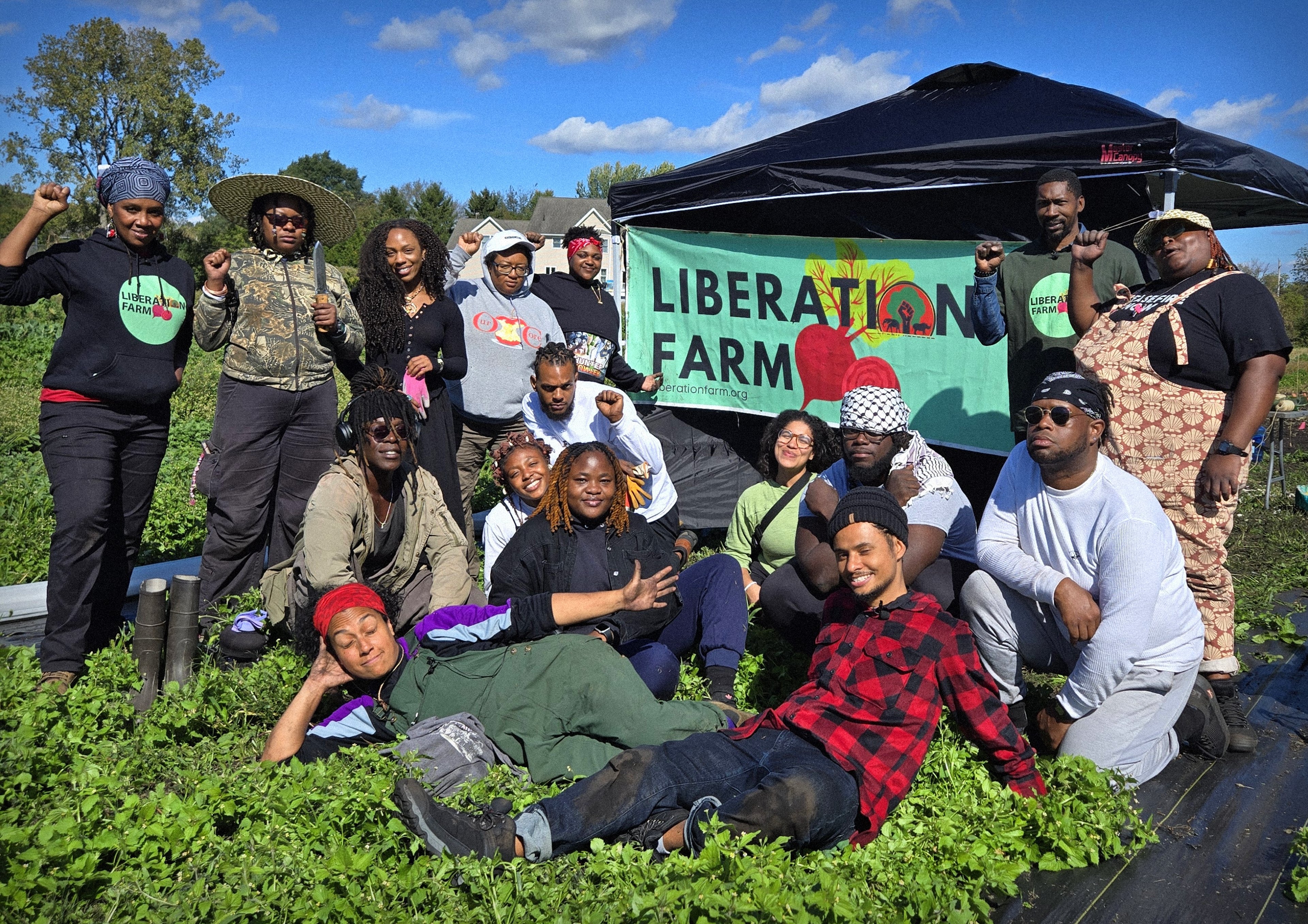
Ancestor Mama Deborah Nelson of the December 12th Movement in the Bronx and Harlem taught lessons of the grassroots. Organizers like her taught me community organizing is supposed to look different from organization to organization to address the same issues. Mama Karen Washington who coined the term Food Apartheid is a force in agriculture in the Northeast. She is one of my dearest mentors and supporters. Her work is generationally impactful in Black food agriculture. Outside of this work, folks don't know she is contributing to the rise in Black agriculture. I met her in the Bronx years ago when she was creating the annual Black Urban Growers conference. She made a name for herself in urban agriculture, but she is also a rural farmer outside of New York. City MamaK addresses Black food sovereignty and food security through institutional building. She believes and trusts young people. Her work is what I have read about Fannie Lou Hamer. My wife and I grow on Liberation Farm about half a mile from MamaK on black dirt in Hudson Valley, NY. The black dirt is where soil has some 30-90% organic matter. MamaK has been critically necessary in placing Black people on land and helping us call for Black food sovereignty. These invaluable lessons in the work are what informs my analysis.
During the 90s and early 2000s, Hip-Hop culture played a central role as a catalyst for activism and consciousness for young people. Domestically and globally, there was an ongoing climate of spontaneous, local, and collaborative cultural effort that gave access to an alternate narrative for BIPOC: one that did not fit the mold ascribed by any mainstream political party or platform. That is to say, there was ingrained in it the endeavor to de-reify blind subscription to traditional European and American values characterized by indifference or violence towards both communities of color and the global South. Since that movement as a vehicle was undermined, or arguably absorbed by the popular sphere in recent years, what can replace it?
Unfortunately, Hip-Hop does not have a praxis of liberation. Hip-Hop's ideology is getting to the bag. At certain points during its birth, the Golden Age and I remember a time in the early 2000's, G.A.ME [Grassroots Artists MovEment]could organize through underground Hip-Hop. On occasion Hip-Hop had a mature political voice and could act in its own self-interest. During every zeitgeist where Hip-Hop had some social justice to combat, major artists usurped the struggle and ascended their individual successful career. Ice Cube, Easy E and Ice T dabbled in police brutality rhymes, but they never addressed it through practical work or demonstration, so there could never be proper analysis. That taught today's artists and even the community at large some of the worst lessons. Practical work is reading, researching, planning, meeting and implementing proven methods that bring community to a convening space. In 1830, the first National Convention of Colored Men met in closed door meetings to solve major Black issues of the time. As Black men, of course a great portion of us have experienced the system behaving systematically racist and violent to us. Policing Black people in America is based on the 1793 and stronger 1850 fugitive slave law. The fugitive slave law of 1850 empowered authorities to force ordinary citizens to join capture-posses. So not only were police bound to accost Black people, white people were deputized. Today, that nosey Karen is not some misunderstood illness, it's based on colonial laws. That Karen behavior is based on their short-term self-interests. They are in an organic relationship tied only to their status in the protection of white supremacy. Without this understanding of white supremacy and knowledge of historic Black armed resistance in the South it is impossible to properly address police brutality in Hip-Hop. because, if Hip-Hop artists cannot align with practical work around white supremacists shooting us then it is being host-controlled by a parasite, and cannot possibly be itself. This was the purpose of Grassroots Artists MovEment (G.A.ME): Give artists the power and freedom through unionizing--within the music groups labels and radio and media stations. Artists would have their rights protected and not be coerced to "sellout" their self-interests or their community's interests, they can be their true artistic-selves. It would be the best kind of art insurance.
Hip-Hop did not marry its activist rhetoric with consistent grassroots action. Individual artists like Tupac Shakur who was a Black Panther Cub, and from time to time, his Panther legacy would shine through. Pac lambasted the white establishment, he was critical of American police and political repression but it wasn't analysis. Pac was speaking from first-hand experience growing up. In May of 1971, Tupac's mother Afeni Shakur and the Panther 21 were freed after an 8-month trial. Pac was born two months later in the movement. Two years later, his aunt Assata Shakur was shot, arrested, beaten and held in prison. When he turns 14, the only father he's known, Dr. Mutulu Shakur is arrested and imprisoned for the remainder of Tupac's young life. Tupac was born into the movement at the traumatic intersection of our movement for self-defense. He never filled out an application. His family was underground. The gatherings Tupac attended in the 1990's that supported organizing and advocacy were from the position of family celebrity. Tupac attended on occasion. It was not regular grassroots planning and execution meetings. Strictly 4 My N.I.G.G.A.Z is still one of my favorite albums of all time, and it is easily one of the most radically charged pieces ever. My mother and I played it routinely, but it doesn't end with coordination within the Black movement for self-determination. It doesn't provide context or definitions for any systems he's communicating to his fans. Building towards Black liberation is not based on blood-relatives but on consistent community engagement articulation of our conditions. When dead prez dropped "Let's Get Free" it resonated instantly. I thought Public Enemy returned. What we saw in dead prez was careful analysis based on experience in the movement. dead prez came out of the Uhuru Movement. I remember M-1 built a chapter in Brooklyn in 2000 and folks did political education every Sunday. To a long-time organizer, the lyrics from dead prez are radically different because of the community engagement and willingness to share their basic steps to Black liberation. This is for folks to analyze engagement level, not compare skill, dedication or success level.
Tupac says on Strictly 4 My N.I.G.G.A.Z "Last Wordz" "Let’s get along with the Mexicans / And we can all have peace on the sets again / Imagine that if it took place (ha ha ha) / Keeping the smile off they white face". M-1 says on dead prez's Let's Get Free "Be Healthy" "Life brings life, it's valuable / so I eat what comes from the ground, it's natural / let your food be your medicine / no Excederin / strictly herb, generate in the sun cause I got melanin." Tupac presents long-term goals that are more difficult to attain and so people cannot make commitments around long-term objectives that are not clearly detailed. dead prez provides the commitment level through their easiest way to engage which is through their music. Unfortunately, 99.9% of Hip-Hop artists are Tupac and this is by design.
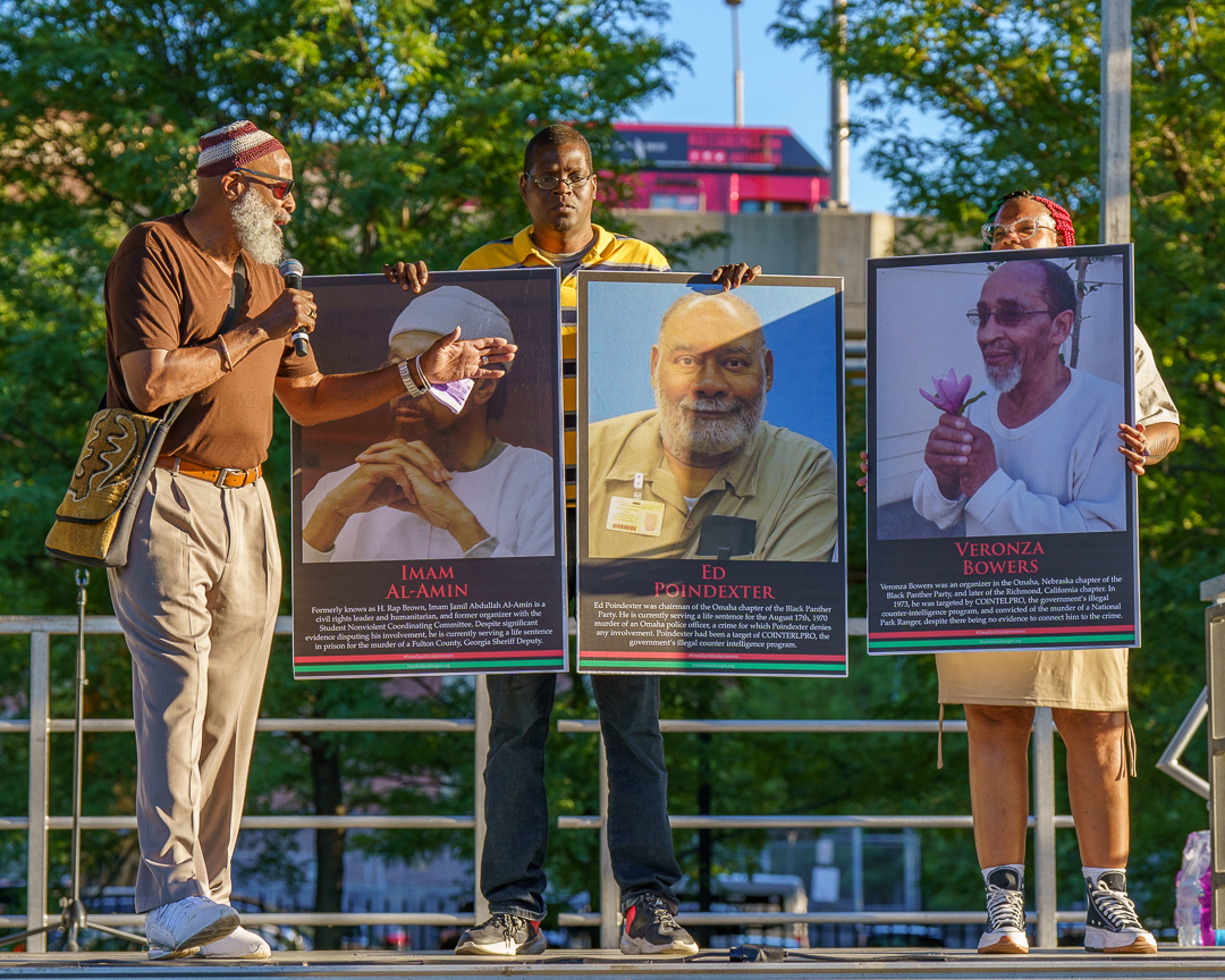
Baba Sekou Odinga advocating for political prisoners at Black VegFest 2022
On the topic of ecosocialism, and in conjunction with your current projects of Black VegFest and Liberation Farm in upstate NY, what can the urban working class learn from the trials of agricultural labor and planning?
Before we can delve into the ecological, agricultural or political nature of a People's food system, especially, Black food, it's important for readers to understand the proper context of food sovereignty. In 1996, La Via Campesina formed a doctrine and built a global community of 81 countries and 180 countries around the international food system as they established the meaning of food sovereignty. The peasants of the world explained that a People have a sovereign or inherit right to food sovereignty. That means, all local communities decide what food will look like in their community, the local people will decide how to distribute the food to everyone, the local people will invest in seed-saving so that food is prepared for the future harvest, the local people can decide how food is labeled and marketed to community and how we decide to control our food system in general. The purpose of the food sovereignty definition was to educate, empower and guide farmers on their human rights and address the global issues confronting peasants and farmers. Farmers and local communities are facing excessive deforestation and mining in Brazil and other parts of South America, the loss of cultural foods and farming in Mexico, the ongoing agricultural western imperialist tactics in India that led to the 2020 -2021 revolt, and the proliferation of attempts to make genetically modified organisms (GMO) the norm in Nigeria and Sub-Saharan Africa.
For over 10 years, I have been documenting this conversation because agriculture, forestry and mining are the industries of natural resources which allow our society to regenerate our ecology and produce what we consume. Just about everything that is produced comes from the land. Food sovereignty explains that the neem in India belongs to the Indians there, the corn in Mexico belongs to Mexico, and the eucalyptus seeds belong to Brazilians because they are indigenous to Brazil. Corn has been around for several millennia. The indigenous Mexican community disagrees with GMO corn seed, because GMOs have the designed capabilities to destroy heirloom regenerative seeds. Last year, due Indigenous People's push back and advocacy by La Via Campesina, the Mexican government announced the prohibition of GMO corn for the purpose of human consumption. This wasn't based solely on health and climate implications, but on the cultural sovereignty of the seed. Indigenous Mexicans argued that cultural practices not only maintain local hereditary use of maize, but they also extend the life of heirloom seeds, its agricultural practices and the maintenance of customs and community. Heirloom maize or corn can be very colorful, while GMO corn is generally only yellow. Food sovereignty is a cultural, political and economic issue.
The Black community in the US also has a demand for food sovereignty. The Black community's call for food sovereignty is similar to Palestine's fight for food sovereignty. Both communities do not have a sovereign government as their food sovereignty was aggressively taken under settler-colonialism. Settler colonialism is the arrival of colonizers on Indigenous lands for the purpose of usurping the thriving living habitat, peaceful community, natural resources and the people to benefit the society of colonizers. Over generations, this process creates and forces the colonized People to become the consumer class. Settler-colonialism uses white supremacist social constructs such as race and religion, global economic apparatuses like UN's Food and Agricultural Organization, the World Bank, the International Monetary Fund, laws, such as the Plant Variety Protection Act, also referred to as the GMO law and, of course military weapons of imperialism to repress and oppress this consumer class over time. As stated, only farmers, miners and foresters or land stewards and agrarians can control and produce resources of the land. Only the government can determine which groups can grow and mine. Under occupation in the 1950's and 1960's, Palestine employed 1/3 of its labor force with just their citrus operation. Today, Palestinians are marked by food insecurity and their citrus farms have been wiped out. Haya Saleh OEP Palestine Justice Organizer explained, "During the second intifada, Israeli occupation forces destroyed over one million trees, the majority of which were citrus trees, by prohibiting farmers from growing low-lying crops." Due to the Israeli administration's use of strawberries and flowers, Palestinians were forced to shift their cultural crops. If a People cannot control their food, they cannot have energy to make any demands or defend them.
The Black community in the US is no different in its demand for food sovereignty. During the fight to abolish slavery, Black people since the 17th century, under colonialism, managed to establish hundreds of free Black communities, such as North Greenwood in Tulsa, Oklahoma, Lyles Station, Indiana, and Seneca Village in New York. The Underground Railroad had extended through all of these communities, saving and rescuing thousands of Black people since its inception. William Still, the de facto leader for the massive operation of freeing enslaved Black persons in America documented the secret movement of the Underground Railroad (1870) detailing that food access was a critical part of getting free. Enslavers used food insecurity to combat resistance. First, enslavers had a policy of preventing slaves from sourcing their own food, which created dependency in the food system. Frederick Douglass documented in his 1845 narrative the numerous examples of penalizing slaves on plantations for eating beyond their food portion. Enslavers also used methods to curb storing foods. This was used to prevent slaves from having enough nutrition and energy to liberate themselves from plantations. The slavemaster and overseer used these tactics to manage slavery. Once Black people got free, they used food as a method to remain free and maintain themselves. In Lyles Station, Indiana, after Charles and Keziah Grier freed themselves, they turned the untenable land into farmland so they could grow food in the early 1800's. Before the slavery ended, Joshua and Sanford Lyles established Lyles Station as a Black town growing sustainable food and interacting with the railroad station to meet newly freed slaves with necessary resources.
By the early 20th century, Black people managed to control 14% of US farmland. Junius George Groves, affectionately called the Potato King, broke records and taught a nation as well as the USDA who acknowledged his scientific skill set of growing more potatoes than anyone in the world between 1902 and 1906. In North Carolina, the strawberry belt, an interconnected farm community of berry crops extended 75 by 55 miles. Black farmers in North Carolina made it possible for Black Staten Islanders to introduce strawberries to New York City in the Black community of Sandy Ground. By 1920, due to the Great Migration of Black people leaving the south for the north to escape white terror in the form of regular lynchings by white supremacists and unfair practices and disenfranchising systems by the USDA, the Black community watched as millions of acres were lost. Today, the Black community holds less than 1% of farmland. The purpose of stealing Black people was to cultivate the farmland. Once the land was cultivated and economic stability was accomplished by the colonialist, the Black community became a consumer class.
Black VegFest, a Black vegan festival, was designed to address non-exploitative food sourcing in Black communities. We don't need dairy and meat which contribute to national and global epidemics in food illnesses and diseases. Heart disease has been the number killer for over 100 years in the US. Globally, the number 1 and 2 highest killers are preventable illnesses of heart disease and cancer. They are even more difficult to treat when the government mandates these foods and markets them over healthier foods. According to the National Institutes of Health, the global majority, made up of Black, Indigenous and Asian communities are 75-95% lactose intolerant. If Black people were a sovereign people, we would be sourcing foods that are not harmful to our children and families. Instead, the US solely mandates dairy as a vital food for all peoples in the US and must be accessible by our children. The US also mandates that all dairy farmers should be subsidized to produce dairy and earn a living. The global majority vegan community argues that this is a racist policy because white people are only 40%, making it easier for a specific demographic to digest. Worse, white farmers account for 99% of all US dairy farmers, creating a clear example of a consumer class model. white farmers are also 95% of the land stewards, managing the best farmland, while receiving a revolving slush fund for exploiting cows and creating systematic racism in our food system.
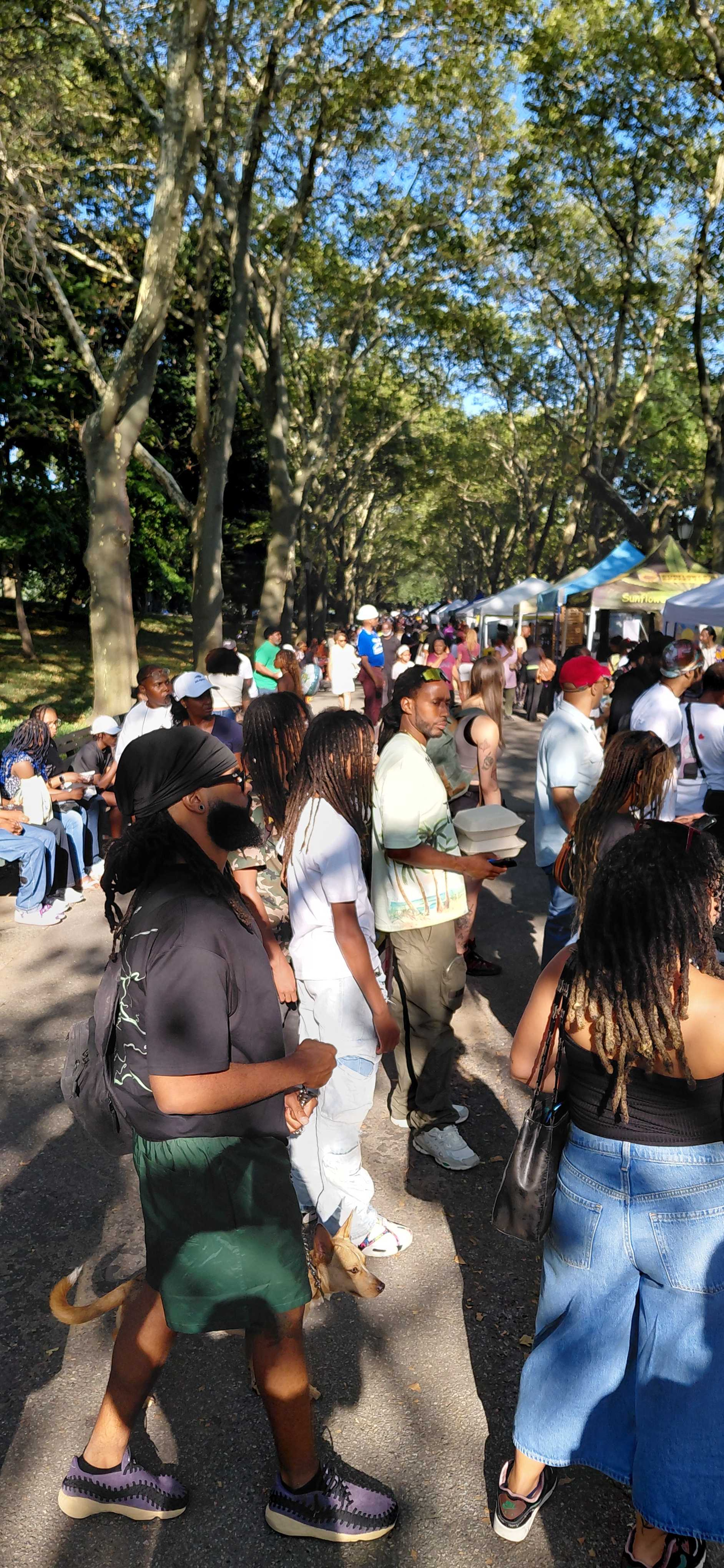
Black VegFest organizes to address the intersection of exploitation in our food system through class labor, consumption and animal agriculture. My analysis stems from being diagnosed with hypertension, which can lead to heart disease, growing food on tiny plots of land in New York City, post-Great Migration, shifting to more horizontal agricultural strategies to yield more crops, being rejected by the USDA for farm loans and successfully appealing the USDA after two racist denials. In 2024, Liberation Farm used the Freedom of Information Act to study the USDA data of groups denied for farm loans between 2018 and 2023. Farm loans are a universal component in national agriculture because they address droughts, floods, and other contributing factors for loss of crops for all farm operations. There are similar programs in every farm community to help manage the food security of a nation. Liberation Farm found the USDA denied only 7% of white farmers and 8% of the average farm. The denial rate for Black farmers was 35%. More than 30 states denied Black farmers at least twice as much as the average. Places like California, Georgia, Mississippi, New York, and Texas, denials were three times higher among Black farmers. Kentucky denied Black farms 19 times more than the average farm. Last year, Black Farmers United-NYS commissioned Liberation Farm to produce the Farmland Equity Series, detailing the fight for Black farmland from 1787 to 2025.
On Saturday August 8th, 12-7PM, Black VegFest will celebrate its 9th year in Lincoln Terrace Park, Crown Heights, Brooklyn, New York. Our theme this year is food sovereignty and farmland equity. Our best work entails understanding our quagmire as it relates to speaking truth to power and solidifying solutions that are palatable for families, children and seniors. Thousands will attend, looking for tasty vegan food options and ways to incorporate more compassionate alternatives to eating. Remember, Black VegFest is free and accessible. There are six entrances and exits to Lincoln Terrace Park with two ADA and wheelchair accessible. There are two incredible areas of interactive education. Doctors, artists, farmers, athletes and healers host workshops, skillshares, panel discussions, and agricultural and cooking demonstrations. The mainstage will host Hip-Hop, jazz and reggae performances. Youth are invited to learn with their peers and small children have access to fun and games, including a kids playground. All event details can be found on www.blackvegfest.org. To learn more about Liberation Farm, log on to: liberationfarm.org.