
Aug 7
The "Workers Deserve More" Program Must Endure: Long-Term Planning, Short-Term Failures, and the Race for the National Executive
To be effective, an organization requires a long-term vision. As we approach the 2028 Presidential election, this necessity becomes all the more pressing.
by Sean A.
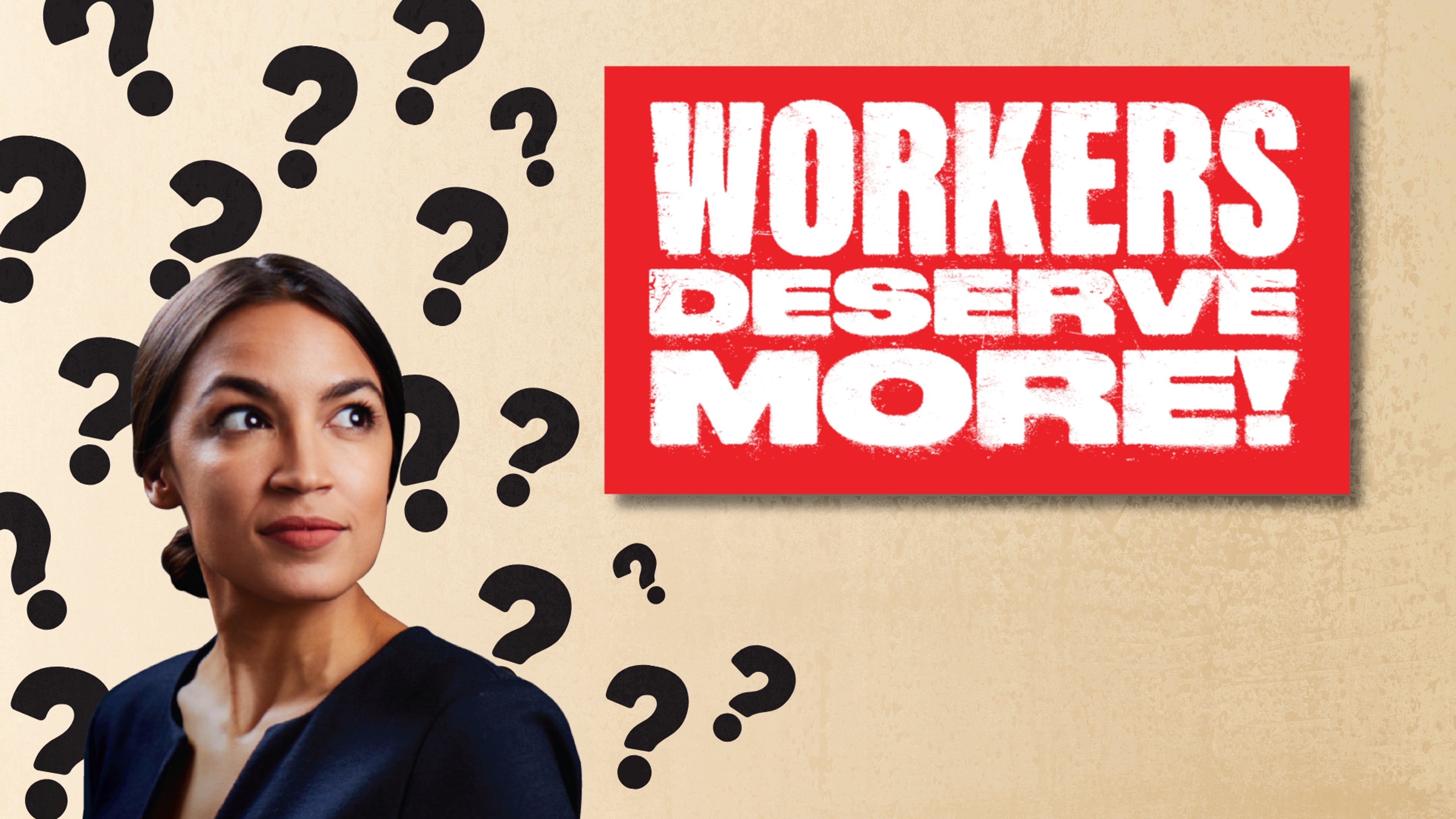
This essay is written with the full understanding that Resolution 33 (R33), which passed at the 2025 Convention, binds DSA at the national level, with responsibilities delegated to each chapter, to engage in the 2028 Presidential election. Despite my personal disagreements with that strategy, this essay is not meant to polemicize against R33, but rather frame the organization’s lack of long-term planning, immature capacity relative to its present strength, and the pitfalls these factors create in that context. The Workers Deserve More program launched in July 2026 is a fantastic program and a strong step toward long-term planning, but it must avoid the trap of endless cycles of new annual (or biennial) plans.
Views expressed in this essay are my own and do not necessarily represent my committees or my caucus.
One of many long-standing criticisms of capitalism is the way quarterly profit cycles force short-sighted decision-making, with a positive report for next investor call as the dominant guiding focus. The drive for short-term profit maximizing within 90-day windows is disruptive to long-term stability. This leads to cycles of employee churn, leadership burnout, underinvestment in infrastructure, and chaos from rapidly pivoting from novelty to novelty.
The quarterly cycle forces even the most well-intentioned chief executives to forgo short-term losses that may be offset by maximal long-term gains. ”Next milestone” planning, when the next milestone is also your only milestone, makes it exceedingly difficult to value anything but the most immediate goals. The relentless chase of short-term maximalism makes crises that could be avoided through long-term planning nearly inevitable. While some organizations have leaned on short-cycle planning to develop their institutional agility, becoming at acting tactically as DSA clearly has, the lack of practice in developing strategic plans makes those crises occur more frequently and more damaging when they occur.
Unfortunately, most DSA chapters operate on an electorally-adjusted “plan for the next quarter” style of internal planning. Requiring chapter-level priority campaigns to last from annual convention to annual convention forces them to only look “one quarter” ahead, given the four-year cadence of many electoral races. Ironically, this short-term planning does grant DSA one of its strengths: our agility. DSA is fantastic at capturing “lightning-in-a-bottle” moments, but we fail at holding that energy firmly, and retaining it for achieving concrete long-term goals.
While DSA’s agility is great for galvanizing members (and voters!) around political moments, however, it also makes DSA prone to miscalculating long-term risk, especially if that risk extends beyond a year or two. Long-term planning is a skill that requires being flexed repeatedly and consistently. Regrettably, DSA has done little—and provides themselves little opportunity—to work out this muscle as a mass organization that is now venturing into inhospitable political territory where the stakes of governance become more immediately reified.
This weakness brings me to my concerns about running a national executive campaign for the 2028 Presidential election as DSA currently orients itself: we have planned for the battle, but we have not planned for the war.
The Workers Will Always Deserve More
There is good news, however: the 2026 Workers Deserve More program is a more-than-laudable step toward national programmatic alignment and begins to shape out what could be the foundation for long-term planning. It is a fantastic set of demands that go beyond a mere minimum program, and sets forth a vision of what socialism can be if we continue to accumulate wins. The Program not only sets forth economic demands, but also clear anti-imperialist foreign policy demands. While programmatic demands such as these are aspirational, they also serve as our organization’s guiding compass—subsequent programs and campaigns will be aligned toward satisfying the aspirational goals of the larger program.
Unfortunately, however, even this monumental step forward in DSA’s development of a national program can easily be undercut by the nature of programs passed at conventions because of their short horizon. A program cannot meaningfully act as a compass for long-term progress if our highest priorities are redetermined every two years at DSA’s National Convention. Local chapters operating with one-year priorities are stymied even further. Explaining why long-term planning is still critically necessary for an organization whose strongest trait is its agility requires both some history and some foreshadowing. To do this, let’s look at the impending race for the national executive office for framing.
While the United States is not the progenitor of imperialism, we are its strongest heir and most dutiful adherent in the present. An “anti-imperialist United States” is not a project DSA can undertake solely by changing the head of state. This is important to keep at the forefront as DSA decides what strategies to take electorally while concurrently developing a national political program. The very duties of the national executive, the President, as the title suggests, is to execute the will of the nation, not decide it (despite the current executive being given near carte blanche to do so, we can expect a left-aligned president would not). Both the national program of DSA—the 2026 Workers Deserve More program—and many individual programs of local chapters have strict anti-imperialist demands that will place a theoretical DSA-supported national executive in not just opposition to these programs and demands, but in direct and fierce antagonism with them. Our organization and chapters have strong anti-capitalist demands that will do the same.
There is, for better or worse, an idealized version of “The DSA Candidate” in both the minds of DSA members and the minds of the masses. This ideal version of a candidate is someone who carries all of the values we put forward as an organization and embodies the “right” answers to our public debates (even if we as members have different views on what that right answer is). Unfortunately, this version of the DSA Candidate can only exist as a platonic ideal for our own actual candidates in the real world, and many of those values come into conflict with how the United States functions geopolitically and internally.
These contradictions place us in a position where we have no strategy for addressing a "DSA Candidate" that cannot stop the bombs over Gaza and the illegal settlement of the West Bank. We are not positioned to adequately address a “DSA Candidate” that cannot mitigate the harms of disparate state-controlled judicial systems dispensing sentences like those seen in the Prairieland cases, and other critical areas of agitation by DSA. Conditions of geopolitics, State Department pressure, and institutions far stronger than a single elected official may realistically force the continuation of material support to Israel, especially now that the House of Representatives has passed the effective merger of the United States’ and Israeli militaries. This would place such an elected directly in contravention of DSA’s still-controversial R22, the anti-Zionist resolution adopted by the national organization last convention, and any candidates’ promises during the endorsement process or campaigning to end such support would immediately become vapor.
What will we do as an organization when this inevitably happens? Does DSA have the strength or the will to publicly rebuke their first national executive? Recent history would answer no, we do not, and this is not an area where we need to speculate. We have already demonstrated our adherence to personality politics in how New York City DSA (NYC-DSA) interacts with their member-mayor, Zohran Mamdani. If we do not change course, the same acquiescence that limits our criticism of Zohran will limit our ability to criticize a DSA President.
New York City DSA’s Culture of Passivity
NYC-DSA’s attempts to prevent their chapter from issuing critical responses against Mamdani, except a single social media post rejecting Mamdani’s decision to add a few hundred cops to NYPD, remains a pointed example of this adherence to “persons over programs” and dilutes our programmatic commitments.
As expected, criticisms levied against Mamdani regarding his expected (in)ability to rein in the NYPD, his capitulation to Zionist demands to protect venues where illegal land sales are held, and others, have mostly come to pass. However, NYC-DSA leadership have actively intervened against dissent against Mamdani using both political and structural means, including the usurpation of the chapter’s Anti-War Working Group’s (AWWG) election of its Steering Committee under the guise of proceduralism. Fearful the AWWG would use its platform to make demands of Mamdani related to Israel (including the demand for the ICC’s warrant to arrest Netanyahu be executed by NYPD—something Mamdani has since clarified is not within his power as the Mayor of NYC) and demands related to the escalations in Iran that Mamdani could not fulfill, the NYC-DSA leadership unilaterally absorbed the administration of the AWWG, attempting to neuter it#.
The lack of multi-year plans often places DSA in a position where our strongest assets are the personalities of the candidates we run for office, and our insider access to them through prior relationships. It is also why DSA has historically preferred to engage in rearguard support of progressive candidates who have attained a level of celebrity prior to our involvement. This creates a downstream effect of NGO-style bargaining between individuals: instead of programmatic alignment or shared values, coalitions are built on the basis of the ability for individuals involved in or around the campaigns to build their personal social capital and form connections on that basis. When an organization’s relationship to an office is based on interpersonal relationships, whether perceived or real—and in the absence of something more overarching like a long-term program—people are remiss to disagree publicly out of fear of harming the relationship. Public criticism and disagreements get suppressed out of a desire for a quiet peace to avoid losing the partnership.
This form of relational organizing arises even when DSA backs “cadre candidates”—candidates that are selected from among the active organizers within DSA itself, as the Mamdani example highlights. When DSA runs cadre candidates, the personal relationships are already deeply entrenched. Friends of the candidate become the chief petitioner for a DSA endorsement, which usually cements them in a leadership position for the working group assigned to the candidate. The lists of petition signatories are whipped by prominent caucus members using interpersonal connections and internal listwork, leaning heavily on personal relationships, one-on-one organizing, and other staples of labor activist organizing methods. While this does have the effect of building a campaign apparatus that is more deeply devoted to the candidate, the personal connections that organizers and volunteers build, and the constituent emotional connections that come with them, intensify and become enmeshed with the structural and strategic elements of campaigns and subsequent co-governance.
Ask most volunteers who have endured the trenches of electoral campaigns about the trauma bonds formed out of them. Ask them about the affinities they had (or didn’t have) prior to volunteering, and then ask them to compare those feelings with how they feel after a campaign ends. The stories you hear will resoundingly highlight themes of solidarity, an increase in affinity toward the candidate, and the development of new friendships, most often with candidates themselves or their senior staff. Real connections are built out of these projects, and, at times, real jobs, too. As valuable as the personal connections built may be—and make no mistake, they are valuable—they also tend to shape how we start seeing candidates’ relationships to our own broader programs and blind us to areas where they might fall short. The point is not to avoid involving ourselves in campaigns, but developing a means to avoid the dangers of doing so. Long-term programs act as the skeleton that keep the muscles of our people-power anchored and oriented toward a purpose.
Left-Coast Infighting
On the other side of the country, California DSA’s voter guide caused conflict with local chapters in the state. North Central Valley DSA (NCVDSA) took to Instagram to publicly rebuke California DSA’s voter guide’s tacit recommendation of billionaire Tom Steyer for governor during the primary cycle, arguing that the recommendation threatened to damage years of the chapter’s coalition-building. Two community organizations with which NCVDSA was developing a nascent partnership reached out to the chapter’s leadership when the California DSA voter guide was published demanding an explanation for what was widely read as a positive recommendation for the billionaire candidate. When presented with these complaints, some delegates from California DSA retreated to their ideological trenches and refused to accept the potential for damage that could come from their actions.
Opponents of the Steyer recommendation and supporters of North Central Valley DSA attributed the state chapter’s error to a lack of investigation into the local chapters, numerous as they are at 22 full-fledged chapters and a pre-chapter organizing committee. However, California DSA did not poll or otherwise directly engage with the chapters in the lead-up to the voter guide’s publication. Instead, it relied on its State Council, the decision-making body of delegates sent by the chapters themselves for participation in the statewide organization, and the task itself was delegated to a specific committee that drafted and edited the voter guide. Members of the organizing group in charge of writing and editing the voter guide did send some probing emails to each of the California chapters’ leadership, but chapter leadership and its appointed delegates are not often the same people (and leadership of chapters actively disengaged from California DSA did not see this as a good-faith attempt at including them in the dialog). Clearly, there were more active steps that could have been taken to prepare for the recommendation.
To grant California DSA some grace, it sits in a fraught position—its State Council does not have full buy-in, and not every chapter is (by choice of those chapters) represented on the council. Only some chapters send full delegations to the State Council, with at least six fully refusing to participate. Delegates defending the State Council’s position in the voter guide were quick to remark that had all the chapters sent delegations, any on-the-ground conditions specific to local chapters could have been made clear during the deliberation process. Many chapters do not feel empowered to join California DSA, however, as apportionment of the Council’s 85 delegates is determined proportionally to the number of members in each chapter. DSA Los Angeles (DSA-LA), for example, the largest chapter in the state, held 30 of the 85 seats on the State Council. With a single chapter holding over one-third of the apportioned delegates, many smaller chapters see no point in joining a statewide organization where they would be functionally dominated by DSA-LA. California DSA leadership tends to dismiss the concern, insisting “good organizing” and coalition building among the smaller chapters could overcome the largest chapters’ dominance of the organization—a suggestion which ignores geographic particularities entirely.
In a sense, both sides are right—and both sides are wrong. It is true that the drafters could have made a stronger effort in communicating with chapters, and that chapters could have been more active in participating at the state level. The problem, however, is deeper. California DSA’s position in membership limbo is both a result of, and complicated by, a lack of foresight or long-term planning. With no long-term vision for how to organize the disparate Californian chapters along a broader program, California DSA is left in a position where its organizational strategies end up becoming local-style electoral campaigns transposed to statewide offices. But this does not have a great track record. Look at California DSA’s campaign for Lt. Governor. Unfortunately, while there was some activation of smaller California chapters (a boon, to be sure), Oliver Ma’s campaign was electorally unsuccessful and mired in tension between his campaign, DSA, and other left organizations running candidates across the state. The Green Party’s gubernatorial candidate, Rudolph “Butch” Ware, claimed that California DSA threatened to withdraw endorsement and support for Ma when he sought out a left-unity cross-endorsement strategy between the two of them. Ware also denounced California DSA (inaccurately referring to them as DSA-LA in the text of the post) for recommending Steyer, and also condemned the guide’s statement against “protest votes”, which included voting for Ware via a write-in campaign.
California is one of the harshest cases of the urban-rural divide in this country, with the ultra-wealthy coastal metropoles standing in stark contrast with the nation’s breadbasket in the California Central Valley. Clear, multi-year planning oriented toward shared statewide goals common to both urban and rural regions, rather than electoral campaigns that only look at the present cycle, could have provided an impetus for the smaller chapters to align with California DSA despite the offset balance of power. Orienting around long-term goals such as the fights against data centers (which process data from surveilling urban centers and harm water systems necessary for agricultural regions), fights for immigration justice which protect the multi-racial working class in both cities and ruralities, and efforts to demonopolize the water systems from the Resnick family’s control, would see chapters from major metros and the agricultural center of the state unify in ways that an electoral campaign, especially a campaign for a Lt. Governor, likely could not achieve on its own.
As the number of DSA chapters in each state grows, future statewide formations will become necessary to coordinate them. To do so effectively, they will need to take a serious look at the successes and failures that have arisen out of California DSA’s founding, operation, and structure, and use those lessons learned to avoid the pitfalls they are now contending with. While statewide electoral campaigns can certainly be used to activate at-large members to spur the growth of new chapters, and activate members in dormant or downturning chapters, those campaigns are not sustainable, and quickly fizzle out if the candidates do not break through the primary process. A long term plan that includes complete partner-chapter onboarding, campaigns that unite the various chapters around common values (and not people) that are deeply and widely shared, and contingency plans that deal with the inevitable intermittent lulls between campaigns can ensure that there is sufficient buy-in from the local chapters and ensure stability for the state-wide formation.
Opposite Coasts Teach a Valuable Lesson
Using two different frames of reference from opposite coasts, there are examples of both an unwillingness to issue principled criticism outward and an inability to accept it when it occurs internally. A serious political organization should be able to strategically, tactically, and respectfully do both. So far, we have shown we can do neither on some of the most important strategic ground available.
The result? DSA as an organization absorbs an undue surplus of the criticism thrust upon our candidates and their actions or decisions. This is more prevalent with our candidates and elected officials that have earned DSA’s endorsement because of a focus on short-term wins and a lack of thoughtful preparation for future potential pitfalls. DSA’s ability to be a lightning rod for our candidates can be a powerful tool, but only when we know how to safely discharge the energy. When a long-term program is in place to anchor and ground our values, criticism of electeds becomes easier and discharging that energy is safer. The program does not just act as a goal, but a real foundation that grounds both future goal-setting and in-the-moment decision making. Self-criticism also becomes easier when we can refer back to the programs we’ve democratically established, both locally and nationally, and ensure we are able to quickly realign ourselves along their trajectories.
If we are to do either goal-setting or critical reflection without being inconsistent, we require programs that do not change every year or two.
How we develop the ability for DSA to co-govern alongside our own candidates is an internal issue we must work out as soon as possible if we hope to achieve our ultimate goals of party-building. But for our most important audience, the multi-racial working class, we must also work ahead of time to ensure we have answers for when our electeds are out of step with our programs. Political trust has been on the decline in the United States, and with good reason: studies going back to 2014 have shown a severe disconnect between our representatives and the people they claim to represent, and, now, the economic effects of that disconnect are coming home to roost.
DSA is facing an unprecedented opportunity: it is launching into the cultural and political zeitgeists as a potent and emergent force earning victories for working class people. We must retain that tenuous trust by standing firm and by refusing to make excuses for failing electeds out of fears individual members have around maintaining personal relationships. We cannot embrace the same dogmatic approach of “don’t primary our own party” that has been used to maintain centrist hegemony within the Democratic Party for decades. We need to be more willing to use the threats (and follow-through) of censure, unendorsement, or, at the most extreme, a primary challenger who will recapture the mandate to govern from the masses (via their subscription to our program and our organizational support) to ensure programmatic alignment. DSA has long provided sufficient carrots, but we have always been afraid to use the stick.
We know from past experiences that when an elected politician is obstructed, tempers their more radical (but widely welcomed) campaign promises, or capitulates to capital interests, the effect is the same: they are seen as an ineffective leader. This is only even more the case for the President. The national executive is a lightning rod for all the ills and gains of the nation, and voters infrequently investigate the causes of ineffectual leadership, even if those causes are legitimate. We should know from our own organizing around electoral issues that telling voters an elected official “faced a hostile legislature” or “inherited a conservative SCOTUS” rarely sways their minds—to many voters, a stronger executive could’ve always overcome those challenges. By agreeing with the voters, in many ways, we direct that energy away from disillusionment and toward more radical politics while mitigating some of the injury caused by elected officials who feel they cannot remain aligned due to political circumstances.
But being able to make the correct argument and amplify the right message takes planning. We need to be sure our program has not changed (and therefore the programs need to last longer than two years) by the time the messaging is necessary, as much of that communications work is going to be done in a manner that anchors everything back to the program. We cannot afford “...but you said in 2026…” style criticisms that may appear like DSA is attempting a realignment with an elected official we’re trying to bail out. This cuts the other way, too. It is much more reasonable in people’s eyes to expect an elected to follow a consistent, long-term program than one that changes frequently. If we wish to keep the faith of the masses, we need to remain consistent in an era of opportunistic populism.
We are already seeing an elevated level of counterprogramming from both Republicans and corporate-aligned Democrats while we’re winning. As an organization, we are wholly unprepared for the ferocity and viciousness of the media hurricane that will strike when our “DSA electeds” ultimately fail–or even when they just stumble.
Take the case of NYC-DSA and their attempt to use the digital public square (as well as a digital back alley) to rebuke the national organization in response to the NPC’s decision on how to handle polling members’ opinions on a potential AOC endorsement. Recently, the co-chair of NYC-DSA, Gustavo Gordillo, and the chapter’s Ecosocialist co-chair both broadcasted pleas to their members via tweets (with one now deleted) calling on members to switch to paying local dues directly to the chapter rather than national dues which are administered by the national organization, with only a minority percentage sent back to the local chapter. This became an opportunity for the enemy: news organizations such as Fox News, Vox, and the New York Times jumped on the opportunity to excoriate the organization, alleging “infighting” and calling our internal democratic processes "acrimonious" (though the New York Times in particular has had a long-standing oppositional relationship with DSA). In Gustavo’s defense, this was clearly not his intention. But the situation has changed, and we need to be cognizant of that.
Mainstream media networks will continue to utilize breaks either within DSA, or between DSA and its electeds, as a means of disorganizing and discouraging potential new members from joining. Take another example: Winter (@leftywinter), a liberal Twitter activist with nearly 50,000 followers, had been a DSA paper member# for a couple months before attending her first in-person meeting, only to demand expulsion of a plurality of DSA members and then publicly encourage a split. When she proved unsuccessful and faced expected backlash, she ended up quitting the organization entirely. Following her social media spectacle, Winter claimed that the New York Times interviewed her about the DSA. In characterizing her interview with the paper, Winter appears to have taken a stance where she suggests that the “AOC-supporting” members split from or purge the “radical communists” from their ranks. The negative media ramp against DSA is just beginning. The media is pulling out all the stops, including utilizing astroturfed “influencers” with pre-existing audiences and trust, a strategy frequently deployed by corporate democrats through dark money “creator incubator” programs, with more and more of these programs spooling up every cycle.
A failure to ensure our new Workers Deserve More program endures, and failure to ensure our planning, our strategy, and our tactics are all in furtherance of the program, could leave us in a position where we’re learning to swim while we’re already drowning. We could be in for a repeat of the 2021 exodus and funding crisis. We may avoid the danger, but we may not, and there has been zero planning around inoculating ourselves against the most-likely worst outcomes.
Looking Ahead to 2028 (and Beyond)
As of the time of writing, for the most electoral chapters, drafting AOC to run for president in 2028 appears to be the plan. DSA chapters in Los Angeles and Atlanta passed resolutions to build the infrastructure necessary to prepare for the presidential primary at their annual local convention. New York City will be voting on a similar resolution later this year, following in their footsteps. Many more chapters are likely to march in lockstep behind the plan to draft AOC as we get closer to 2027. Despite this preparation, AOC’s strongest soldiers will have to survive the 2027 National Convention in Chicago where delegates may amend or repeal R33. There is also no plan for 2030, when midterm elections, which often moves legislative balances toward the executive's opposition party, will occur. We cannot even decide on what our playbook for 2030 will be until the 2029 convention. There is no plan for 2032, when we would have to (presumably) reelect AOC, which similarly will not be formalized until the 2031 convention. This is unacceptable.
Strong organizations are always taking calculated risks, and to do so, occasionally march into the unknown; they must, if they’re to innovate, succeed, and excel. But we're not calculating the risks. There is no way to prepare for the many risks ahead if we haven’t even made those calculations, let alone structured our organization in a way that allows us to lay the groundwork ahead of time for addressing the multitude of likely potential outcomes. DSA has won victory after victory riding on vibes, and it can be credibly argued that it’s those vibes that have grown our membership—but now we’re trying to aim that expertly-captured bottled-lightning at a national executive campaign we're wholly unprepared to support should we be victorious.
There is no doubt DSA and its candidates will make strong showings, even at the national level, and DSA will secure yet another record number of victories for democratic socialism. This time, however, we cannot ignore the risks of having our name tied to the presidency. We can no longer place ourselves in a position of passivity where our endorsed elected officials are permitted to govern exclusive of our involvement after we’ve attached our name to them. And we can no longer permit ourselves to only look one or two years forward, either oblivious or intentionally ignorant to risks that may exist beyond that time.
Frustratingly, for all the myriad opinions within DSA that assume running any presidential candidate will be catastrophic, there has been little talk from either the more electoral “DSA right” or the often electorally fatalist “DSA left” of actionable risk mitigation offered aside from: "we'll cross that bridge when we come to it". When the issue to be addressed is ensuring we have bridges left to cross, the problems presented by the lack of foresight, strategy, or contingencies becomes apparent. Failure to prepare for demobilization of membership in the aftermath of a victory against Trump could prove fatal, and relying on the electoral short-cycles of smaller local campaigns may not be sufficient to retain members who may become content to rest on their laurels after a national victory.
Worse yet, depending on the actions of our national candidates, another “Bowman Affair” is not only possible, but likely. The contradictions of leading a capitalist and imperialist nation as a democratic socialist have the potential to produce innumerable conflicts, each with disruptive potential measured in magnitudes higher than then-Congressman Jamaal Bowman’s meeting with then-Prime Minister of Israel, Naftali Bennett, and his failure to vote against Iron Dome funding, contradicting DSA’s position and its solidarity with the Palestinian people.
The “Bowman Affair” is a lesson we’ve already learned, however. We know it was not merely the failure of our elected officials that caused the 2021 membership exodus from DSA, but the subsequent failure to expel Bowman and the NPC’s# de-chartering of the National BDS Working Group that spurred a loss of over 7% of the membership in a single month. With the grave outcome of the “Affair” in our institutional memory, we have no excuses for naivety as we debate entering the race for the presidency.
If we find ourselves again on our back foot during a period of national backlash and membership exodus, we would be rendered incapable of mounting an effective defense or recovery in the moment. How do we counterprogram against the institutional media onslaught if we’ve been drained of funds, resources, and membership engagement? How do we reconcile maintaining institutional and political power with a membership that correctly demands accountability? How do we build community organizations and recruit new members if we are hemorrhaging organizers frustrated and disillusioned by our orientation to AOC? This is something we still struggle with in many areas of the country now, how will we continue to address it when our own organizers have once again become disillusioned and quit?
What is the lesson? A simple one: many of the above conflicts could have been stopped, or at least mitigated, if DSA was permitted to engage in more long-term planning, held firmly onto its programs, and took proactive measures to ensure its elected representatives hold our programs just as firmly. Planning beyond 2027 and further will give us the necessary practice in adapting to whichever situations arise. I worry elevating anyone into the national executive with thin legislative support, or without a plan for mitigating and addressing fallout caused by a failed executive tied to our name, is organizational suicide. It is not AOC that will doom us, contrary to the opinions of many on DSA’s left flank; it is our current inability to handle our own victories that will doom us.
DSA has not cultivated the discipline necessary to handle crises in the manners a mature organization should, because discipline is practiced over time. We can “fake it ‘til you make it” when we ride short-term victories to the next short-term victory, but, until we have to sustain programmatic discipline through both successes and failures, and build the muscles to do so through exercise, we will always be “faking it”—until we suddenly can’t anymore.
As we head into preparations for the National convention, fellow DSA members should take this structural short-sightedness to heart and consider how we might use our tactical prowess to bolster our strategic planning. The national organization, in my mind, should be able to set five- or six-year plans. Chapters should be able to set both one-year and three-year plans, with the three-year plans acting as mid-point goals for the national multi-year roadmap and the one-year plans acting as short-term campaigns that proactively develop the chapters toward its goals and ensure chapters remain in alignment with the broader national program. We can remain flexible and agile, and if we use those strengths along an oriented program, such as the Workers Deserve More program, we can start preparing for any eventual stumbles without sacrificing our strongest assets or compromising our values.
We need to remember the race for the national executive is just one leg of a very long marathon. We cannot exhaust ourselves in the first leg of our first real race if our goal is to cross the finish line, and certainly not if we expect to win. And, just like any other elite athlete, it is important to remember we must arrive at the track prepared for the competition and with a plan to win.