
Sep 3, 2026
In the Spirit of Verano del '19: Puerto Rico's Water Crisis
The island's water crisis runs deeper than drought. It is the product of a colonial system, and the mass protests cannot fizzle out as they did in 2019.
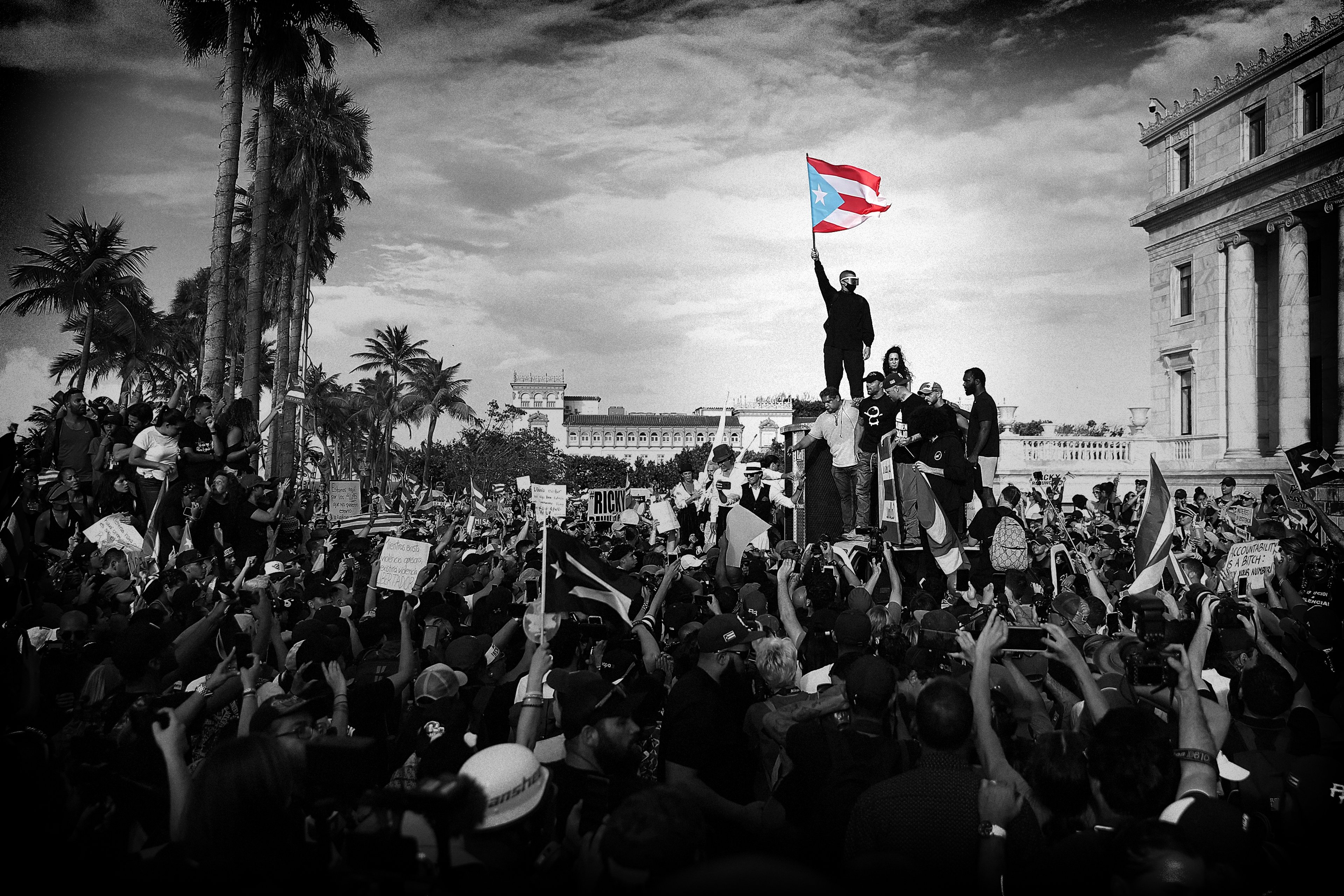
Over 200 thousand Puerto Ricans are currently without running water. The government of the island began rationing water between various areas of the island and, since early August, has been systematically cutting off water from specific regions. But this is not just a drought. It is not just an infrastructure issue. It is fundamental to the status of the territory, exaggerated by the corruption in the government, which itself is in part due to the status of the colonized nation.
The compounding issues with the utilities on the island have added to a growing mound of evidence that the Puerto Rican Government is utterly incompetent at providing its people with basic services. Enraging the residents, who are already frustrated by the constant blackouts and the general plague that is the electrical grid on the island.
In June, a major pipeline in San Juan burst, setting off the current water crisis on the island. This pipeline was fixed relatively quickly, but it showed what was to come in the weeks ahead. Also in early June, the United States Drought Monitor issued a warning for a moderate to extreme drought sweeping across the majority of the archipelago. San Juan is experiencing the driest soil period in at least 70 years, according to the San Juan International Airport. On Friday, August 7th, the Governor of Puerto Rico, Jenniffer González Colón, released a statement calling for conservation of water and the start of water rationing in the capital of San Juan. As we speak sections of the island are trading off their water access; while the water is cut off in one area, another will have it, and vice versa.
According to the National Weather Service, the El Niño weather pattern and a mild tropical storm season are making it challenging to track when the next line of storms and precipitation will come. Their Senior Service Hydrologist, Emanuel Rodríguez, stated that, “it could be five or six months of below-normal precipitation, not only [for] us, but [for] all of the entire northeast Caribbean.”
Residents fed up with the government have taken to the streets to voice their frustrations as early as Saturday, August 8th, when protests started to occur mostly in the capital. A common sentiment has been percolating amongst the population that the water crisis did not approach this level of emergency, even during Hurricane Maria. Even with relief efforts underway, the people of the island doubt that enough is being done, and few are convinced that their government or the U.S. government truly cares about their plight.
The Puerto Rico National Guard has mobilized to distribute nearly 600,000 gallons of water, mostly around the capital region of the territory. Officials are offering grants of up to $5,000 to small businesses in order to buy or rent water trucks or to buy bottled water, cisterns, and tanks, in addition to other equipment and services. While good, this is not nearly enough to help the plight of the people of the island. Moreover, the government has been slow on its feet, with some people going over 80 consecutive days without running water.
Despite popular sentiment, this has happened before; droughts prompted strict water rationing in 2015 and 2020. Utilities are always going out on the island as is, with extended periods of blackouts happening monthly and occasional total national blackouts. These constitute separate but related issues: the power system is controlled by LUMA Energy, a privatized U.S.-owned entity (officially based in San Juan) created as a joint venture between Quanta Services (USA) and ATCO (Canada). Created in 2020 to manage Puerto Rico’s power grid, LUMA Energy has consistently been at the head of numerous scandals and violations over the years since its creation. These issues were partially inherited from the predecessor system named “Autoridad de Energía Eléctrica de Puerto Rico.” Workers' rights at LUMA Energy are constantly thrown out the window, with the unionized workers continually having to rise against their employers and demand more.
This is not an occurrence that happens in a system that works for the people of the nation, and the people know that. Last weekend, at Bad Bunny’s concert, partway through the opening song, he shifted into an unscripted message about the island's ongoing water and electricity problems, telling the crowd he couldn't personally restore anyone's water or power but wanted to hand them hope and pride instead. During the opening set from the band Chuwi, performers used their song "Tierra" to raise the same water and electricity grievances, then put a message on the stadium's screens urging people to join the demonstrations in accordance with the general plight of the people and with the various organizations on the island fighting for a better future.
This is hardly the first time the island has risen up against corruption and neglect. As recently as the summer of 2019, over a million people took to the streets to protest—an event that would come to be known as Verano del ‘19 or Telegramgate. The protests were over corruption and scandals involving the former governor, “Ricardo Antonio 'Ricky' Rosselló Nevares,” as well as numerous other government officials. Protestors demanded nothing short of their resignation. The main trigger for the event was a specific scandal in which thousands of Telegram messages were leaked to the public, in which the governor and many other people in his administration were openly talking about taking bribes, joking about mass tragedies (like Hurricane Maria, which killed over 3000 people), making racist, homophobic, and sexist jokes about various people in politics, and many more things. From July 8, 2019, to August 12, 2019, people protested constantly, throughout the day and night, until the government all resigned effective August 2 at 5:00 p.m. AST, at which point an interim government was formed until elections in the following November and an investigation was held. Though that investigation led to various resignations, it filed no criminal charges and ultimately amounted to very little.
Just as in Verano del ‘19, the masses will show their discontent with a mass protest. They cannot be allowed to fizzle out into the illusion of a resolution this time. These protests must be used to further the goals of decolonialism, anti-corruption, and socialism more broadly. The decolonial movements and organizations, along with the socialist ones, must march with the masses and call out the deplorability of our government. They must also show an alternative path, one beyond the hell that is the current arrangement, one that pushes freedom for all of the Puerto Rican people, one that pushes out the colonial bourgeoisie and the national bourgeoisie alike. They cannot go the path of Verano del ‘19, where the government generally went right back to the way it did before; real change is needed. It is our job as communists in the core to stand up and march with them in solidarity and for total decolonization of the world. It is our duty to push people towards the direction of communism while supporting the national self-determination of the people, and it is our job to support it wholeheartedly.
In the spirit of Verano del ‘19, the people must rise against this government; we must, as Puerto Ricans, show the governments what we want. We must show that we are done with the neglect of the US federal government and the Puerto Rican Territorial Government. The Puerto Rican Government, with the U.S. Government as its master, has shown time and time again not to be for the people of the archipelago. What is clear is that both must go. This is not just a symptom of corruption nor just a symptom of natural causes; it is but a symptom of the colonial system, a system that needs to be overthrown and replaced with one that works for the Puerto Rican people. That is to say: independent, equal, and socialist.