
Sep 5, 2026
Police Reform Doesn’t Work, We Need Abolition: A Reflection on Organizing Against the Police in Texas
Austin DSA’s experience shows that liberal ideas of police reform aren’t enough, and socialists must adopt an abolitionist approach.
by Sam K.
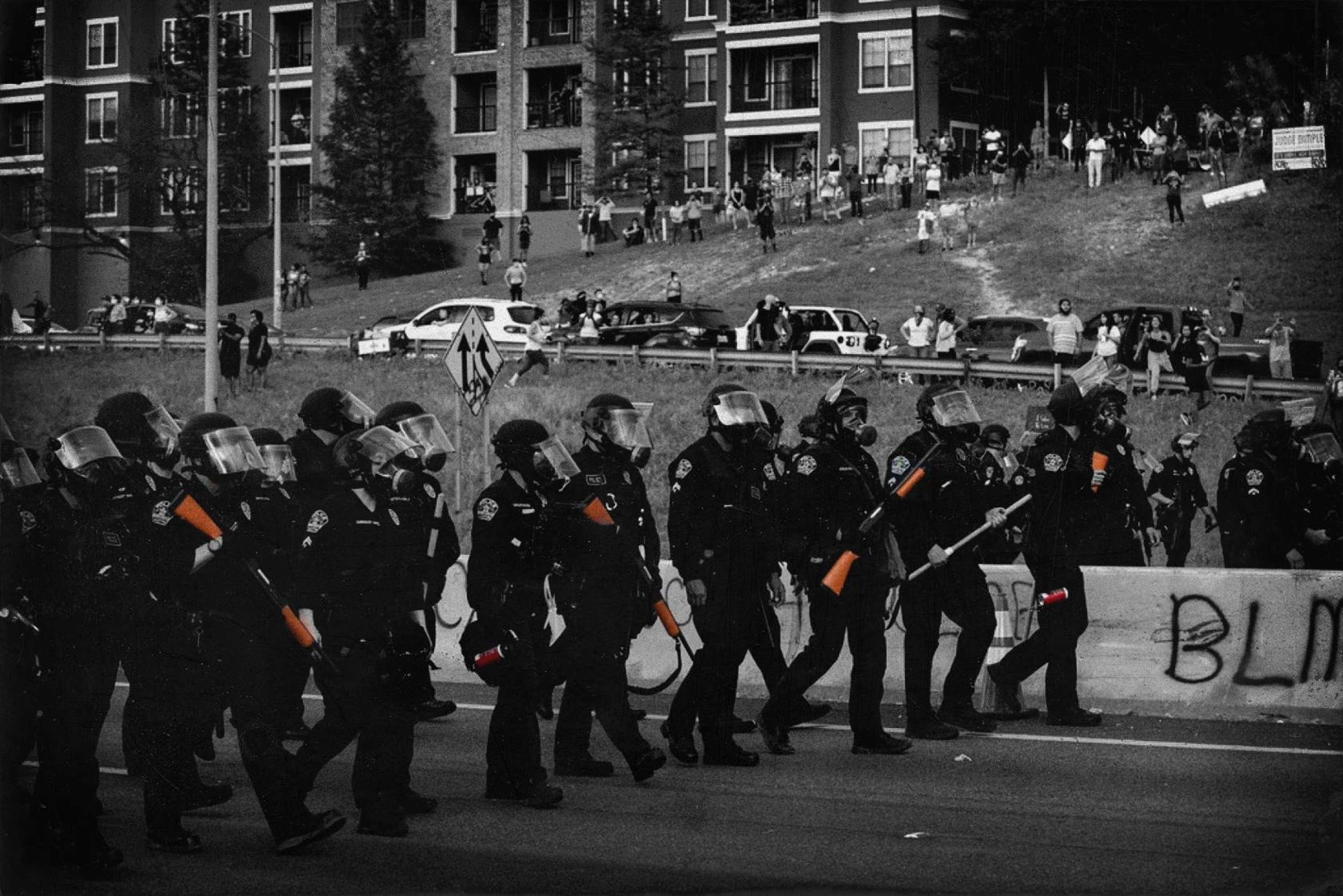
Six years after the murder of George Floyd in Minneapolis, police reform versus abolition remains a contentious debate within DSA. The organic mass uprisings calling to “defund the police” in 2020 under the banner of Black Lives Matter didn’t just arise spontaneously. They were built off of the 2014 Black Lives Matter uprisings in Ferguson, Missouri, after the murder of Michael Brown.
In 2017, Austin DSA was going through its own internal struggle over recurrent, chronic abuses committed by the city’s police. The chapter passed a resolution calling for prison abolition while, at the same time, a sitting member of DSA’s National Political Committee (NPC) and former chapter leader had previously worked as an organizer for CLEAT (Combined Law Enforcement Associations of Texas), raising questions about whether it was possible to maintain a consistent anti-police stance alongside a leadership that had organized for the police. When this organizer, Danny Fetonte, refused to disavow his past work helping the police, the NPC censured him and forced his resignation.
Nine years later, with DSA’s ascendance to the mainstream and the recent publicization of our Workers Deserve More program – which includes taking steps toward the abolition of police and prisons – these discussions around policing are once again back in full force.
Austin DSA and Black Lives Matter
In 2020, Austin DSA endorsed a slate of candidates as part of its support for the Bernie Sanders campaign. Jose Garza for Travis County District Attorney was the chapter’s sole victory in the Democratic Party primary. Garza rode the wave of the Black Lives Matter protests and promised to prosecute wage theft and hold police accountable and later won the general election with more votes than any DSA-endorsed candidate in the country had received up to that point.
Many members of the chapter also participated in the Black Lives Matter protests that summer, myself included. After peacefully occupying I-35 — the highway that runs through the center of Austin and was built to divide the whiter, wealthier west Austin from the poorer, Blacker east — I fled as riot police fired so-called “less-lethal rounds” at the crowd. The moment I looked over my shoulder, one of the rounds struck my left eye. Ten surgeries later, my eye required total removal last year.
That summer of 2020, my fellow Austin DSA members and I pressured the Austin City Council to defund the police. Greg Casar, then a DSA-endorsed City Council member, led partially successful efforts to redistribute funds from the Austin Police Department’s (APD) budget to other parts of the city budget. APD’s budget was cut by $150M, with $45M transferred to a “Reimagine Public Safety Fund” for various non-profit organizations and pilot programs building services such as a violence intervention program and mental health first responders. The City Council also removed APD’s DNA Crime Lab and created a new independent Forensics Science Department, outside police control and budgeting. APD had a long standing rape kit testing backlog which was a persistent embarrassment for the city. Police cadet classes were paused for a year and were monitored by the consulting firm Kroll Associates, who reported to the City Council. Some of the efforts were more successful than others. While District Attorney Garza followed through with indicting a total of 21 cops for various instances of police brutality, he failed to convict a single one.
Austin Police Oversight Act
As the militancy and mass participation in the defund the police movement waned, a core group of people remained committed to further reforms at the city level. But in the absence of a strong, well organized, and militant street movement, the power of the police association, right-wing money, and ‘copaganda’ prevailed. The right quickly did whatever it could to squash organizing around the issue. The State of Texas passed a law that prohibits cities from ever reducing their police budgets again. As a result, every police budget increase now becomes a new floor in Texas. Organizers both in Austin DSA and in the Black-led criminal justice reform world understood we needed a different approach.
In 2022, Equity Action, an arm of Austin Justice Coalition, the city’s main Black-led criminal justice reform organization, launched a ballot petition initiative called the Austin Police Oversight Act (APOA). Austin DSA quickly endorsed it and took a leading role in steering the canvassing, communications, and other aspects of the campaign.
The language in the APOA included provisions to eliminate secrecy of Austin police conduct records, enable people (including police officers who fear retaliation from higher-ups) to submit anonymous complaints to the Office of Police Oversight, and to establish a Civilian Review Board. The Review Board would have the power to gather evidence with unfettered access to body camera footage and police reports, to interview witnesses, and to publish information on its website. Members of the Review Board would even be able to use a secure online system to review internal police documents without physically going to the police station. The APOA was an attempt to intervene in the police contract negotiation process by mandating the city include these oversight clauses, presenting an ultimatum to the police — a contract with oversight, or no contract.
The campaign launched in 2022 with petition signature-gathering, which grew rapidly. The coalition of endorsers grew to include a very big tent: AFSCME Local 1624 and the Austin Central Labor Council, nearly every local Democratic Party club, the Texas Working Families Party, the Travis County Democratic Party, and the Party for Socialism and Liberation - Austin. It also secured the endorsement of national DSA, the only campaign of its type to do so.
Many elected officials endorsed the APOA, including Casar (by then a congressman) and Rep. Lloyd Doggett; five statehouse representatives, including Rep. James Talarico; seven out of ten Austin City Council members; and Austin Mayor Kirk Watson. Many of those who backed the campaign, including Watson, only did so because Austin DSA had built such a hegemonic, wide-reaching campaign.
Despite a heavily funded police association front group, “Voters for Oversight and Police Accountability,” placing a competing proposal on the same ballot, Austin voters passed the APOA by a vote of 79% to 21% in May 2023, while also soundly defeating the APA’s alternative. Despite the victories at the ballot box, many uncertainties remained with implementation and the next police contract.
The campaign continued indirectly through Mike Siegel’s 2024 campaign for City Council. Mike not only co-authored the APOA but also campaigned explicitly on police oversight. He also served as the primary litigator for Equity Action, a local advocacy group, when it sued the City of Austin to block an ambiguously worded police contract and filed a temporary restraining order claiming the city was “poised to violate its ministerial duties under the Austin Police Oversight Act… by ratifying a tentative Meet and Confer Agreement on Oct. 24, 2024.” Ultimately, a right-wing judge ruled against Equity Action and the City Council approved the contract. While the city does continue to release previously sealed records, it is now done through the Texas Public Information Act which has bureaucratic, financial, and time barriers. At the same time, Austin DSA and national DSA both endorsed Siegel, who won in a close runoff.
Unfulfilled promise?
It was clear early on that the City of Austin was panicking about the prospect of having to implement the provisions of the APOA. The city decided to hire “Rampage Law,” a firm that specializes in defending cops. (The same law firm was hired by the City of Uvalde to protect itself from lawsuits filed by the families of children who were massacred in 2022.) One of Rampage Law’s attorneys, Lowell Denton, was hired as an outside consultant, despite being disqualified from working as outside legal counsel for the city due to a 2002 whistleblower lawsuit. Another Rampage Law attorney, Sarah Metcalf Griffin, was hired in 2021 as the city’s deputy labor relations officer and then, in 2023, promoted to chief labor relations officer.
The city paid “Rampage Law” more than $2 million for their work negotiating the police contract. This presented a strange conflict of interest: the city was the one supposedly negotiating against the police association. It is not surprising, as a result, that the Austin Police Association, Rampage Law attorneys, and the city’s legal department were seemingly able to work together to ensure they all were protected, leaving the Austin residents behind. Meanwhile, the City of Austin spends more on fighting police brutality lawsuits than it pays out in settlements, in part due to excessive reliance on outside legal counsel — something Council member Siegel has called for increased oversight of.
The City of Austin’s Office of Police Oversight (OPO) was created due to Austin Justice Coalition’s pressuring of the city in contract negotiations with the police department back in 2018. But this oversight can only function as a check on police misconduct if it is adequately funded and staffed with fully independent investigators. However, its leadership is hired by and accountable to the city manager, an arm of the mayor who is consistently funded by and close to the real estate lobby and the chamber of commerce. Its funding is further hindered by bloated police budgets and the limited revenue mechanisms of municipal government. “Two Years After Voters Approved Austin Police Oversight Act, the Measure Remains Unfulfilled.”
The civilian review board envisioned by the Austin Police Oversight Act, now known as the Community Police Review Commission (CPRC), met for the first time on May 16, 2025, and has continued to meet once per month. While more time is certainly needed to make concrete conclusions about the efficacy of the CPRC, it will not be sufficient to cease organizing against the police even in its best possible state. Still, the CPRC and other comparable boards and commissions in various cities are important achievements and it is worth fighting to expand their democratic character and oversight capabilities.
This does not erase the body’s limits. Austin’s CPRC can respond to complaints, publish some information, and make disciplinary recommendations to the Chief of Police. But the Chief of Police can ignore them. The CPRC can shine a light on police, but it is far from establishing democratic control over their operation. Meanwhile, the City of Austin continues to give the Austin Police Department more money, locking in new permanent floors, as per state law — all while paramedics and other city workers lag far behind in pay and benefits.
Police power
The roadblocks to implementation of the APOA raise difficult questions for democratic socialists. Were these roadblocks simply due to a lack of political power in City Hall in Austin? Austin DSA campaigned hard, and successfully, to get this transformative legislation enacted and even elect one of its authors to City Council. If that’s not enough to reform the police, what is? Even if the APOA had been implemented swiftly and favorably to the will of the voters, would it have been sufficient in holding police accountable? Is holding police accountable sufficient? Is Austin DSA simply lacking a legislative majority as well as the mayor’s seat? What would happen then, should they achieve such a socialist majority? Would the police willingly and peacefully comply? Would the State or Federal government step in?
Would we be ready to confront these challenges, or would we cut our losses?
We should also consider the situation in New York City. Mayor Zohran Mamdani has failed to uphold his promise to dismantle the NYPD’s Strategic Response Group, a unit formed in 2015 that responds to protests with extreme violence and inhumane tactics. His retention of NYPD Commissioner Jessica Tisch – a Zionist, billionaire heiress who opposes even mild police reforms – is a reflection of the lack of organized, oppositional forces to the entrenched political power of police departments across the country and in New York City, where the NYPD is larger and more resourced than many countries’ militaries. This is what we’re up against. When the police don’t get their bloated budgets, they throw fits — or worse.
Mayor Mamdani is undoubtedly keenly aware of the 1992 “City Hall Riot”, a violent reaction by the Patrolmen’s Benevolent Association in response to a proposal from Mayor David Dinkins, the first DSA-endorsed mayor of New York City, to create a civilian agency to investigate police misconduct. More than 4,000 NYPD cops participated in the riots, blocking traffic on the Brooklyn Bridge and attempting to storm City Hall. Rudy Giuliani, the Republican federal prosecutor who had lost to Dinkins three years earlier, spoke at the rally, inflaming racial tensions and using the scandal as a platform to defeat Dinkins in the 1993 mayoral election. The solidified, entrenched power of armed police are tranquil lullabies sung to the capitalist class. Without them, who will discipline labor? Who will disorganize Black and Brown communities — then police them for their disorganization? These questions, and the difficulty of displacing them even in places where the left has more power, such as NYC, raise serious questions for the project. What would it take for Mayor Mamdani to fire Commissioner Tisch, let alone for the NYPD to be reined in?
Is reform realistic?
As democratic socialists, we must confront the reality of police: far from simple ‘protectors of the people,’ there is a clear throughline from slave-catching patrols, strikebreakers and counterinsurgency forces of yesterday to the functions carried out by the police today. As our movement breaks into the mainstream, the desire to retreat from the call for abolition — the recognition of a necessary future without police or prisons — is a temptation we must resist. It may seem easy to think that police reform is sufficient and abolition is unrealistic. It is true that police reforms seem more politically viable. If a police reform campaign like the APOA can win in the heart of Texas, it can probably win anywhere in the country. But are these reforms really winnable? Is truly meaningful, adequate police reform actually possible to implement? Lessons from the 1990s and our present circumstances tell us: we must think bigger and go further. Even if police reform is easier to win in the short term, a refusal to challenge the power of the police means that these reforms consistently fail to accomplish their stated aims.
In the Texas State Legislature, I advocated for a bill that would close youth prisons. But state representatives were simply looking for minor reforms, like improving access to healthcare, or bringing air conditioning and ventilation into prisons. It is difficult for any progressive legislation to get through the Texas legislature – it seems three regressive bills must be passed in exchange for any progressive bill – and when even Democrats take such a limited view of what could be done to fix the prison system, state legislative campaigns seem like a dead end.
Those who prefer police and prison reform to abolition often point to carceral systems in social democratic Nordic countries, which are undoubtedly less inhumane than the police and prisons in the U.S. But even if one believes there are models elsewhere in the world for police and prisons which we should strive for, one must be realistic about what it would take to achieve this in the United States.
Police here receive discounted equipment from the military. They have all manner of firearms, helicopters, and in some instances, tanks and submarines. The NYPD has its own intelligence bureau, which embedded officers into groups like the Black Panthers and surveilled Muslim student groups after 9/11. The bureau is currently headed by Rebecca Weiner, a member of the Council on Foreign Relations and an adjunct assistant professor at Columbia who coordinated police intelligence activities during the encampments, which she blamed on “outside agitators”. The NYPD also operates an International/Domestic Liaison Program with numerous offices in other cities domestically and overseas — including “Tel Aviv.” The scale of the U.S. incarceration system — both public and private — is profoundly cruel and exploitative. The 13th Amendment’s exception of slavery for punishment of a crime continues to be exploited to this day for profit. These are continuations of slavery and slave catchers — this is clear to anyone who is willing to see and face the truth.
Such a powerful and reactionary state apparatus — one that is inextricably linked to the white supremacist and capitalist system of exploitation, one with immense political power and a deep revulsion to oversight — cannot be transformed into a humane public safety institution. This is a less realistic position than believing it will eventually be abolished.
Tearing down these systems and rebuilding a more humane, comprehensive, holistic, and effective system of justice and public safety for all is the only sensible path forward. What exactly that system may look like will continue to be debated both inside and outside of DSA. What's critical, though, is for us to recognize that this current system of policing and prisons must be torn down in order for us to build anew. Lest we forget, the call to “defund” was a response to both the unfettered police brutality and the enormous police budgets which themselves are defunding non-carceral alternatives to crime let alone libraries, after school programs, street lights, and other critical public works that contribute to a holistic system of public safety. Fighting for independent civilian oversight and other reforms which highlight and hinder police power can be part of the long struggle for abolition — but when we reach a tipping point, we’ll have to truly confront police power at its most desperate moment.
In the absence of a sober and concrete case for meaningfully reforming our current system without defunding, demilitarizing, and disarming police, abolition remains a critical point in our program. In order for us to build a new system of public safety and justice for all, we must break the handcuffs that restrict us as democratic socialists, workers, and tenants from taking control over our lives.
After all — Workers Deserve More!