
Aug 12
Francesca Hong Was Not The Fighter Wisconsin Demanded: A Post-Mortem
It was Francesca Hong's failure to meet the moment in our era of political boldness that cost her the victory on Tuesday night.
by E. Day and T. E. Moon
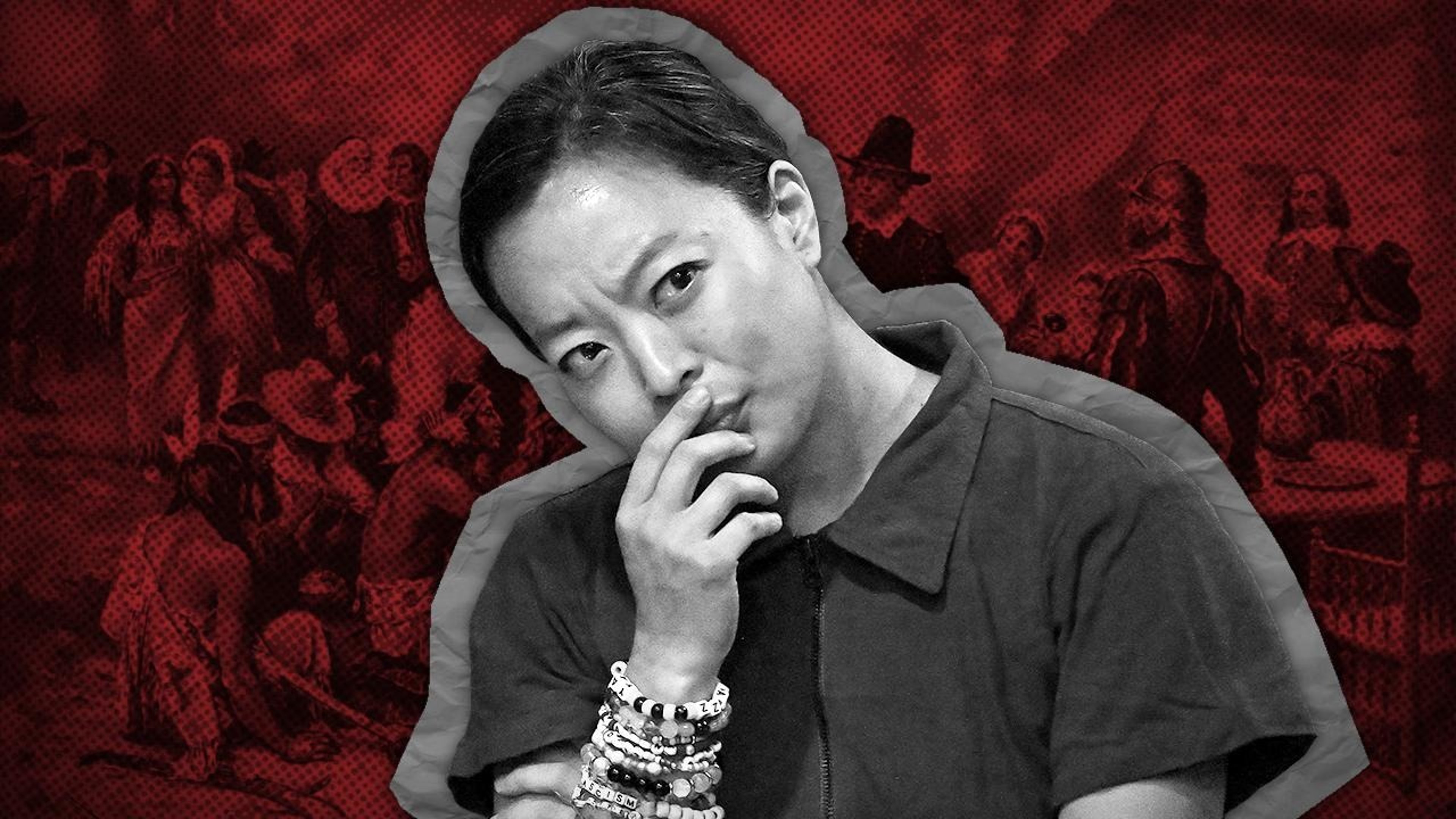
Rule 1: Attack, attack, attack.
Rule 2: Admit nothing, deny everything.
Rule 3: No matter what happens, no matter what they say about you, and no matter how beaten you are, claim victory and never admit defeat.
Donald Trump’s “Three Rules” as taught by Roy Cohn
After a nail-biting night of tallying votes, DSA candidate Francesca Hong lost to her opponent, David Crowley, in the Wisconsin Gubernatorial Democratic primary by less than a single percentage point.
Hong and her campaign’s efforts were objectively remarkable. An out-and-out socialist came within a hair’s breadth of snagging the nomination for the governorship of one of the most crucial swing states in the country. The genuine mass character of her campaign and the tireless efforts of on-the-ground organizers are the only reasons it got as far as it did. That will always be the kernel deserving of commendation, despite the bitter taste of the final results.
But ultimately, the popular narrative emerging from this loss is one of progressives in retreat, of socialists being discredited, and of a working-class base rejecting the left insurgency. The establishment is gleefully pushing the story that we have overreached and have been firmly rejected.
Outlets like Politico ignore the massive sea change in American politics that even a close loss represents. Such a result was unimaginable merely a decade ago. But typical of the mainstream media, all of this is utterly ignored. Instead, somehow, because of a series of faulty polls, the establishment, barely holding on by the skin of its teeth, is presented as a glorious triumph, indicative of the inevitable collapse of the socialist insurgency.
This narrative must be the object of our war. Narratives matter; they are the primary currency of our modern attention economy. Hong did not lose because the masses reject our politics; she lost because her campaign failed to master the machinery of attention required to enforce our narrative over theirs.
The socialist left broadly, and the DSA specifically, lack a coherent media and electoral strategy. Instead, the movement acts haphazardly, driven by local chapter efforts and the particularist whims of leaders like Bernie Sanders and AOC. The stakes of the moment demand a unified strategy.
There are three fundamental demands that such an essential strategy requires: a message, a messenger, and a means of delivering that message. Let us take each in turn.
The Message: The Democratic Revolution
Any tactical failures of the campaign belie the deeper failure of its message to match the objective historical moment. The office of Governor of Wisconsin is a crucial chokepoint for the certification of the 2028 election. The election of 2024 was decided by less than one percentage point in the state. During Trump’s failed 2020 coup, the essential element of his scheme was attempting to intimidate GOP-controlled state governments into sending a fake slate of electors for certification by Congress, in the face of a Democratic triumph in the popular vote. The governor is a key figure in preventing such a process from repeating, with greater legalistic and ideological certainty, in 2029. Indeed, over this there will almost certainly be a constitutional crisis in 2029, as the Republicans refuse to cede power for fear of criminal prosecution and the 'communist Democrats' lurking in their fevered imaginations.
All Americans—those of marginalized racial, gender, and sexual identities in particular—are under fascist attack; some socialists seem to have lost their senses over the gravity of our situation. But the masses have not. If the movement is going to build a new political pole, it must keep tempo with the progressive base. In key races across the country, DSA candidates need to run campaigns that the public sees as both forward-looking and broadly popular.
To meet this neo-fascist oligarchy, voters do not want a weakling, a vacillator, an imbecile. They want a vanguard. They want a champion who will not blink, hesitate, or think twice when the right-wing attempts to steal democracy. We must project an image of absolute, unshakable power, proving to the electorate that we will not be bound by arbitrary legalism or self-flagellating moralism when the fate of the working-class is on the line. Democratic voters want to survive, and more, they yearn to crush their enemies. We must prove we will do whatever it takes to win.
This moment demands a message of active, democratic revolution. Our message must be a simple one: we will take power for the people. The American proletariat knows that power is currently in the hands of oligarchs, corrupt politicians, pedophilic billionaires, heartless insurance companies, Big Pharma, and the Israel lobby—the entire sclerotic establishment that is stealing from them and keeping them down. A revolutionary campaign cannot merely promise the moon; we must promise to break that power structure. When capitalist media fishes for low-brow soundbites or demands apologies for past tweets, a socialist candidate cannot shrink into timidity. We must remain entirely on the offensive, projecting aggression, not caution. We are promising to be their champions in this struggle for power. We will govern and transform their lives, come hell or high water, and we will not apologize for it.
There are many ways to do so, and each candidate must find their own path that works for them. The exact combination of policies matters to an extent, but is ultimately secondary to our ability to give life to those policies as a signifier that our movement will not be the same old story as the past decades of the duopoly. The people are far more insightful than some give them credit for; they know that our system makes passing legislative reform incredibly difficult. Why else would every politician fail to deliver on their promises? The only other plausible explanations are corruption and incompetence, each of which is also rightfully believed by the people to be endemic to our politics.
Hong’s digital presence was a glaring symptom of this ideological timidity. A brief look at her website reveals a fatal absence of any unifying slogan pointing toward a democratic revolution or the broader goals of our insurgency. Instead, the site reads like a CV, meticulously explaining who she is rather than what war she intends to fight. This is a hallmark academic move—treating a bid for executive power like an application for a faculty position rather than a declaration of political warfare. Despite appearing on notable online political commentators’ streams such as Mike From PA, she showed an unwillingness to carry this strategy out to its fullest extent.
Contrast this approach with Abdul El-Sayed’s campaign messaging. His platform strips away the bureaucratic throat-clearing in favor of a direct, material assault on the status quo, utilizing language that names both the crisis and its solution. His site unapologetically demands “money out of politics, money in your pockets, Medicare for all”, validating working-class exhaustion with the raw truth that it simply shouldn't be this hard just to get by. The “who” in El-Sayed’s messaging isn't a biographical essay, but rather a banner video of him dapping up local Michiganders. These represent two fundamentally different approaches to politics. One candidate offered a resume; the other offered themselves as a people’s weapon. Because Hong lacked a language that aggressively named both the crisis and the solution, the narrative of power we so desperately needed was never there.
Run like a Zohran; pivot constantly and consistently towards affordability at all costs. Sacrifice every sacred cow at the altar of respectability, so long as you make clear you’re doing so in the name of making the right enemies. Or, perhaps, go the other direction. Go whole hog, embrace vicious populism, and unambiguously signal your intent to burn down the system at all costs.
Condemn Thanksgiving or don’t. Do not vacillate and demonstrate weakness. Coming out against Thanksgiving, and then claiming it as “your favorite holiday,” does not turn towards electability, but against it. It demonstrates a lack of confidence, a lack of will, a lack of vision. It makes you a flip-flopper. Embrace our movement, or hedge against it, but commit. A halfway job does more harm than good.
The Messenger: Towards a Candidate Pipeline
The horizon of 2028 is approaching rapidly. If the left mounts a serious national insurgency—anchored by a figure like Alexandria Ocasio-Cortez—the sheer gravitational pull of her presidential campaign will command the attention of the entire American electorate. But this effort at the top of the ticket is useless without fully taking advantage of a down-ballot flank.
The scale of the candidate recruitment crisis facing the Democratic Socialists of America is staggering. To meet this moment, the organization must immediately abandon its particularist approach and adopt an aggressively ambitious national strategy. We must blanket the electoral map: hunting down complacent Democratic incumbents in deep-blue strongholds and identifying vulnerable right-wing seats where the working-class has been left to rot. We are in the midst of a great wave. If we do not backfill these downballot races with our own people, the liberal establishment will simply co-opt the populist energy and ride the wave themselves. We must run for our lives.
We cannot fill these seats with interchangeable political tourists or insulated academics. A democratic revolution does not materialize from the ether of pure theory; it is born in specific places, fought by specific people. The candidates we elevate must be the organic champions of their own neighborhoods. They must be local warriors whom the community already recognizes and trusts, speaking the unvarnished language the working-class actually uses. We have seen the stark difference in outcomes when a candidate is artificially transplanted versus when they are a true product of their environment.
Francesca Hong certainly fit the criteria of a local fighter, and her bravery in mounting this campaign is undeniable. She stepped into the fire of a crucial statewide race despite the lack of electoral infrastructure to support her. The movement rallied behind her candidacy, but that pure enthusiasm was, tragically, not enough. We effectively threw her to the wolves, providing no institutional armor, no media conditioning, and no strategic guidance. She was left entirely to her own devices, to wither alone on the vine.
The consequences of this neglect proved fatal. Because she lacked rigorous preparation and a natural gift for charisma, Hong projected a disastrous aura of weakness and hesitation on the campaign trail. In the crucible of modern politics—where hostile interviews are a non-negotiable test of a candidate's mettle—she stumbled. She appeared overly cautious, retreating into academic caveats rather than swinging the lethal, left-populist charisma required to dominate a news cycle.
To take one example among many, in 2020 Francesca Hong tweeted, “I support defunding the police as a first step towards abolishing the police.” However, during her campaign, Hong distanced herself from the movement, even going so far as to call for the “transition” away from the Madison protest encampment set up in the aftermath of the racist murder of Corey Ruiz by police.
The capitalist media is a machine designed to extract this sort of timidity and amplify it. When pressed by bad-faith interviewers, Hong lacked the necessary conditioning to seize the narrative. Instead of taking control, she shrank—failing to project the unshakable confidence and image of a conqueror that the working-class desperately craves.
The movement can no longer afford to merely endorse brave individuals and pray they survive the gauntlet. The DSA must construct a hardened electoral pipeline engineered to produce a thousand—ten thousand—Zohran Mamdanis. We cannot rely on vague hopes that generational talents will stumble into our meetings or onto our phone screens, as the Democrats have done for decades. This means building a relentless political machine that actively recruits talent and subjects them to grueling, useful training.
We must put our candidates through political boot camps. They must face hostile mock interviews that simulate the most vicious, bad-faith attacks the establishment can muster. They must be drilled in the art of mass persuasion, learning to weaponize hyper-local grievances—whether it is fighting the oligarchy over a moratorium on data centers, resisting corporate land-grabs, or mobilizing against extortionate utility rates, as well as national struggles against DHS terrorism, or against imperialism, the war in Iran, and the genocide in Palestine. Furthermore, they must be themselves for hours at a time on podcasts and radio shows and on the stump. They must be likeable, they must be charismatic, they must be good communicators.
When the camera turns on, and the establishment attack dogs bare their teeth, our candidates must know only one protocol. You do not explain. You never defend. You never admit defeat, and you never apologize. You attack like a rabid dog.
The Means of the Message: The Permanent Campaign
A political campaign requires a mechanism to force its platform onto the public consciousness. Without a concrete media strategy, the best candidates remain invisible. The left must build an infrastructure of relentless attention-capture.
P.K. Gandakin dissects the exact failure of Hong's media approach in Geese Magazine:
The second defense is more interesting, and more revealing of the contradictions of our task. In the same interview, Hong explains that her rejection of defunding/abolition is not a shift away from her socialist politics. Instead, she believes that, as governor, one must “be tough on causes if we're going to be tough on crime.” “Tough on causes,” of course, refers to social programs that would improve the quality of life of people such that they would be less likely to commit crime in the first place. For those defending Hong, this was a clever way for her to answer the question without falling into the ‘trap’ of defending abolition and without giving up her socialist principles.
The progressive base often celebrates this kind of rhetorical maneuvering as tactical maturity. They view the evasion of controversy as a necessary evil for statewide viability. But adopting the linguistic framework of the carceral state to justify public goods completely cedes the ideological battlefield. The candidate attempts to outsmart the interviewer, resulting in a convoluted defense that thrills political insiders while projecting pure cowardice to the working-class. Voters recognize a politician trying to squirm out of a tough spot.
Gandakin identifies the terminal trajectory of this behavior:
It is the clean-ness of this formula that should repulse us. The struggle against liquidation in the current period can be sloganeered as: deliverism vs. democratic revolution. Every revolutionary upsurge begins to temper itself before reaching its conclusion; it begins to exhaust itself, to lose its momentum to friction. We must carry out the permanent campaign—we are the permanent antagonism in society, the restless, questing element that refuses to stop pushing; we must be Jacobins. The steam that drives our current engine depends on coal that is being quickly exhausted—left to its own devices, the train will crash, whether ‘crashing’ means far-right dictatorship or total co-option by liberal ideology.
Seeking a frictionless path to office inevitably hollows out the political project. The left cannot settle for technocratic deliverism while the right-wing wages absolute war. Surviving the current political era requires embracing the permanent campaign. Socialists must function as a hostile, inescapable presence. The attention economy runs on overwhelming volume, output, and a movement aiming for power must dictate the daily narrative through sheer, uncompromising force. In the realm of public attention, quantity operates as its own intrinsic quality.
The Hong campaign failed this mandate completely in its resource allocation. They prided themselves on spending zero dollars on television advertisements. Tom Tiffany weaponized nearly four million dollars on the airwaves. David Crowley blanketed television screens with ads like these. Hong’s campaign isolated itself entirely on social media and streaming platforms, abandoning traditional broadcasting.
Political science offers conflicting data regarding the precise conversion metrics of television advertising. Yet the basic mechanical truths of the medium remain intact. Broadcast television fundamentally increases candidate recognition. Furthermore, highly targeted ad buys demonstrably expand voter outreach.
Refusing to contest the airwaves guaranteed that rural and older demographics never even encountered the socialist platform. Hoarding cash reserves while right-wing billionaires saturate the visual landscape is a dereliction of duty.
Zohran Mamdani’s New York City mayoral victory provides the definitive blueprint for rectifying this deficit. According to Middle Seat, the production team responsible for Mamdani’s multimedia strategy:
Because Zohran’s campaign participated in the city’s matching funds program, it had strict limits on fundraising and campaign spending. Meanwhile, Cuomo and his right-wing billionaire allies were flooding the airwaves with tens of millions of dollars in TV, mail, and digital ads to support his campaign. To compete, we had to scale smart, reaching persuadable voters with creative that would actually resonate with them. Polling revealed that older Black and Latino men, too often overlooked by traditional persuasion programs, were key to moving the needle. With a limited budget and a quick-approaching election, we needed to produce powerful ads that would hit home with the right people, fast—and put them on the biggest screens we could find—from TV and CTV to taxi cabs and mobile.
In total, Middle Seat produced 12 ads across the primary and general elections. They added:
Our mixed-media strategy reached voters across TV, CTV, digital out-of-home, and social. We secured direct deals with Univision, BET, Peacock, Disney and ESPN, New York Times, CBS and others to make sure our message was showing up where it mattered at the most efficient costs. From geo-targeted ads for young people to saturation TV buys across Spanish-language stations, our placement strategy was designed to complement the campaign’s limitations—and expand Zohran’s coalition in key neighborhoods.
Working on a budget of $1.7M across both elections, the ads led to an 8.2% increase in overall persuasion lift, with a 10.7% and 10.3% gain in favorability from Black men over 35 and Latino men over 35, respectively. Post-election analyses found that these same demographics helped carry Zohran to a no less than stunning victory.
But buying the airtime is only half the battle; the content itself must project authority. We can no longer rely on the amateurish aesthetics that have plagued left-wing media for a decade. When a candidate steps before a camera, the production quality acts as a subliminal argument for our competence. Crisp lighting, professional sound mixing, and flawless video editing are not bourgeois luxuries. They are the baseline requirements of a modern proletarian movement that seeks to command the focus of the American public. A movement promising to seize state power and dismantle the oligarchy cannot broadcast its vision using the grainy, unpolished visual language of a student project. We have to look like we are ready to govern. High production value authors respect, projecting the exact kind of lethal political machinery the working-class expects from a victorious vanguard.
Furthermore, this media engine cannot restrict itself to formal campaign windows or traditional political commentary. Capitalist platforms harvest human awareness for profit at every hour of the day, and socialist agitation must meet working people on that exact terrain. Our media presence must penetrate every digital arena where the working-class actually spends its time—from gaming communities and sports commentary to lifestyle channels and local culture. We must create a saturation effect, establishing a constant ideological presence across every digital and non-digital pathway we can. Rather than waiting for the public to seek us out, our media must continuously translate the indignities of daily life into sharp, accessible analysis, as well as clear, articulable propaganda.
To command that space, our messaging must abandon academic detachment in favor of fierce emotional resonance. Correct analysis is dead weight if it fails to move people to act. Our agitation must ignite an active class consciousness, transforming quiet frustration into direct rage against the billionaire class while building an unshakeable pride in collective labor. It must forcefully expose the immediate threat of far-right authoritarianism without falling into hopeless doom-saying, balancing that urgency with a bold, triumphant vision of what working-class power will build. We must capture the imagination of the working-class today or watch the right-wing weaponize their disillusionment tomorrow.
The dust on this election has yet to settle. Many lessons remain to be extracted. Much work remains to be done. But one thing remains crystal clear: we must seize the moment by the collar. Before we can do anything else in the name of the people—before we can build our Democratic Revolution—we must first capture their attention.